Outdoor Christmas Lights
The best outdoor Christmas lights for a house
Different parts of the house want different lights. These are the picks by job, not one winner pretending to cover everything.
Mike M. — The hands-on owner behind Iron Mako Media.
Published
This page contains affiliate links. If you buy through them we may earn a commission at no cost to you, and it never decides what we recommend. How this site is funded.
Quick picks
| # | Product | Best for | Score | Price |
|---|---|---|---|---|
| 1 | 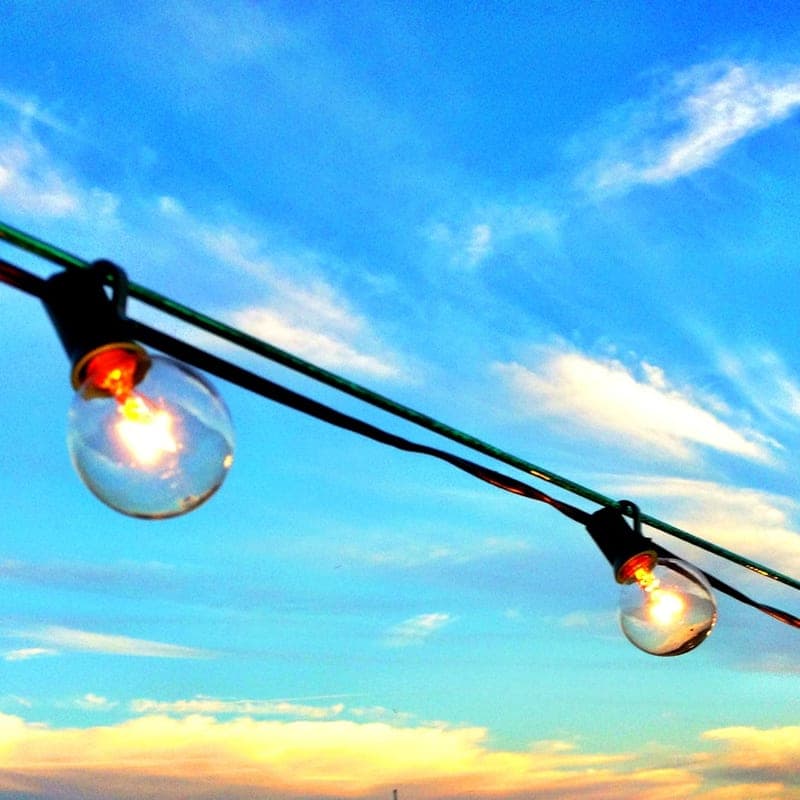 Top pickWintergreen Lighting OptiCore C9 LED, 25 ft25 bulbs / 25 ft, 12 in spacing | Rooflines you want to keep for a decade | 9.2 | Check price on Amazon |
| 2 | 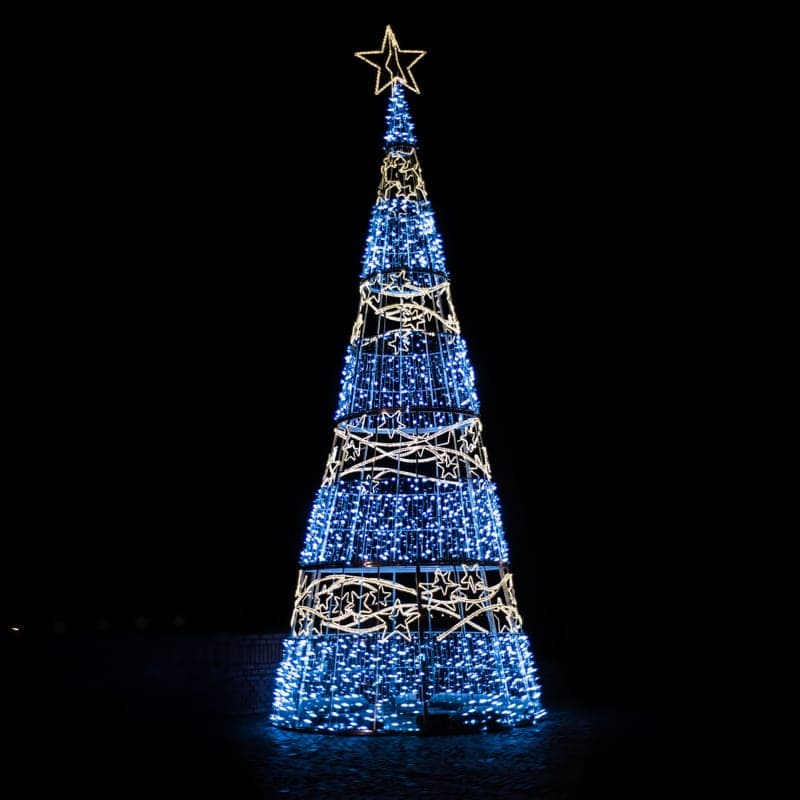 Dazzle Bright Christmas Net Lights360 LEDs, 8 modes | Bushes and hedges, done in ten minutes | 8.7 | Check price on Amazon |
| 3 | 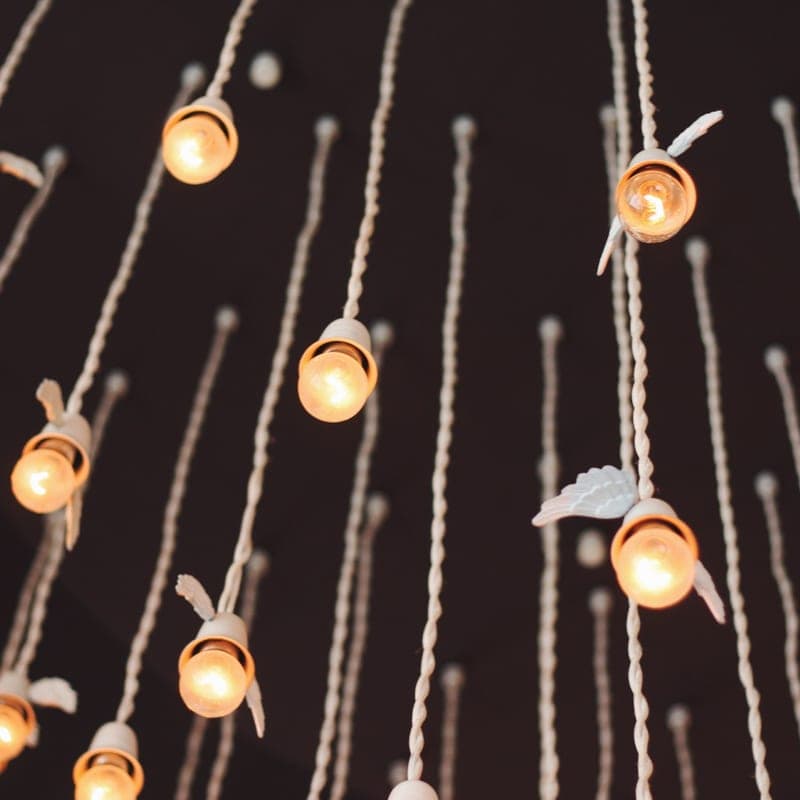 Toodour LED Icicle LightsVaried drop lengths, outdoor rated | Gutter lines and porch eaves | 8.4 | Check price on Amazon |
| 4 | Brizled LED Christmas String LightsHigh LED count per set, multiple modes | A first display on a budget | 8.0 | Check price on Amazon |
| 5 | 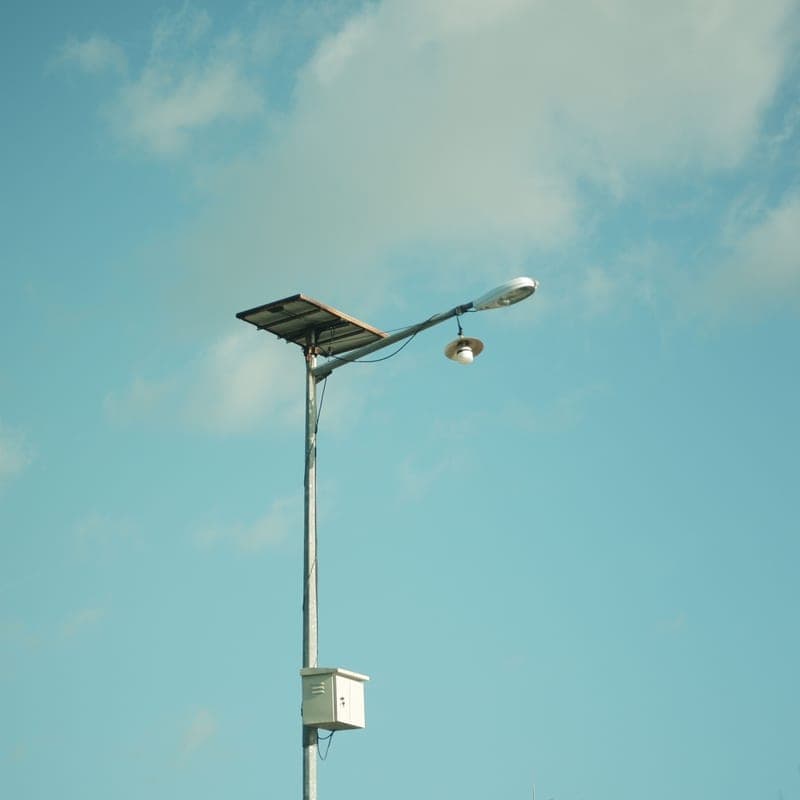 Brightown Solar Christmas String Lights, 2-packSolar panel, 8 modes, 2-pack | Anywhere you have no outlet | 7.6 | Check price on Amazon |
| 6 |  Twinkle Star Battery Operated String Lights3x AA, timer function on most sets | Wreaths, garland and anything on a door | 7.8 | Check price on Amazon |
#ad We may earn a commission · Prices are shown by Amazon, not by us
Scores are our own editorial judgment from published specifications and buyer feedback — not aggregated user ratings, and not from hands-on testing. See how we pick.
Jump to a full review below: lights
How we picked
These picks come from manufacturer specifications, current listings and buyer feedback read in full — not from hands-on testing of every unit. We do not run a weather lab, we have not wind-tunnel tested anything, and we are not going to pretend otherwise. Where a manufacturer publishes a rated-hours or durability figure we quote it and attribute it; where none exists, we say so rather than inventing one.
What we did evaluate is the thing that actually decides a purchase: fit for job. A roofline, a shrub, a gutter line and a far corner of the yard are four different problems, and the product that wins one is usually wrong for the others. Our full approach is on the methodology page.
Match the light to the part of the house
| Part of the house | Format | Why |
|---|---|---|
| Roofline, gutters, gables | C9 socketed LED | Reads as individual bulbs at distance; bulbs are replaceable |
| Front shrubs and hedges | Net lights | Ninety seconds per bush, and the spacing looks even |
| Straight gutter or porch eave | Icicle | Forgiving to install; the varied drops hide small errors |
| Columns, railings, small trees | Mini / 5 mm string | Wraps tightly and reads as a continuous line |
| Far corner with no outlet | Solar | The only format that needs no cord |
| Wreath, mailbox, door | Battery | No cord running down the door frame |
Most houses use three of those six. The common combination — and the one we would build a first display around — is C9 on the roofline, nets on the shrubs, and one accent. That is covered in a first display plan.
The buying guide: five decisions
1. Socketed or molded
This is the decision that determines how long the set lasts, and almost nobody makes it deliberately. A socketed C9 set has bulbs that screw out — one failure is a two-dollar fix. A molded mini string has bulbs sealed into the wire — one failed section is a dead set.
If you plan to light the house for more than two or three seasons, socketed is the cheaper choice despite costing several times more up front. Commercial vs consumer grade has the multi-year arithmetic.
2. Bulb size
C9 is the large traditional bulb. C7 is the same shape a size down and suits smaller houses and window outlines. Mini LED reads as a line rather than as bulbs. The direct comparison is in C9 vs C7.
3. Color temperature
Warm white looks like an incandescent bulb and flatters brick, wood and warm-toned siding. Cool white is crisper, reads as modern, and can look distinctly blue against warm materials — which is the most common regret in outdoor lighting. Decide once and buy the whole run in one order, because two brands' warm white do not match. See warm white vs cool white.
4. LED, effectively without exception
LED draws roughly an order of magnitude less power than incandescent, which is what lets a whole-house display run on one circuit. The only real argument for incandescent is the specific color of a hot filament. LED vs incandescent covers both sides.
5. Connectability
Check two numbers on the tag: whether sets connect end to end, and the maximum number that may be chained. That second figure — usually three to six for C9 — exists because the first set's wire carries the current for everything downstream. Exceeding it is a genuine fire risk, not a warranty technicality.
What we deliberately did not test
You will find outdoor lighting roundups quoting 50 to 60 mph wind resistance, minus-40-degree tolerance and 30-day exposure test results. We have run none of those tests, and where a competitor publishes them without a named third-party lab, there is no way for you to check them either.
What we will tell you is what the manufacturer publishes, with a link, and what the physical design implies — that a polycarbonate lens survives a fall that would shatter glass, that a socketed set is repairable and a molded one is not, and that the failure point in any outdoor set is the connection rather than the bulb.
Once you have chosen, work out how many sets you need at how many Christmas lights do I need, then get them on the house with the best light clips.
The picks in full
Top pick
Wintergreen Lighting OptiCore C9 LED, 25 ft
Wintergreen Lighting
#ad We may earn a commission · Prices are shown by Amazon, not by us
The commercial-grade C9 most professional installers use, sold in retail quantities. Thick polycarbonate lenses and a green commercial-gauge wire that survives being handled every year.
C9 is the big, faceted, traditional-looking bulb — the one that reads as Christmas lights from the street rather than as a glow. Wintergreen's OptiCore line is the version professional installers buy, and the reason is not brightness. It is that the lens is polycarbonate rather than glass, and the manufacturer rates the bulbs at 60,000 hours. A season is roughly 45 days at eight hours, so about 360 hours. The arithmetic on that rating is generous enough that bulb failure stops being the thing that ends a strand's life; handling damage is.
The practical case for buying commercial-grade C9 is replaceability. Each bulb screws into an E17 socket. When one dies, you replace one bulb for a couple of dollars instead of pulling a 100-light strand off the roof. Over five seasons that is the whole argument, and it is why the same boxes keep appearing on the same houses.
The honest counterpoint: this is expensive per foot, and it is sold in 25 ft sets. A 180 ft roofline is eight boxes plus spare bulbs, which is a real number. If you are lighting one gable over the front door and you are not sure you will do it again next year, a cheaper set is the right call and we would not argue.
One buying note that trips people up — C9 sets and C9 bulbs are sold separately as often as together. Check whether the listing you are on is a complete lit set or a box of replacement bulbs, because the photos look nearly identical.
What works
- Bulbs are replaceable individually — one failure is not a dead strand
- Polycarbonate lens survives being dropped off a ladder
- Same product line pros buy, so spare bulbs stay available year to year
- End-to-end connectable, so long roof runs are one circuit decision
What does not
- Costs several times what a big-box 100-count set costs
- Green wire is visible against white fascia in daylight
- 25 ft per set means a 180 ft roofline is eight boxes
| Bulb | C9, E17 base, LED |
|---|---|
| Set length | 25 ft, 25 bulbs |
| Spacing | 12 in |
| Lens | Polycarbonate (manufacturer states 200x the impact strength of glass) |
| Rated life | 60,000 hours (manufacturer figure) |
| Wire | Green, commercial gauge |
Bushes and hedges, done in ten minutes
Dazzle Bright Christmas Net Lights
Dazzle Bright
#ad We may earn a commission · Prices are shown by Amazon, not by us
A mesh of LEDs you throw over a shrub. It is the highest ratio of visible result to time spent of anything on this site, and it is why net lights belong in most first displays.
Net lights solve one problem completely: covering a bush. Wrapping a shrub by hand takes twenty minutes and looks hand-wrapped. A net takes about ninety seconds and looks even, because it is a grid.
Dazzle Bright's sets run 360 LEDs in a mesh with eight modes. The mode controller is more useful than it sounds — on a bush the steady setting is almost always right, but the slow-fade setting reads well on a hedge line where a steady wall of light looks flat.
Where nets fail is geometry. They want a roughly rectangular volume. A tall juniper, an irregular ornamental grass, or a sparse young shrub will let the net sag into it and you get a lumpy result that reads as cheap. Measure the bush: if it is meaningfully taller than the net is wide, buy string and wrap it.
Takedown is the quiet advantage. A net comes off in one motion and folds. A wrapped shrub has to be unwrapped, in the cold, in January, and that is the job everyone underestimates.
What works
- Covers a shrub in one throw — no wrapping, no ladder
- Even spacing looks deliberate in a way hand-wrapped string never does
- Packs down flat, unlike a wrapped bush that has to be unwrapped
What does not
- Only works on roughly cube-shaped shrubs; it sags off tall or sparse ones
- A snagged mesh is harder to untangle than a string
- Fixed LEDs — no bulb replacement
| Type | Net / mesh |
|---|---|
| LED count | 360 (per the manufacturer listing) |
| Modes | 8 |
| Colors | Multicolor and warm white options |
| Use | Outdoor rated |
| Connectable | Yes on most sets |
Gutter lines and porch eaves
Toodour LED Icicle Lights
Toodour
#ad We may earn a commission · Prices are shown by Amazon, not by us
Varied-length drops off a horizontal wire. The look only works on a genuinely straight run, which is why they belong on a gutter and almost nowhere else.
Icicle lights are the one light type where installation quality is nearly invisible. The drops are deliberately different lengths, so a clip line that is a half-inch off here and there disappears into the design. On C9, that same error is a visible sag.
That forgiveness only applies on a straight horizontal run. On a raked gable — a roof edge that climbs at an angle — icicles hang vertically off a sloped line and the effect reads as a mistake. Gutter lines, porch eaves and the horizontal band above a garage door are where they work.
Storage is their real cost. The drops interlock with each other in a box, and untangling a set of icicles in November is a genuinely unpleasant hour. They are the strongest argument on this site for buying a storage reel, which is why we link that section from here.
Toodour's sets come in the three standard colors and are connectable. We have not run them across multiple seasons and there is no published hours rating, so we are not quoting durability figures.
What works
- Reads as a deliberate design element rather than a strand of lights
- The varied drop lengths hide small height errors in your clip line
- Cheap relative to the visual effect
What does not
- Needs a straight horizontal run — they look wrong on a raked gable
- Drops tangle with each other in storage more than any other light type
- Wind moves them, which some people find distracting
| Type | Icicle, varied drop lengths |
|---|---|
| Bulb | Mini LED, fixed |
| Colors | Warm white, cool white, multicolor |
| Use | Outdoor rated |
| Connectable | Yes on most sets |
A first display on a budget
Brizled LED Christmas String Lights
Brizled
#ad We may earn a commission · Prices are shown by Amazon, not by us
High-count LED string sets at big-box prices, with the multi-function controllers and color-changing options a first display usually wants. Not commercial hardware, and not priced like it.
Most first displays are mini LED strings, and Brizled is one of the brands that does them well enough at a low price. If your goal is to cover a lot of roofline and two bushes this weekend without spending several hundred dollars, this is the honest answer, and the commercial C9 recommendation above is the wrong one for you.
The meaningful feature is the controller. Many of these sets include warm-white/cool-white switching or full color-change, which means one purchase covers two looks. Deciding between warm and cool is the single most common regret in outdoor lighting, and a set that does both removes the decision.
What you give up is repairability. The bulbs are molded into the wire, so a dead section is a dead set — you replace it, you do not fix it. And the wire is light gauge, which matters at takedown more than at install: wound carelessly onto a reel, thin wire kinks, and a kink is where next year's failure starts.
We have not run these across multiple seasons, and the manufacturer does not publish a rated-hours figure, so we are not going to tell you how long they last. Treat them as a two-to-four season purchase and the value is good.
What works
- Cheapest route to a lot of covered feet
- Color-changing and warm/cool-switching options in one set
- Connectable, so a run is not a per-set outlet problem
What does not
- Bulbs are molded in — a failed section is a failed strand
- Wire gauge is light; it does not enjoy being wound badly onto a reel
- No published hours rating, so longevity is a guess
| Bulb | Mini LED, fixed (not replaceable) |
|---|---|
| Modes | Multi-function controller on most sets |
| Use | Indoor / outdoor rated |
| Connectable | Yes, on most sets |
| Rated life | Not published for this line |
Anywhere you have no outlet
Brightown Solar Christmas String Lights, 2-pack
Brightown
#ad We may earn a commission · Prices are shown by Amazon, not by us
Solar solves exactly one problem — the far corner of the yard with no power — and it is genuinely good at that. It is a poor substitute for a wired run anywhere an outlet exists.
Solar Christmas lights have a reputation problem, and most of it is deserved for the wrong reason. They are not bad products. They are products bought for the wrong job.
The right job is the tree at the end of the driveway, the mailbox, the fence line fifty feet from the house — anywhere running a cord means either a trip hazard or a trench. For that, solar is the only reasonable answer and it works.
The wrong job is the front of the house, where an outlet exists. December has the shortest days of the year and the lowest sun angle, which is precisely when a solar panel charges worst and you want the lights on longest. Brightown states 8-10 hours on a full charge; in late December, in the northern half of the country, after a cloudy day, expect meaningfully less. That is physics, not a product defect.
Practical placement note: the panel needs actual sky, not shaded sky, and it needs brushing clear after snow. A panel under two inches of snow is an off switch.
What works
- Zero wiring, zero circuit load, no cord across the lawn
- Reaches parts of the yard a cord realistically cannot
- No electricity cost at all
What does not
- December is the worst month of the year for solar charging
- Output is visibly dimmer than mains-powered LEDs
- A snowed-over panel produces nothing until you clear it
| Power | Solar panel with integrated battery |
|---|---|
| Runtime | Manufacturer states 8-10 hours on a full charge |
| Modes | 8 |
| Pack | 2 sets |
| Use | Outdoor rated |
Wreaths, garland and anything on a door
Twinkle Star Battery Operated String Lights
Twinkle Star
#ad We may earn a commission · Prices are shown by Amazon, not by us
Battery sets exist for the places a cord cannot go without looking terrible — a door wreath, a mailbox, a porch column. Judged on that job they are excellent; judged as house lighting they are not.
A cord running down the front door frame ruins a wreath. That is the entire case for battery lights, and it is a good one.
Twinkle Star's battery sets run on three AA cells with a built-in timer — typically six hours on, eighteen off — which matters more than it sounds. Without a timer you are opening the door and fishing behind the greenery every evening.
The thing nobody mentions in listings: alkaline batteries lose capacity in the cold, and a wreath on an exterior door is at outdoor temperature. Expect noticeably shorter runtime in a cold snap than in a mild week. Lithium AA cells hold up much better in cold and are worth the premium on anything you do not want to service in January.
Hide the battery box in the back of the wreath before you hang it, not after. This sounds obvious and it is the step everyone skips.
What works
- No cord down the door frame — the whole point
- Built-in timers mean you are not switching a wreath on by hand
- Trivially movable
What does not
- Cold weather cuts alkaline battery capacity significantly
- The battery box has to be hidden, and on a wreath that is fiddly
- Replacing batteries mid-season on a door wreath is a real chore
| Power | 3x AA (batteries typically not included) |
|---|---|
| Timer | Built-in on/off timer on most sets |
| Use | Outdoor rated; the battery box is the weak point |
| Runtime | Varies with mode and temperature |
Common questions
What are the best Christmas lights for the outside of a house?
For a roofline, C9 LED bulbs on a socketed string — they read clearly from the street and individual bulbs are replaceable. For shrubs, net lights. For a straight gutter or porch eave, icicles. Most well-finished residential displays are the first two plus one accent.
Are LED or incandescent Christmas lights better outdoors?
LED, for almost everyone. The power draw is roughly an order of magnitude lower, which is what lets a whole-house display run on one 15-amp circuit, and there is no hot glass. The remaining argument for incandescent is the specific color of a hot filament, which some people genuinely prefer.
How many sets of Christmas lights can I connect together?
Whatever the tag on your set says — usually three to six for C9, more for low-draw mini LED. The limit exists because the wire in the first set carries the current for every set after it. If a run needs more, run a second feed from the outlet instead.
Do outdoor Christmas lights need to be waterproof?
They need to be outdoor rated, which is not the same as submersible. The wire and bulbs handle rain; the failure point is a connection sitting in standing water. Keep connections up out of puddles and out of the gutter.
What color temperature should I choose?
Warm white on brick, wood or warm-toned siding; cool white on gray, white or modern facades. Whichever you pick, buy every set for a continuous run from the same product line in one order, because warm white is not a standardized color between brands.
Sources
Every specification quoted on this page comes from the manufacturer’s own published information or a current retail listing, linked below. Where a figure is not published, we say so rather than estimating it.