Outdoor Christmas Lights
C9 vs C7 Christmas lights
Same shape, different size, different base. The choice is about the scale of the house, not about quality.
Mike M. — The hands-on owner behind Iron Mako Media.
Published
This page contains affiliate links. If you buy through them we may earn a commission at no cost to you, and it never decides what we recommend. How this site is funded.
The verdict in one line: C9 for a two-story house or a long roofline seen from the street; C7 for a single-story, a smaller frontage, windows, or a path where a large bulb would be out of proportion. Neither is better made than the other — they are the same product at two scales.
The actual differences
| C9 | C7 | |
|---|---|---|
| Bulb base | E17 intermediate | E12 candelabra |
| Relative size | Larger | Roughly two thirds the size |
| Standard spacing | 12 in | 12 in |
| Reads clearly from | The street, on a two-story | Closer range, or a low frontage |
| Bulbs replaceable | Yes | Yes |
| Cost per foot | Higher | Lower |
| Clip compatibility | C9-specific or all-application | C7-specific or all-application |
The base difference is the one with practical consequences. E17 for C9, E12 for C7 — they are not interchangeable, and a box of C9 bulbs will not fit a C7 string. Check which you own before ordering spares.
Pick C9 if...
- The roofline is two stories up, where a smaller bulb loses definition at viewing distance
- The frontage is wide and you want the outline to read strongly from across the street
- You are lighting a large tree, where C9 has the presence to work at scale
- You want the traditional big-bulb look that most people mean by 'Christmas lights'
Pick C7 if...
- The house is single-story, or the lit edge is close to the viewer
- You are outlining windows, doors or a porch where C9 would look oversized
- You are running lights along a path or a low fence at close range
- You want the same traditional look at lower cost per foot
What does not differ
Both are socketed, both are repairable, both come in faceted and smooth finishes, both use the same 12-inch standard spacing, and both are available in LED and incandescent. Build quality tracks the product line, not the bulb size — a commercial C7 set outlasts a budget C9 set comfortably.
Both also share the same real advantage over molded mini strings: individually replaceable bulbs, which is what keeps a set alive for many seasons.
Can you mix them?
Yes, if you do it deliberately by zone rather than within a run. C9 along the main roofline and C7 around the windows and door is a coherent scheme — the size difference reads as hierarchy. C9 and C7 alternating along the same gutter reads as a mistake.
If you do mix, keep the color temperature identical across both, and buy both from the same product line where possible.
Whichever you choose, the count is the same: one bulb per foot at standard spacing, one clip per bulb. Work it out in how many Christmas lights do I need and how many clips do I need.
What to buy
The products that fit the advice above, chosen by the process on our methodology page. We have not hands-on tested them; specifications are the manufacturers’ own.
Quick picks
| # | Product | Best for | Score | Price |
|---|---|---|---|---|
| 1 | 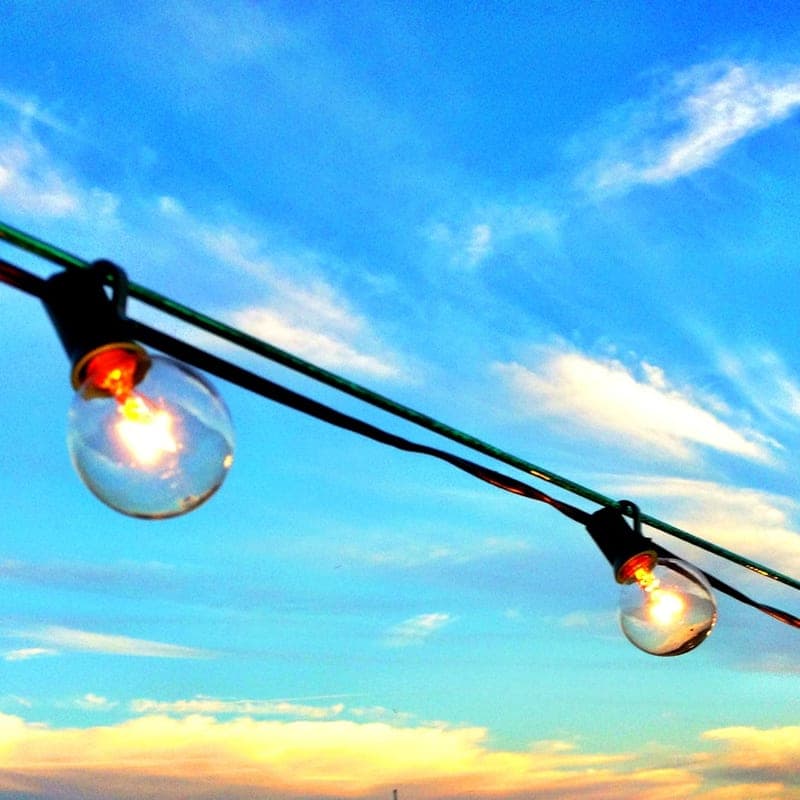 Top pickWintergreen Lighting OptiCore C9 LED, 25 ft25 bulbs / 25 ft, 12 in spacing | Rooflines you want to keep for a decade | 9.2 | Check price on Amazon |
| 2 | Novelty Lights C9 Ceramic LED, green wire25 bulbs, opaque ceramic finish | Opaque, saturated color instead of clear glass | 8.5 | Check price on Amazon |
| 3 | 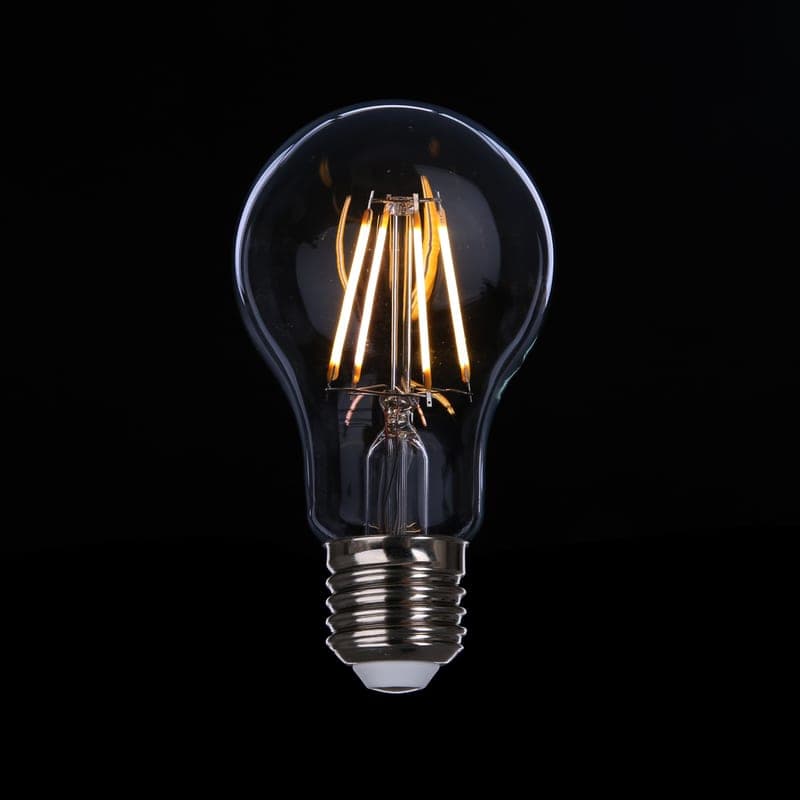 Wintergreen Lighting OptiCore C9 replacement bulbs, box of 25E17 base, box of 25 | Keeping an existing C9 run alive | 9.0 | Check price on Amazon |
#ad We may earn a commission · Prices are shown by Amazon, not by us
Scores are our own editorial judgment from published specifications and buyer feedback — not aggregated user ratings, and not from hands-on testing. See how we pick.
Jump to a full review below: lights
The picks in full
Top pick
Wintergreen Lighting OptiCore C9 LED, 25 ft
Wintergreen Lighting
#ad We may earn a commission · Prices are shown by Amazon, not by us
The commercial-grade C9 most professional installers use, sold in retail quantities. Thick polycarbonate lenses and a green commercial-gauge wire that survives being handled every year.
C9 is the big, faceted, traditional-looking bulb — the one that reads as Christmas lights from the street rather than as a glow. Wintergreen's OptiCore line is the version professional installers buy, and the reason is not brightness. It is that the lens is polycarbonate rather than glass, and the manufacturer rates the bulbs at 60,000 hours. A season is roughly 45 days at eight hours, so about 360 hours. The arithmetic on that rating is generous enough that bulb failure stops being the thing that ends a strand's life; handling damage is.
The practical case for buying commercial-grade C9 is replaceability. Each bulb screws into an E17 socket. When one dies, you replace one bulb for a couple of dollars instead of pulling a 100-light strand off the roof. Over five seasons that is the whole argument, and it is why the same boxes keep appearing on the same houses.
The honest counterpoint: this is expensive per foot, and it is sold in 25 ft sets. A 180 ft roofline is eight boxes plus spare bulbs, which is a real number. If you are lighting one gable over the front door and you are not sure you will do it again next year, a cheaper set is the right call and we would not argue.
One buying note that trips people up — C9 sets and C9 bulbs are sold separately as often as together. Check whether the listing you are on is a complete lit set or a box of replacement bulbs, because the photos look nearly identical.
What works
- Bulbs are replaceable individually — one failure is not a dead strand
- Polycarbonate lens survives being dropped off a ladder
- Same product line pros buy, so spare bulbs stay available year to year
- End-to-end connectable, so long roof runs are one circuit decision
What does not
- Costs several times what a big-box 100-count set costs
- Green wire is visible against white fascia in daylight
- 25 ft per set means a 180 ft roofline is eight boxes
| Bulb | C9, E17 base, LED |
|---|---|
| Set length | 25 ft, 25 bulbs |
| Spacing | 12 in |
| Lens | Polycarbonate (manufacturer states 200x the impact strength of glass) |
| Rated life | 60,000 hours (manufacturer figure) |
| Wire | Green, commercial gauge |
Opaque, saturated color instead of clear glass
Novelty Lights C9 Ceramic LED, green wire
Novelty Lights
#ad We may earn a commission · Prices are shown by Amazon, not by us
Ceramic-style opaque C9 bulbs in a commercial string. The color reads solid at distance rather than as a bright point, which is what most people picture when they picture C9 multicolor.
There are two kinds of C9 bulb and the listings rarely make the difference clear. Transparent faceted bulbs sparkle and throw light; opaque ceramic bulbs glow as a solid block of color. From fifty feet away on a roofline, the opaque version is what most people have in their head when they say they want old-fashioned Christmas lights.
Novelty Lights sells the opaque version in a standard 25-bulb commercial string on green wire, at a price below the top-tier commercial lines. The bulbs use the same E17 base as every other C9 on this page, so spares are interchangeable across brands — a genuinely useful property that nobody advertises.
The trade-off is light output onto the house. If you want the facade lit, faceted or smooth transparent bulbs do that and these do not. If you want the roofline outlined in color against a dark house, these do it better. It is an aesthetic decision, not a quality one.
We could not find a published rated-hours figure for this line, so we are not quoting one. That is a gap in the manufacturer's own documentation rather than a mark against the product.
What works
- Opaque finish reads as solid color from the curb, not as a glare point
- Replaceable bulbs, same E17 base as other commercial C9
- Cheaper than the premium commercial lines
What does not
- Opaque bulbs throw less light onto the house itself
- Manufacturer does not publish a rated-hours figure for this line
- Green wire is the only common option
| Bulb | C9, E17 base, LED, opaque ceramic finish |
|---|---|
| Set | 25 bulbs, green wire |
| Voltage | 120 V |
| Colors | Multicolor and single-color options |
| Connectable | Yes, end to end |
Keeping an existing C9 run alive
Wintergreen Lighting OptiCore C9 replacement bulbs, box of 25
Wintergreen Lighting
#ad We may earn a commission · Prices are shown by Amazon, not by us
The reason to own socket-based C9 in the first place. A box of 25 E17 bulbs turns a dead spot on the roof into a five-minute fix instead of a re-install.
Buy a box of these at the same time you buy the lights. That is the whole recommendation.
The E17 base is a genuine standard, so a Wintergreen bulb will screw into another brand's C9 socket. That matters in year four, when the set you originally bought has been discontinued and you have one dark bulb over the garage.
Match the finish, though. Faceted bulbs have a cut-glass texture that catches light; smooth or ceramic bulbs are opaque. Put one faceted bulb in a run of twenty-four smooth ones and it is the only thing anyone sees.
If your lights are molded mini strings rather than socketed C9, none of this applies and there is nothing to replace. That difference is the strongest practical argument for socketed C9 over cheap strings, and it only shows up after a couple of seasons.
What works
- Cross-brand compatible — E17 is E17
- One dead bulb costs a couple of dollars, not a whole strand
- Buying a spare box with the original set is cheap insurance
What does not
- Only useful if your sets have sockets — molded mini strings cannot use them
- Faceted and smooth finishes look different; ordering the wrong one is obvious
| Base | E17 (C9 standard) |
|---|---|
| Pack | Box of 25 |
| Type | LED, faceted and smooth/opaque options |
| Rated life | 60,000 hours (manufacturer figure) |
| Fits | Any standard E17 C9 socket, any brand |
Common questions
What is the difference between C7 and C9 bulbs?
Size and base. C9 is the larger bulb on an E17 intermediate base; C7 is roughly two thirds the size on an E12 candelabra base. The bases are not interchangeable, so spare bulbs must match your string.
Are C9 lights brighter than C7?
Generally yes, because the bulb is larger, but the meaningful difference is how each reads at distance. C9 holds definition from across the street on a two-story house; C7 is better proportioned close up on a smaller frontage.
Can you use C7 bulbs in a C9 string?
No. C9 uses an E17 base and C7 uses E12 — they physically do not fit each other's sockets. Check which base your string uses before buying replacement bulbs.
Which is cheaper, C7 or C9?
C7, per foot, because the bulbs are smaller. The gap is modest, and on a long roofline the bigger cost driver is set count and spacing rather than bulb size.
Sources
Every specification quoted on this page comes from the manufacturer’s own published information or a current retail listing, linked below. Where a figure is not published, we say so rather than estimating it.