Outdoor Christmas Lights
The best outdoor Christmas lights for trees
A trunk, a mature evergreen and a front hedge are three different lighting problems. These are the picks for each, with the spacing that makes them look deliberate.
Mike M. — The hands-on owner behind Iron Mako Media.
Published
This page contains affiliate links. If you buy through them we may earn a commission at no cost to you, and it never decides what we recommend. How this site is funded.
Quick picks
| # | Product | Best for | Score | Price |
|---|---|---|---|---|
| 1 | 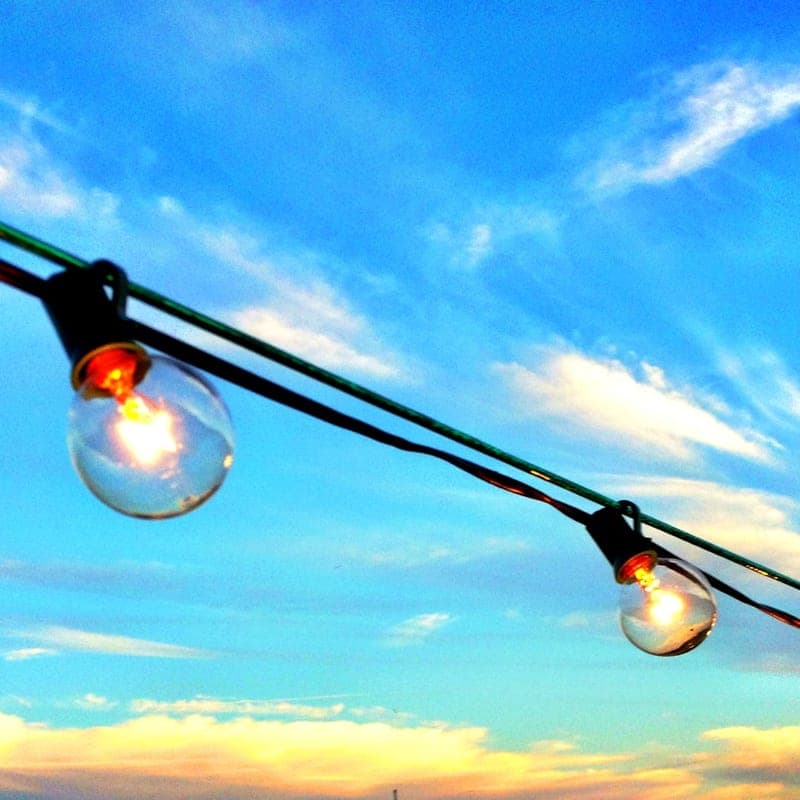 Top pickWintergreen Lighting 5 mm Wide Angle LED Mini Lights, 70 ct / 24 ft green wire70 bulbs / 24 ft, 5 mm wide angle | Wrapping trunks and branches | 9.0 | Check price on Amazon |
| 2 | 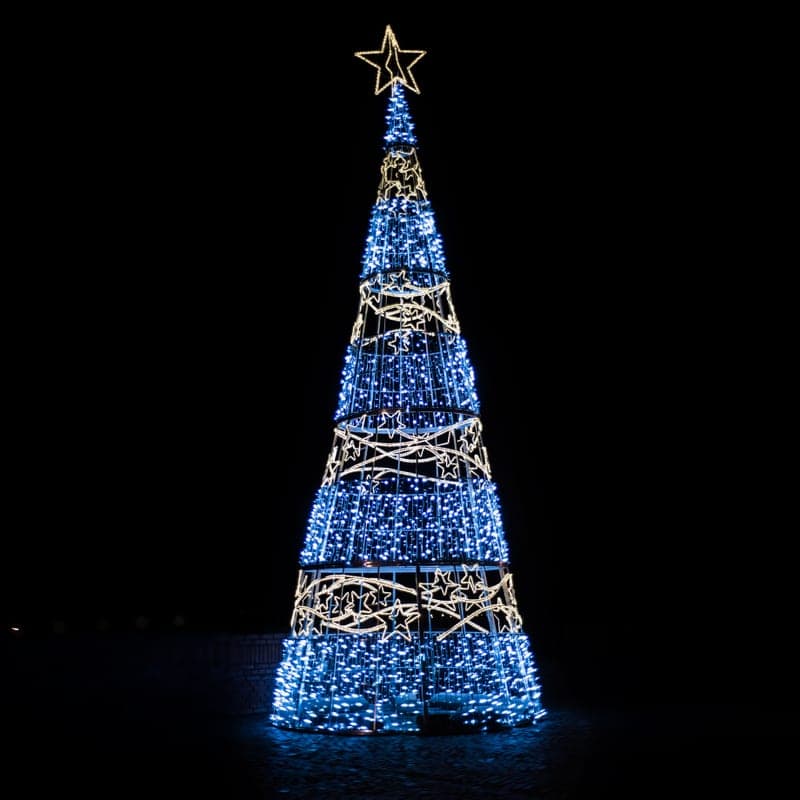 5 mm LED StretchNet Pro Tree Wrap Lights, brown wire5 mm wide angle on a stretchable net | Wrapping a trunk in minutes | 8.7 | Check price on Amazon |
| 3 | Dazzle Bright Christmas Net Lights360 LEDs, 8 modes | Bushes and hedges, done in ten minutes | 8.7 | Check price on Amazon |
| 4 | Wintergreen Lighting OptiCore C9 LED, 25 ft25 bulbs / 25 ft, 12 in spacing | Rooflines you want to keep for a decade | 9.2 | Check price on Amazon |
| 5 | 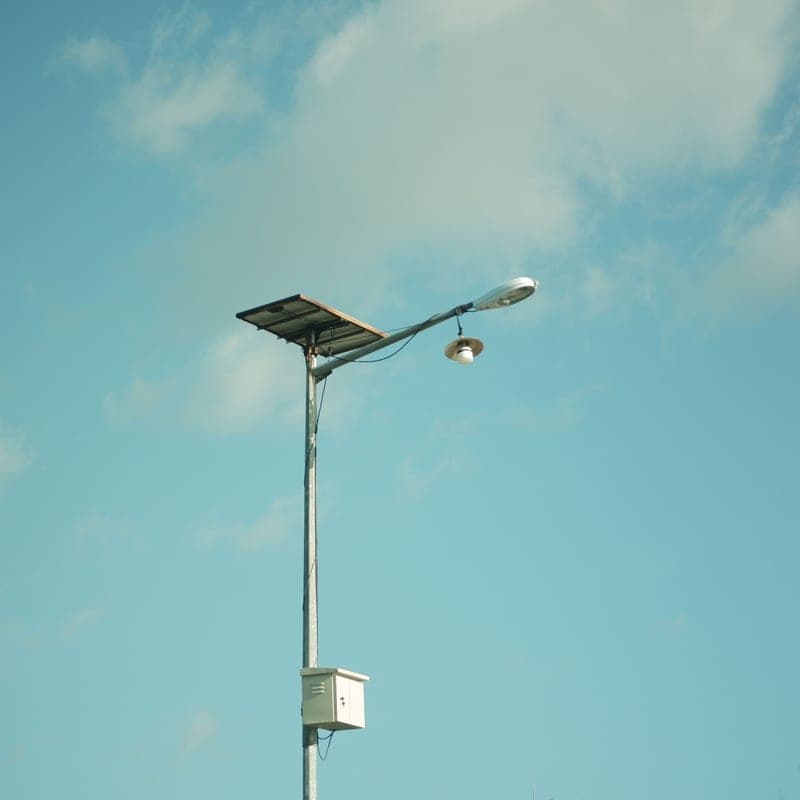 Brightown Solar Christmas String Lights, 2-packSolar panel, 8 modes, 2-pack | Anywhere you have no outlet | 7.6 | Check price on Amazon |
#ad We may earn a commission · Prices are shown by Amazon, not by us
Scores are our own editorial judgment from published specifications and buyer feedback — not aggregated user ratings, and not from hands-on testing. See how we pick.
Jump to a full review below: lights
Decide which tree problem you have
People search for tree lights as though it were one category. It is at least four, and the product that wins one is wrong for the others.
| What you are lighting | Format | Why |
|---|---|---|
| A straight trunk, 6 in wrap spacing | 5 mm wide angle string, green or brown wire | Small bulbs read as a column of light; wide-angle lens throws sideways around the trunk |
| A trunk you want done in ten minutes | Tree wrap net | Elastic net sets the spacing for you and stretches over a taper |
| A front shrub or low hedge | Net lights | Ninety seconds per bush and the spacing looks even |
| A tall mature evergreen | C9 socketed LED | Big bulbs read at distance and a socketed set is repairable up high |
| A tree with no outlet anywhere near | Solar string | The only format that needs no cord run across the lawn |
Why 5 mm wide angle is the tree format
Christmas Lights, Etc identifies 5 mm LED wide-angle lights as the type most commonly used on outdoor trees, and the reason is in the lens. It is concave rather than domed, so it spreads light sideways rather than firing it forward. Wrapped around the curve of a trunk, that is exactly what you want — the bark glows, rather than a row of bright points pointing at the street.
Wire color is the second half of the same decision and it is the one people skip. Lights are lit for about eight hours a night and the wire is visible for the other sixteen. Green wire disappears against evergreen foliage and most bark; brown wire disappears against deciduous trunks; white wire spiraled up a dark trunk is a barber pole in daylight.
Spacing: the number that decides how it looks
Christmas Lights, Etc recommends 6-inch bulb spacing for the best look on a wrapped tree, and its guidance is to carry the wrap the length of the trunk and roughly three to four feet up into the extending branches — choosing branches for an even distribution rather than trying to do all of them. Tighter wraps as you go up read as denser; a consistent 6 to 8 inch spiral around each limb reads as sparse and natural.
Shrubs are a solved problem, so solve it
Hand-wrapping a boxwood or a yew with string lights takes twenty minutes and looks uneven no matter how careful you are, because a shrub has no geometry to follow. A net drapes over the top in about ninety seconds and the spacing is set by the net. If you have three shrubs across the front of the house, nets are the single biggest time saving available in outdoor lighting. Best net lights goes into the sizing.
Tall evergreens: the ladder question
A mature evergreen at 20 feet or more is the one tree where the format changes. Mini string that high reads as almost nothing from the street, and getting it up there is the most hazardous job in the whole display. C9 at wide spacing, run vertically from the top down in a small number of long lines rather than wrapped, reads clearly and needs far less material.
It is also the one place we will tell you plainly that a professional install may be the right purchase. A 25-foot ladder against a live tree on soft winter ground is a genuinely different risk from a ladder against a wall — see ladder safety and, for the money side, DIY vs professional install cost.
Power and cords across a lawn
Trees are rarely near an outlet, and the cord run is the part of a tree display that gets improvised. Use an outdoor-rated cord of the right gauge for the distance, keep every connection up out of standing water and off the ground, and put the whole run on a timer at the house end. The specifics are in best outdoor extension cords and GFCI and outdoor lights.
How we picked
Manufacturer specifications, current retail listings and buyer feedback read in full — not hands-on testing. We have not wrapped every one of these around a tree and we are not going to imply otherwise. Where a rated-hours or construction figure is published we quote and link it; where it is not, the page says so. See methodology.
The picks in full
Top pick
Wintergreen Lighting 5 mm Wide Angle LED Mini Lights, 70 ct / 24 ft green wire
Wintergreen Lighting
#ad We may earn a commission · Prices are shown by Amazon, not by us
The commercial 5 mm wide-angle string is the format built for tree wrapping: a small concave lens that throws light sideways, on a green wire that disappears into bark and foliage in daylight.
Wrapping a tree is a different lighting problem from outlining a roof, and the bulb that solves it is different too. A roofline wants a big bulb that reads as a distinct point from the street. A trunk wants a small bulb, close together, that turns the bark into a glowing column — and that is what the 5 mm wide-angle format is for. Christmas Lights, Etc identifies 5 mm LED wide-angle lights as the type most commonly used on outdoor trees, and the reason is the lens: it is concave, so it spreads light sideways around the curve of the trunk instead of firing it into the street.
Wintergreen's 70-count set runs 24 feet on green wire. Green matters more than people expect. Lights are lit for roughly eight hours a night and the wire is visible for the other sixteen, and white wire spiraled up a dark trunk is a barber pole in daylight. Green disappears against bark and evergreen foliage; brown wire, sold in the same format, disappears against deciduous trunks.
The practical limit is length. Twenty-four feet sounds like a lot until you wrap it: at the 6-inch spiral spacing Christmas Lights, Etc recommends for the best look, a single set covers a surprisingly short stretch of a mature trunk. Buy by measured length rather than by set count, and buy connectable so the whole trunk runs off one feed.
What you give up against a socketed C9 is repairability — these are prelamped, so a failed section is a failed set. For a trunk wrap that is an acceptable trade, because the wire is doing structural work around a rough surface and the failure mode is usually abrasion rather than a dead bulb.
What works
- Wide-angle lens spreads light around the trunk rather than straight out
- Green wire is invisible against bark and foliage during the day
- Connectable, so a tall trunk is one continuous wrap from one outlet
- Small bulb means the wrap reads as a line of light, not a row of dots
What does not
- Bulbs are not individually replaceable on a prelamped set
- 24 ft per set covers less trunk than you expect once it is spiraled
- Manufacturer does not publish a rated-hours figure for this line
| Bulb | 5 mm wide angle (concave lens), LED |
|---|---|
| Set | 70 bulbs, 24 ft |
| Wire | Green (other colors sold in the same line) |
| Use | Commercial grade, outdoor |
| Connectable | Yes, end to end |
Wrapping a trunk in minutes
5 mm LED StretchNet Pro Tree Wrap Lights, brown wire
Christmas Lights, Etc
#ad We may earn a commission · Prices are shown by Amazon, not by us
A stretchable net sized for a trunk rather than a string you spiral by hand. You wrap once, the elastic takes up the slack, and the spacing comes out even without you measuring it.
The slow part of lighting a tree is not the ladder. It is spiraling a string up a trunk by hand and discovering at the top that the spacing drifted, so the bottom four feet are dense and the top four are sparse. Tree wrap net solves that mechanically: the lights are held in a net with a stretchable cord woven through it, so you hold one edge against the trunk, wrap once, and the elastic pulls the spacing even.
Christmas Lights, Etc describes the StretchNet Pro as expandable to fit a variety of trunk diameters, which is the whole point — a trunk tapers, and a fixed net would be tight at the bottom and loose at the top. The brown wire version is the one to buy for a deciduous trunk; green is right if you are wrapping an evergreen or a column against foliage.
The honest limitation is that this is a trunk product and nothing else. It does not go up into branches, it does not follow a fork, and on a multi-stem or heavily gnarled tree it will not sit flat. For those, hand-spiraled 5 mm string is still the answer, and Christmas Lights, Etc's own guidance is to carry the wrap up the trunk and roughly three to four feet into the extending branches, choosing branches rather than trying to do all of them.
Price per lit foot is higher than plain string. What you buy is time, and a finish that looks deliberate rather than improvised — which matters most on the one specimen tree at the front of the house that everybody actually looks at.
What works
- Even spacing without measuring — the net sets it for you
- Wraps a trunk in a fraction of the time a hand-spiraled string takes
- Brown wire disappears against bark in daylight
- Stretch means one size fits a range of trunk diameters
What does not
- Only works on a reasonably straight, cylindrical trunk
- Costs more per lit foot than a plain string
- Useless on branches — it is a trunk product
| Format | Net with an elastic cord woven through |
|---|---|
| Bulb | 5 mm wide angle LED |
| Wire | Brown (green also sold) |
| Fit | Expandable across a range of trunk diameters |
| Use | Outdoor tree trunks and columns |
Bushes and hedges, done in ten minutes
Dazzle Bright Christmas Net Lights
Dazzle Bright
#ad We may earn a commission · Prices are shown by Amazon, not by us
A mesh of LEDs you throw over a shrub. It is the highest ratio of visible result to time spent of anything on this site, and it is why net lights belong in most first displays.
Net lights solve one problem completely: covering a bush. Wrapping a shrub by hand takes twenty minutes and looks hand-wrapped. A net takes about ninety seconds and looks even, because it is a grid.
Dazzle Bright's sets run 360 LEDs in a mesh with eight modes. The mode controller is more useful than it sounds — on a bush the steady setting is almost always right, but the slow-fade setting reads well on a hedge line where a steady wall of light looks flat.
Where nets fail is geometry. They want a roughly rectangular volume. A tall juniper, an irregular ornamental grass, or a sparse young shrub will let the net sag into it and you get a lumpy result that reads as cheap. Measure the bush: if it is meaningfully taller than the net is wide, buy string and wrap it.
Takedown is the quiet advantage. A net comes off in one motion and folds. A wrapped shrub has to be unwrapped, in the cold, in January, and that is the job everyone underestimates.
What works
- Covers a shrub in one throw — no wrapping, no ladder
- Even spacing looks deliberate in a way hand-wrapped string never does
- Packs down flat, unlike a wrapped bush that has to be unwrapped
What does not
- Only works on roughly cube-shaped shrubs; it sags off tall or sparse ones
- A snagged mesh is harder to untangle than a string
- Fixed LEDs — no bulb replacement
| Type | Net / mesh |
|---|---|
| LED count | 360 (per the manufacturer listing) |
| Modes | 8 |
| Colors | Multicolor and warm white options |
| Use | Outdoor rated |
| Connectable | Yes on most sets |
Rooflines you want to keep for a decade
Wintergreen Lighting OptiCore C9 LED, 25 ft
Wintergreen Lighting
#ad We may earn a commission · Prices are shown by Amazon, not by us
The commercial-grade C9 most professional installers use, sold in retail quantities. Thick polycarbonate lenses and a green commercial-gauge wire that survives being handled every year.
C9 is the big, faceted, traditional-looking bulb — the one that reads as Christmas lights from the street rather than as a glow. Wintergreen's OptiCore line is the version professional installers buy, and the reason is not brightness. It is that the lens is polycarbonate rather than glass, and the manufacturer rates the bulbs at 60,000 hours. A season is roughly 45 days at eight hours, so about 360 hours. The arithmetic on that rating is generous enough that bulb failure stops being the thing that ends a strand's life; handling damage is.
The practical case for buying commercial-grade C9 is replaceability. Each bulb screws into an E17 socket. When one dies, you replace one bulb for a couple of dollars instead of pulling a 100-light strand off the roof. Over five seasons that is the whole argument, and it is why the same boxes keep appearing on the same houses.
The honest counterpoint: this is expensive per foot, and it is sold in 25 ft sets. A 180 ft roofline is eight boxes plus spare bulbs, which is a real number. If you are lighting one gable over the front door and you are not sure you will do it again next year, a cheaper set is the right call and we would not argue.
One buying note that trips people up — C9 sets and C9 bulbs are sold separately as often as together. Check whether the listing you are on is a complete lit set or a box of replacement bulbs, because the photos look nearly identical.
What works
- Bulbs are replaceable individually — one failure is not a dead strand
- Polycarbonate lens survives being dropped off a ladder
- Same product line pros buy, so spare bulbs stay available year to year
- End-to-end connectable, so long roof runs are one circuit decision
What does not
- Costs several times what a big-box 100-count set costs
- Green wire is visible against white fascia in daylight
- 25 ft per set means a 180 ft roofline is eight boxes
| Bulb | C9, E17 base, LED |
|---|---|
| Set length | 25 ft, 25 bulbs |
| Spacing | 12 in |
| Lens | Polycarbonate (manufacturer states 200x the impact strength of glass) |
| Rated life | 60,000 hours (manufacturer figure) |
| Wire | Green, commercial gauge |
Anywhere you have no outlet
Brightown Solar Christmas String Lights, 2-pack
Brightown
#ad We may earn a commission · Prices are shown by Amazon, not by us
Solar solves exactly one problem — the far corner of the yard with no power — and it is genuinely good at that. It is a poor substitute for a wired run anywhere an outlet exists.
Solar Christmas lights have a reputation problem, and most of it is deserved for the wrong reason. They are not bad products. They are products bought for the wrong job.
The right job is the tree at the end of the driveway, the mailbox, the fence line fifty feet from the house — anywhere running a cord means either a trip hazard or a trench. For that, solar is the only reasonable answer and it works.
The wrong job is the front of the house, where an outlet exists. December has the shortest days of the year and the lowest sun angle, which is precisely when a solar panel charges worst and you want the lights on longest. Brightown states 8-10 hours on a full charge; in late December, in the northern half of the country, after a cloudy day, expect meaningfully less. That is physics, not a product defect.
Practical placement note: the panel needs actual sky, not shaded sky, and it needs brushing clear after snow. A panel under two inches of snow is an off switch.
What works
- Zero wiring, zero circuit load, no cord across the lawn
- Reaches parts of the yard a cord realistically cannot
- No electricity cost at all
What does not
- December is the worst month of the year for solar charging
- Output is visibly dimmer than mains-powered LEDs
- A snowed-over panel produces nothing until you clear it
| Power | Solar panel with integrated battery |
|---|---|
| Runtime | Manufacturer states 8-10 hours on a full charge |
| Modes | 8 |
| Pack | 2 sets |
| Use | Outdoor rated |
Common questions
What kind of Christmas lights are best for outdoor trees?
5 mm wide-angle LED mini lights on green or brown wire for wrapping trunks and branches — the concave lens spreads light around the curve of the wood instead of firing it forward. Net lights for shrubs and low hedges, and C9 on a socketed string for tall mature evergreens where a small bulb would not read from the street.
How many lights do I need to wrap a tree?
It depends on trunk diameter and how far up the branches you go, so measure rather than guess: wrap a tape around the trunk at your chosen pitch and multiply. As a planning rule, Christmas Lights, Etc recommends 6-inch bulb spacing for the best look and wrapping the trunk plus roughly three to four feet into the extending branches.
What color wire should tree lights have?
Green for evergreens and most bark, brown for deciduous trunks. The wire is visible in daylight for roughly twice as many hours as the lights are lit at night, and white wire spiraled up a dark trunk is the most common visual mistake in tree lighting.
Are tree wrap net lights better than string lights?
For a straight cylindrical trunk, yes — the net sets the spacing for you and stretches over the taper, so a trunk is done in minutes with even coverage. For branches, forks and gnarled multi-stem trees the net will not sit flat and hand-spiraled string is still the answer.
Can you leave Christmas lights on a tree all year?
You can physically, but seasonal sets are not specified for twelve months of UV and the tree will grow around the wire. On a living tree, wire left in place for years can girdle a limb as it thickens. Take them down, and wind each run as it comes off rather than coiling a pile afterwards.
Sources
Every specification quoted on this page comes from the manufacturer’s own published information or a current retail listing, linked below. Where a figure is not published, we say so rather than estimating it.