Outdoor Christmas Lights
Warm white vs cool white Christmas lights
The most consequential decision in outdoor lighting, made most often by accident at a store shelf.
Mike M. — The hands-on owner behind Iron Mako Media.
Published
This page contains affiliate links. If you buy through them we may earn a commission at no cost to you, and it never decides what we recommend. How this site is funded.
The verdict first: warm white on brick, wood, stone and warm-toned siding — which is most houses. Cool white on gray, white, black or modern facades, and where you specifically want a crisp, icy look. The most common regret is cool white against warm brick, where it reads distinctly blue.
What the two actually look like
Warm white is the color of an incandescent bulb: yellow-leaning, soft, and close to candlelight. Cool white leans blue-white and reads as brighter for the same output because our eyes perceive cooler light that way.
Neither is more 'correct'. But they interact very differently with the material behind them, and that interaction is what people are actually judging when they say a display looks right or wrong.
Match it to the house
| House material | Recommended | Why |
|---|---|---|
| Red or brown brick | Warm white | Cool white reads blue against warm masonry |
| Wood siding or cedar | Warm white | Enhances the natural warmth of the material |
| Beige or cream siding | Warm white | Cool white makes beige look gray and washed out |
| Gray siding | Either, cool white is crisper | Gray is neutral, so both read cleanly |
| White or light modern facade | Cool white | Crisp and deliberate; warm can look yellow |
| Black or dark modern | Cool white | Maximum contrast, reads as architectural |
| Stone | Warm white | Picks up the warm tones in most stone |
Snow changes the answer
If you get reliable snow cover, factor it in. Snow is highly reflective and slightly blue in shadow, and cool white on snow amplifies that — which can look genuinely beautiful and crisp, or cold and hospital-like, depending on the house.
Warm white on snow is the safer choice: the contrast between warm light and cool snow is pleasant rather than reinforcing, and it is what most people picture when they picture a snowy lit house.
Why you cannot mix and cannot fix it later
Neither 'warm white' nor 'cool white' is a standardized specification. Two brands' warm white will differ, and sometimes noticeably, because nothing constrains them to a common color temperature.
The practical consequence is strict: buy every set for a continuous run from one product line, in one order. The classic failure is buying four sets in November, running short, and buying two more in December from whatever the store has restocked — which is how one gutter ends up with two whites in it.
Mixing deliberately by zone can work. Warm white on the house and cool white on a single blue-lit tree is a design choice. Warm and cool alternating along the same gutter is not.
The hedge: color-changing sets
If you genuinely cannot decide, many current LED sets switch between warm and cool white on a controller, and some do full color change. That is one purchase covering both looks, and it removes the decision entirely.
The trade-off is that color-changing sets are almost always molded mini strings rather than socketed C9 — so you gain flexibility and lose repairability. See commercial vs consumer grade.
What to buy
The products that fit the advice above, chosen by the process on our methodology page. We have not hands-on tested them; specifications are the manufacturers’ own.
Quick picks
| # | Product | Best for | Score | Price |
|---|---|---|---|---|
| 1 | 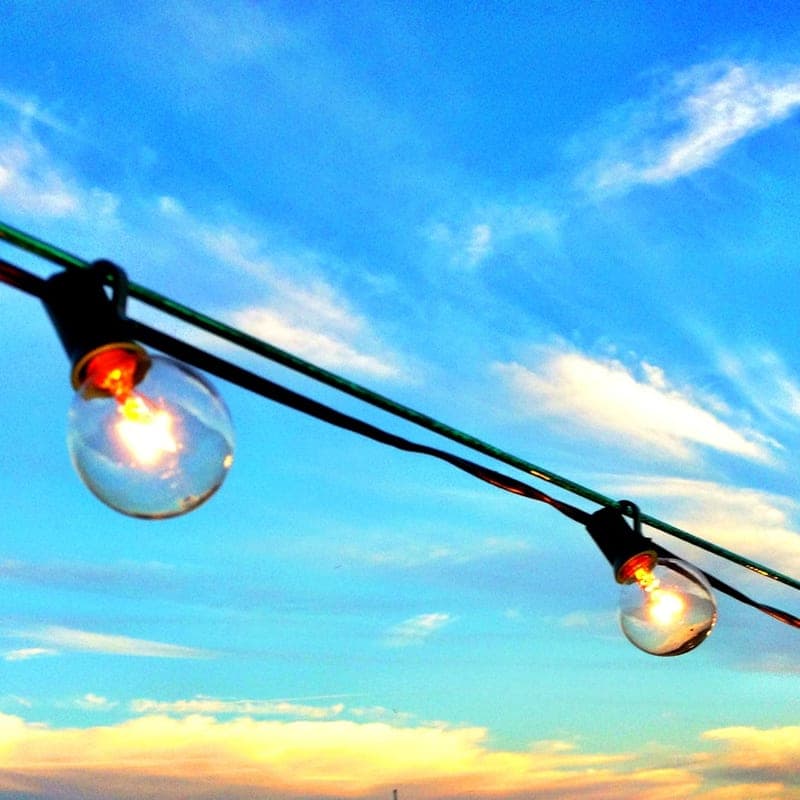 Top pickWintergreen Lighting OptiCore C9 LED, 25 ft25 bulbs / 25 ft, 12 in spacing | Rooflines you want to keep for a decade | 9.2 | Check price on Amazon |
| 2 | Brizled LED Christmas String LightsHigh LED count per set, multiple modes | A first display on a budget | 8.0 | Check price on Amazon |
| 3 | 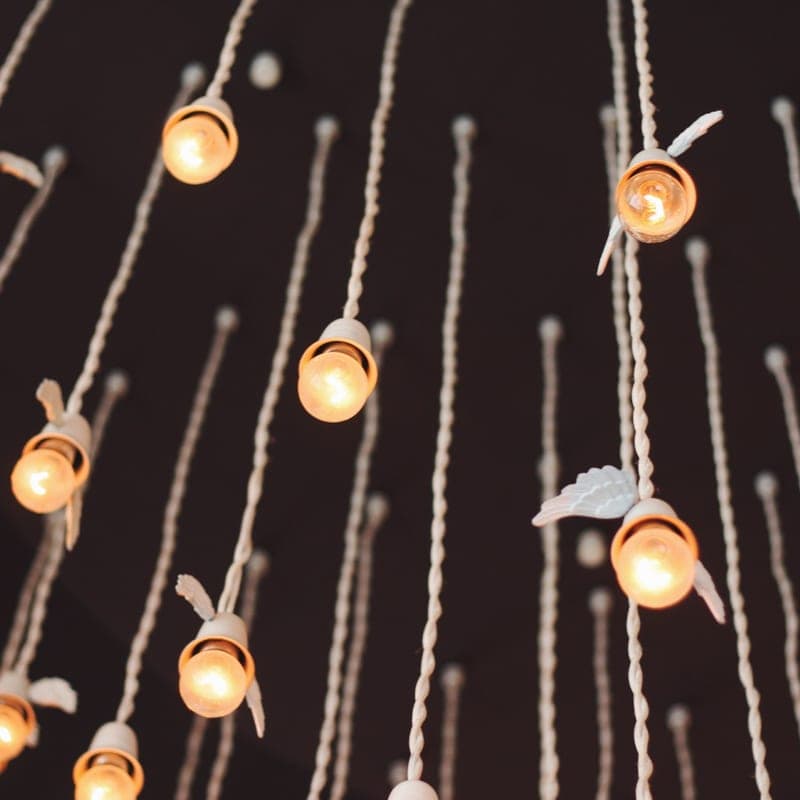 Brightown Icicle LightsFull color line, connectable | Long eave runs in one purchase | 8.2 | Check price on Amazon |
#ad We may earn a commission · Prices are shown by Amazon, not by us
Scores are our own editorial judgment from published specifications and buyer feedback — not aggregated user ratings, and not from hands-on testing. See how we pick.
Jump to a full review below: lights
The picks in full
Top pick
Wintergreen Lighting OptiCore C9 LED, 25 ft
Wintergreen Lighting
#ad We may earn a commission · Prices are shown by Amazon, not by us
The commercial-grade C9 most professional installers use, sold in retail quantities. Thick polycarbonate lenses and a green commercial-gauge wire that survives being handled every year.
C9 is the big, faceted, traditional-looking bulb — the one that reads as Christmas lights from the street rather than as a glow. Wintergreen's OptiCore line is the version professional installers buy, and the reason is not brightness. It is that the lens is polycarbonate rather than glass, and the manufacturer rates the bulbs at 60,000 hours. A season is roughly 45 days at eight hours, so about 360 hours. The arithmetic on that rating is generous enough that bulb failure stops being the thing that ends a strand's life; handling damage is.
The practical case for buying commercial-grade C9 is replaceability. Each bulb screws into an E17 socket. When one dies, you replace one bulb for a couple of dollars instead of pulling a 100-light strand off the roof. Over five seasons that is the whole argument, and it is why the same boxes keep appearing on the same houses.
The honest counterpoint: this is expensive per foot, and it is sold in 25 ft sets. A 180 ft roofline is eight boxes plus spare bulbs, which is a real number. If you are lighting one gable over the front door and you are not sure you will do it again next year, a cheaper set is the right call and we would not argue.
One buying note that trips people up — C9 sets and C9 bulbs are sold separately as often as together. Check whether the listing you are on is a complete lit set or a box of replacement bulbs, because the photos look nearly identical.
What works
- Bulbs are replaceable individually — one failure is not a dead strand
- Polycarbonate lens survives being dropped off a ladder
- Same product line pros buy, so spare bulbs stay available year to year
- End-to-end connectable, so long roof runs are one circuit decision
What does not
- Costs several times what a big-box 100-count set costs
- Green wire is visible against white fascia in daylight
- 25 ft per set means a 180 ft roofline is eight boxes
| Bulb | C9, E17 base, LED |
|---|---|
| Set length | 25 ft, 25 bulbs |
| Spacing | 12 in |
| Lens | Polycarbonate (manufacturer states 200x the impact strength of glass) |
| Rated life | 60,000 hours (manufacturer figure) |
| Wire | Green, commercial gauge |
A first display on a budget
Brizled LED Christmas String Lights
Brizled
#ad We may earn a commission · Prices are shown by Amazon, not by us
High-count LED string sets at big-box prices, with the multi-function controllers and color-changing options a first display usually wants. Not commercial hardware, and not priced like it.
Most first displays are mini LED strings, and Brizled is one of the brands that does them well enough at a low price. If your goal is to cover a lot of roofline and two bushes this weekend without spending several hundred dollars, this is the honest answer, and the commercial C9 recommendation above is the wrong one for you.
The meaningful feature is the controller. Many of these sets include warm-white/cool-white switching or full color-change, which means one purchase covers two looks. Deciding between warm and cool is the single most common regret in outdoor lighting, and a set that does both removes the decision.
What you give up is repairability. The bulbs are molded into the wire, so a dead section is a dead set — you replace it, you do not fix it. And the wire is light gauge, which matters at takedown more than at install: wound carelessly onto a reel, thin wire kinks, and a kink is where next year's failure starts.
We have not run these across multiple seasons, and the manufacturer does not publish a rated-hours figure, so we are not going to tell you how long they last. Treat them as a two-to-four season purchase and the value is good.
What works
- Cheapest route to a lot of covered feet
- Color-changing and warm/cool-switching options in one set
- Connectable, so a run is not a per-set outlet problem
What does not
- Bulbs are molded in — a failed section is a failed strand
- Wire gauge is light; it does not enjoy being wound badly onto a reel
- No published hours rating, so longevity is a guess
| Bulb | Mini LED, fixed (not replaceable) |
|---|---|
| Modes | Multi-function controller on most sets |
| Use | Indoor / outdoor rated |
| Connectable | Yes, on most sets |
| Rated life | Not published for this line |
Long eave runs in one purchase
Brightown Icicle Lights
Brightown
#ad We may earn a commission · Prices are shown by Amazon, not by us
Brightown runs a full icicle line, which matters because buying every set of a long run from the same line is how you avoid two shades of white along one gutter.
The reason to care which brand of icicle lights you buy is color consistency. A 40-foot gutter is three or four sets. Buy them from three different brands and you will have three different warm whites in a row, which is more obvious at night than it sounds.
Brightown maintains a broad icicle line across the standard colors, so a long run can be bought as matched sets from one listing. That is the practical reason to pick it over a cheaper one-off.
Everything else is generic to the format: straight horizontal runs only, connectable end to end, and a storage problem that reels solve.
No rated-hours figure is published for this line, so we are not quoting one.
What works
- One product line covers a long run, so the whites match
- Color-changing options exist within the same line
- Widely stocked, so replacing one set mid-season is realistic
What does not
- Same raked-gable limitation as every icicle set
- Same storage tangling problem
| Type | Icicle, varied drop lengths |
|---|---|
| Colors | Full line — warm white, cool white, multicolor, color-changing |
| Use | Outdoor rated |
| Connectable | Yes |
Common questions
Should Christmas lights be warm white or cool white?
Warm white on brick, wood, stone and beige siding, which covers most houses. Cool white on gray, white, black or modern facades. The common regret is cool white against warm brick, where it reads blue.
Can you mix warm white and cool white Christmas lights?
Not within a run — it reads as a mistake. Deliberately by zone, such as warm on the house and cool on one feature tree, can work as a design choice. Within one gutter line, never.
Why do my Christmas lights look like two different colors?
Almost certainly because the sets came from different product lines or brands. Warm white is not standardized, so two makers' versions differ. Buying an entire run in one order from one line is the only reliable prevention.
Which looks better in snow?
Warm white, for most people — the contrast between warm light and cool snow is pleasant. Cool white on snow reinforces the blue in shadowed snow, which can look either crisp or clinical depending on the house.
Sources
Every specification quoted on this page comes from the manufacturer’s own published information or a current retail listing, linked below. Where a figure is not published, we say so rather than estimating it.