Outdoor Christmas Lights
The best commercial-grade outdoor Christmas lights
Commercial grade is a construction claim, not a brightness claim. Four published build details tell you whether a set has earned the label.
Mike M. — The hands-on owner behind Iron Mako Media.
Published
This page contains affiliate links. If you buy through them we may earn a commission at no cost to you, and it never decides what we recommend. How this site is funded.
Quick picks
| # | Product | Best for | Score | Price |
|---|---|---|---|---|
| 1 | 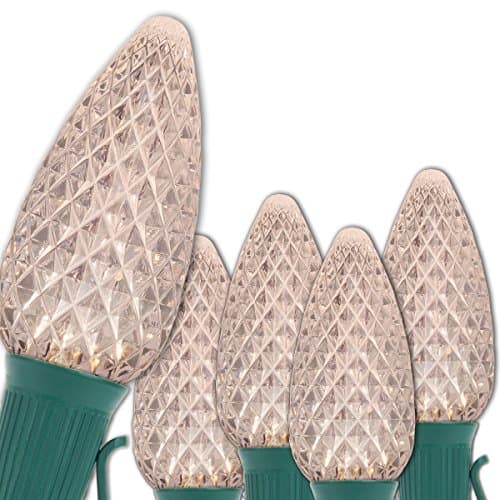 Top pickWintergreen Lighting OptiCore C9 LED, 25 ft25 bulbs / 25 ft, 12 in spacing | Rooflines you want to keep for a decade | 9.2 | $49.99 · View on Amazon |
| 2 | 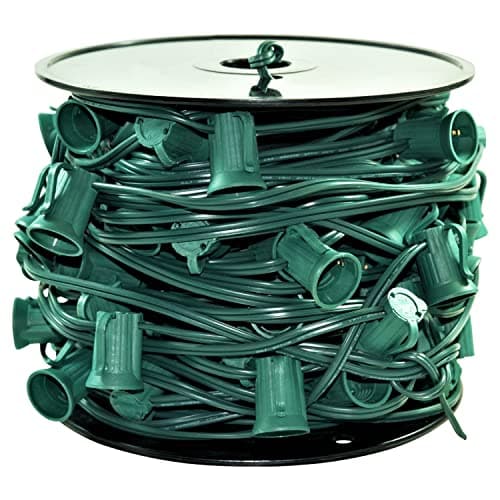 C9 socket wire spool, SPT-1, 12 in spacing100 or 1000 ft spool, E17 sockets, SPT-1 | A roofline you want cut to the exact foot | 9.0 | $59.98 · View on Amazon |
| 3 | 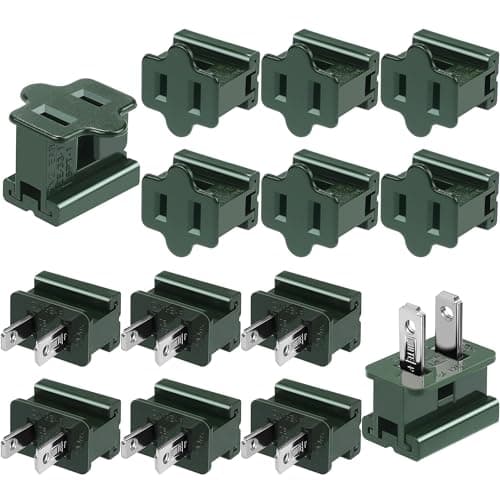 SPT-1 zip plugs, male and femaleSlide-on SPT-1, no wire stripping | Terminating a cut run | 8.7 | $12.99 · View on Amazon |
| 4 | 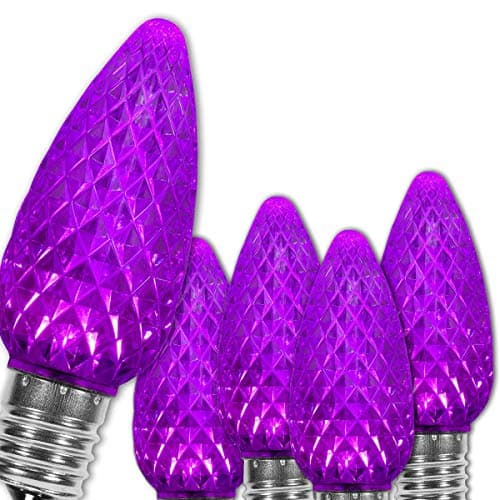 Wintergreen Lighting OptiCore C9 replacement bulbs, box of 25E17 base, box of 25 | Keeping an existing C9 run alive | 9.0 | $39.99 · View on Amazon |
| 5 | 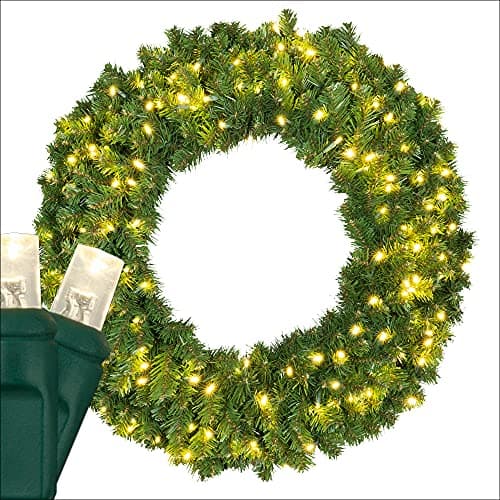 Red Sleigh 36 in Sequoia Fir Commercial-Grade Pre-Lit Wreath, 150 warm white LED36 in, 150 LED, 320 tips, 11 W | A gable, a garage front or a two-story wall | 8.9 | $224.99 · View on Amazon |
#ad We may earn a commission · Price as of October 10, 2026
Scores are our own editorial judgment from published specifications and buyer feedback, scored against the same criteria across this category. See how we pick.
Jump to a full review below: lights
The short version: the commercial-grade set worth buying for a house is a C9 LED string with one-piece molded sockets and polycarbonate lenses — our top pick is Wintergreen's OptiCore C9, which publishes both. If your roofline has an awkward length, the genuinely professional answer is not a string at all: it is a spool of C9 socket wire plus slide-on SPT-1 plugs, cut to the exact foot. That is how installers do every job, and it costs less per foot than buying four strings and coiling the excess.
What commercial grade actually means
The phrase is not regulated, so plenty of retail sets carry it. The Christmas Light Emporium's professional-versus-retail guide is unusually specific about the real differences, and they are all construction details rather than performance claims.
| Detail | Professional grade | Retail grade |
|---|---|---|
| Socket and bulb | Single-molded one-piece, prelamped epoxy construction — the LED lens is fused into the socket with epoxy | Two-piece: a separate bulb held in its socket by friction alone |
| Lens material | Polycarbonate | Polystyrene plastic, or lower-grade PVC |
| Conductor | Copper wire | Copper alloy blends |
| LED | Surface-mount diodes (SMD) | Low-output LED diodes |
| Warranty | Published multi-year term (e.g. 3 years on 5 mm LED) | Typically far shorter |
The one-piece socket is the whole argument
Every failure mode of an outdoor light string starts at the socket. A two-piece bulb is held by friction, so it works loose in wind, and the gap between lens and socket is a path for water to reach the contact. A one-piece molded socket with the lens epoxied in has no gap and nothing to work loose. You lose bulb replaceability — a dead lamp is a dead section rather than a 40-cent fix — and in exchange you get a strand that survives the weather.
That trade runs the other way on a replaceable-bulb C9 system, where the socket takes a standard E17 lamp and a failure is a bulb swap. Both designs are legitimate; what is not legitimate is a two-piece friction socket sold as commercial grade. If you are weighing the two, replacing bulbs and fuses covers what a repairable system is actually worth over a decade.
Polycarbonate vs polystyrene, in one sentence each
- Polycarbonate is the material family used in safety glasses. It takes a UV stabiliser well, resists impact in cold, and does not go chalky after three seasons on a south-facing eave.
- Polystyrene is cheap, clear and brittle. It yellows under UV and it cracks when a ladder or a hailstone finds it in January.
- What you will see in the listing: professional sets name the material. Retail sets say durable plastic. The absence of a named material is itself information.
Efficiency, with the published number
The energy case is not marketing. The Emporium publishes a direct comparison for its professional C9 line: a ProCore LED C9 draws 0.84 watts against 7 watts for an incandescent C9 — roughly 88 percent less per bulb. On a 200-bulb roofline that is 168 watts against 1,400 watts, which is the difference between one circuit comfortably carrying the whole display and tripping a breaker on the first cold night.
| Bulbs | LED C9 at 0.84 W | Incandescent C9 at 7 W |
|---|---|---|
| 100 | 84 W | 700 W |
| 200 | 168 W | 1,400 W |
| 400 | 336 W | 2,800 W |
The 15-amp circuit working budget is about 1,440 watts, so 200 incandescent C9s are already at the limit before a single inflatable is plugged in. The full arithmetic, including the separate end-to-end connection limit, is in how many lights on one circuit.
Socket wire: the format most homeowners never consider
Pro installers rarely buy pre-made strings. They buy a spool of SPT-1 socket wire at a fixed spacing — 12 inches is standard for C9 — cut it to the measured length of each roof segment, and terminate each end with a slide-on zip plug that needs no wire stripping. It is the reason a professional install has no coils of excess wire behind the downspout and no dark gaps at the corners.
- Measure each segment separately — front gable, left eave, right eave, garage return — rather than measuring the whole house as one number. Measuring your roofline has the method.
- Cut the socket wire to each segment plus a short tail for the drop to the next run.
- Fit a male zip plug on one end and a female on the other, so segments chain in the direction of the power source.
- Lamp it on the ground. Nothing should be bulbed or tested while you are standing on a ladder.
Is commercial grade worth it on a house?
It is worth it on anything you intend to leave up for six weeks a year for a decade, and it is not worth it on anything you will replace in three years because you got bored of it. A roofline is the first case. A novelty inflatable or a short accent run is the second. The sharpest version of this argument, with the cost-per-season arithmetic, is in commercial vs consumer grade.
How we picked
Published construction specifications and manufacturer wattage figures, read against the retail listings for the same bulb shapes. Every figure is linked below. See methodology.
The picks in full
Top pick
Wintergreen Lighting OptiCore C9 LED, 25 ft
5 mm Wide Angle LED
The commercial-grade C9 most professional installers use, sold in retail quantities. Thick polycarbonate lenses and a green commercial-gauge wire that survives being handled every year.
C9 is the big, faceted, traditional-looking bulb — the one that reads as Christmas lights from the street rather than as a glow. Wintergreen's OptiCore line is the version professional installers buy, and the reason is not brightness. It is that the lens is polycarbonate rather than glass, and the manufacturer rates the bulbs at 60,000 hours. A season is roughly 45 days at eight hours, so about 360 hours. The arithmetic on that rating is generous enough that bulb failure stops being the thing that ends a strand's life; handling damage is.
The practical case for buying commercial-grade C9 is replaceability. Each bulb screws into an E17 socket. When one dies, you replace one bulb for a couple of dollars instead of pulling a 100-light strand off the roof. Over five seasons that is the whole argument, and it is why the same boxes keep appearing on the same houses.
The honest counterpoint: this is expensive per foot, and it is sold in 25 ft sets. A 180 ft roofline is eight boxes plus spare bulbs, which is a real number. If you are lighting one gable over the front door and you are not sure you will do it again next year, a cheaper set is the right call and we would not argue.
One buying note that trips people up — C9 sets and C9 bulbs are sold separately as often as together. Check whether the listing you are on is a complete lit set or a box of replacement bulbs, because the photos look nearly identical.
What works
- Bulbs are replaceable individually — one failure is not a dead strand
- Polycarbonate lens survives being dropped off a ladder
- Same product line pros buy, so spare bulbs stay available year to year
- End-to-end connectable, so long roof runs are one circuit decision
What does not
- Costs several times what a big-box 100-count set costs
- Green wire is visible against white fascia in daylight
- 25 ft per set means a 180 ft roofline is eight boxes
| Bulb | C9, E17 base, LED |
|---|---|
| Set length | 25 ft, 25 bulbs |
| Spacing | 12 in |
| Lens | Polycarbonate (manufacturer states 200x the impact strength of glass) |
| Rated life | 60,000 hours (manufacturer figure) |
| Wire | Green, commercial gauge |
A roofline you want cut to the exact foot
C9 socket wire spool, SPT-1, 12 in spacing
Bulk C9 socket wire
The only genuinely trimmable Christmas light: continuous SPT-1 socket wire on a spool with no plugs fitted, so every run is cut to the length of the actual run and terminated by you.
This is what trimmable actually means in Christmas lighting, and it is a format rather than a feature on a box. A spool is continuous socket wire with no plug on either end. HolidayLEDs sells it in 100 ft and 1000 ft lengths and states plainly that the C9 SPT-1 socket spools are there to allow custom light strings. You measure the gutter, cut the wire between two sockets, fit a plug, and the run is the length of the gutter.
Christmas Light Source is explicit about which lights can be treated this way: C7, C9 and E26 medium-base cords with 20, 18, 16 or 14 AWG lamp cord wiring can be cut to custom lengths and terminated. Mini lights cannot, because their small wiring harnesses are wired in series — cutting one is how you get a dead strand rather than a shorter one.
The practical reason to do this is the thing that annoys people most about retail sets: the last set on a run is always the wrong length. You either stop three feet short of the corner or you have a loop of slack zip-tied behind the downspout. On a spool there is no last set. There is one run, cut where the gutter ends.
Be honest about the part the product photos leave out. You are fitting the plugs. That means a wire cutter, the right SPT-1 zip plugs, and attention to which conductor is which — Christmas Light Source's own advice is to consult a master electrician if you have questions and to check your work. If that sentence makes you uneasy, buy sets. If you have rewired a lamp, this is easier than that.
Cost is the other half of the case. Per foot, spool plus bulbs plus plugs lands under the equivalent length in retail 25 ft sets, and the gap widens the longer the roofline. Under roughly 50 ft of roof it is not worth the learning curve. Over roughly 100 ft it is the obvious answer, and it is how professional installers buy.
What works
- Every run is cut to the measured length, so no bunched slack at the end of a gutter
- One continuous run across a long roofline instead of eight sets and eight plug joints
- Replaceable bulbs and replaceable sockets — nothing about it is disposable
- Cheaper per foot than buying the same length in retail sets
What does not
- You fit every plug yourself, which is the part most people have never done
- Bulbs are a separate purchase and a separate cost
- Amperage per run is your calculation, not a number printed on a box
- No returns on 140 ft of wire you cut wrong
| Format | Continuous socket wire on a spool, no plugs fitted |
|---|---|
| Spool lengths | 100 ft or 1000 ft (HolidayLEDs published options) |
| Socket base | C9 / E17 intermediate |
| Spacing | 12 in is the common stock spacing; 6, 15, 18 and 24 in also sold |
| Wire | SPT-1 zip cord |
| Bulbs | Sold separately — a spool is wire and sockets only |
Terminating a cut run
SPT-1 zip plugs, male and female
Gilbert-style SPT-1 plugs
The small part that makes a spool usable. Slide-on SPT-1 plugs pierce the zip cord as they close, so a cut end becomes a finished end with a pair of pliers and no stripping.
If you cut socket wire you have created two unfinished ends, and the plug is how you finish them. The slide-on SPT-1 plug — sold as a Gilbert plug or a vampire plug — has two internal blades. You push the zip cord in, squeeze the body shut with pliers, and the blades pierce the insulation to make contact. There is no stripping and there are no screws.
Christmas Light Source's guidance on cut cords is to choose a proper plug, and to deal with the other end either by fitting a female plug or by closing it off with electrical tape or liquid electrical tape. A female plug is the better call in almost every case, because it means next December you can add a run to the end rather than pulling the whole thing down.
The one specification that matters is the wire type, and it is the one people get wrong. SPT-1 and SPT-2 describe the insulation thickness of the zip cord. An SPT-1 plug on SPT-2 wire will not close correctly, and the fix is buying the right plugs rather than forcing it. Check the spool listing for which it is before ordering, and buy a few more plugs than you need.
Order these with the spool, not after it. The most common way this project stalls is a roofline of cut socket wire sitting in the garage in the second week of December because the plugs are three days out.
What works
- No stripping, no screw terminals, no soldering — squeeze it shut and it is done
- Female plugs let you extend a run next season instead of rebuying it
- Sold in bulk for cents each, so spares cost nothing
What does not
- SPT-1 plugs on SPT-2 wire (or the reverse) will not seat properly — check before ordering
- A cut end left unterminated is a live hazard; this is not an optional accessory
- Getting the first one right takes a practice attempt on an offcut
| Fits | SPT-1 zip cord — SPT-1 and SPT-2 plugs are not interchangeable |
|---|---|
| Types | Male (line end) and female (tail end, for extending a run later) |
| Install | Slide-on; internal blades pierce the insulation when squeezed shut |
| Tooling | Wire cutter and pliers |
Keeping an existing C9 run alive
Wintergreen Lighting OptiCore C9 replacement bulbs, box of 25
Wintergreen Lighting
The reason to own socket-based C9 in the first place. A box of 25 E17 bulbs turns a dead spot on the roof into a five-minute fix instead of a re-install.
Buy a box of these at the same time you buy the lights. That is the whole recommendation.
The E17 base is a genuine standard, so a Wintergreen bulb will screw into another brand's C9 socket. That matters in year four, when the set you originally bought has been discontinued and you have one dark bulb over the garage.
Match the finish, though. Faceted bulbs have a cut-glass texture that catches light; smooth or ceramic bulbs are opaque. Put one faceted bulb in a run of twenty-four smooth ones and it is the only thing anyone sees.
If your lights are molded mini strings rather than socketed C9, none of this applies and there is nothing to replace. That difference is the strongest practical argument for socketed C9 over cheap strings, and it only shows up after a couple of seasons.
What works
- Cross-brand compatible — E17 is E17
- One dead bulb costs a couple of dollars, not a whole strand
- Buying a spare box with the original set is cheap insurance
What does not
- Only useful if your sets have sockets — molded mini strings cannot use them
- Faceted and smooth finishes look different; ordering the wrong one is obvious
| Base | E17 (C9 standard) |
|---|---|
| Pack | Box of 25 |
| Type | LED, faceted and smooth/opaque options |
| Rated life | 60,000 hours (manufacturer figure) |
| Fits | Any standard E17 C9 socket, any brand |
A gable, a garage front or a two-story wall
Red Sleigh 36 in Sequoia Fir Commercial-Grade Pre-Lit Wreath, 150 warm white LED
Red Sleigh
The same commercial construction scaled up to the size that actually reads from the street. Three feet is the first diameter that holds its own on a large facade instead of disappearing into it.
Scale is the mistake people make with wreaths, and it is almost always the same mistake in the same direction. A 24-inch wreath is the right size for a front door seen from six feet away. Put it on a gable, over a garage, or on a two-story wall seen from the street and it reads as a small green circle — the money is spent and nobody notices.
The 36-inch Sequoia Fir is the size that solves that. It is the same construction as the 30-inch — galvanized steel frame, crush-resistant PVC needles, sealed shatterproof acrylic bulbs, UV-resistant, flame retardant, rated for outdoor use — carrying 150 warm-white wide-angle LED mini lights across 320 tips at a published 11 watts. The line also runs to a 48-inch with 200 lights and 480 tips, if the wall is big enough to need it and you can find one in stock.
Think about mounting before you buy. A three-foot wreath on a gable is not a nail and a wreath hanger; it is a lag hook or an eye bolt into something structural, a cord run, and in most cases a ladder you are genuinely comfortable on. The wreath is not heavy, but wind load on three feet of greenery is real and the failure mode is it swinging against siding all December.
The electrical side is trivial and worth saying so, because people assume the opposite. Eleven watts is less than a single incandescent C9 bulb. You can hang three of these on a facade and not think about the circuit at all. What does need thought is the cord route, which is the actual work: one outdoor-rated extension cord, with the connection hanging below the plug so water runs away from it rather than into it.
Storage is the real cost nobody budgets for. Three feet of commercial greenery does not compress, does not fold and does not fit in the bin your light strings live in. It wants a hook in a garage or a dedicated wreath bag, and if the answer is a shelf it will be crushed by February.
Diameter options, light counts, tip counts, wattage, frame material, bulb construction and the outdoor rating above are the published figures for the commercial Sequoia Fir wreath line, linked in the sources.
What works
- Big enough to read as a feature from the curb rather than as a detail
- Same galvanized frame and sealed-bulb construction as the 30 in
- 11 W for a three-foot lit wreath is a rounding error on any circuit
- Commercial greenery keeps its shape through repeated seasons of handling
What does not
- Needs a real mounting plan — this is not a wreath hanger over a door
- Three feet of wreath is a storage problem the box does not solve
- Undecorated greenery; every bow and cone is yours to add
- The most expensive pick on this page by a clear margin
| Diameter | 36 in (48 in with 200 LED and 480 tips also made) |
|---|---|
| Lights | 150 warm white wide-angle LED mini lights |
| Tips | 320, crush-resistant PVC |
| Power | 11 W per wreath (published figure) |
| Frame | Heavy-duty galvanized steel, specified to prevent rust |
| Bulbs | Shatterproof acrylic, sealed to keep water out |
| Rating | Rated for outdoor and indoor use; UV resistant, flame retardant |
Common questions
What makes Christmas lights commercial grade?
Construction, not brightness. Published professional specifications call for single-molded one-piece bulb-and-socket assemblies with the lens epoxied in, polycarbonate rather than polystyrene lenses, copper conductors rather than alloy blends, surface-mount diodes, and a multi-year warranty. Retail sets typically use a two-piece friction-fit bulb and a polystyrene lens.
Is commercial grade just a thicker wire?
No, and gauge is a poor thing to shop on. Professional and retail LED strings are frequently both 22 AWG, so wire gauge alone tells you very little. The socket construction and the lens material are the differences that decide whether a set survives five outdoor seasons.
How much electricity do commercial LED C9 lights use?
One published professional figure is 0.84 watts per C9 LED bulb against 7 watts for an incandescent C9 — about 88 percent less per bulb. A 200-bulb LED roofline therefore draws roughly 168 watts, where the incandescent equivalent would draw about 1,400 watts and effectively consume a whole 15-amp circuit.
Should I buy socket wire instead of light strings?
If your roof segments are awkward lengths, yes. A spool of SPT-1 C9 socket wire at 12-inch spacing plus slide-on zip plugs lets you cut each run to the measured foot, which is how professional installs avoid both dark gaps and coils of excess wire. It also usually costs less per foot than buying extra strings.
Can I cut a regular Christmas light string to length?
Generally no. A sealed consumer LED string is a series circuit, so cutting it kills the run and leaves an exposed conductor. Socket wire is built to be cut, and some permanent systems publish that their track can be trimmed and reconnected. Anything else should be left at the length you bought.
Sources
Every specification quoted on this page comes from the manufacturer’s own published information or a current retail listing, linked below. Where a figure is not published, we say so rather than estimating it.
- The Christmas Light Emporium — professional vs retail grade Christmas lights (one-piece prelamped epoxy socket, polycarbonate vs polystyrene lens, copper vs alloy conductor, SMD diodes, 0.84 W ProCore C9 vs 7 W incandescent C9, 3-year warranty)
- The Christmas Light Emporium — commercial Christmas lights buying guide (custom stringer wire and screw-in bulbs, specifying a commercial job)
- Creative Displays — retail grade vs commercial grade holiday lighting
- HolidayLEDs — C9 socket wire spools, SPT-1, 12 in spacing
- Christmas Light Source — can I cut Christmas lights to length
- Wintergreen Lighting — OptiCore C9 LED commercial Christmas light specifications