Outdoor Christmas Lights
The best Christmas lights for porch columns
A wrapped column eats far more light than anyone expects. One formula tells you exactly how much before you buy.
Mike M. — The hands-on owner behind Iron Mako Media.
Published
This page contains affiliate links. If you buy through them we may earn a commission at no cost to you, and it never decides what we recommend. How this site is funded.
Quick picks
| # | Product | Best for | Score | Price |
|---|---|---|---|---|
| 1 | 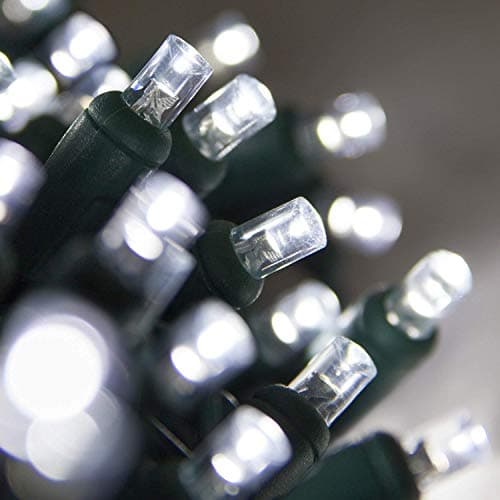 Top pick5 mm Wide Angle LED Mini Lights, 70 ct, green wire70 bulbs / 24 ft, 5 mm wide angle | Wrapping trunks and branches | 9.0 | $24.99 · View on Amazon |
| 2 | 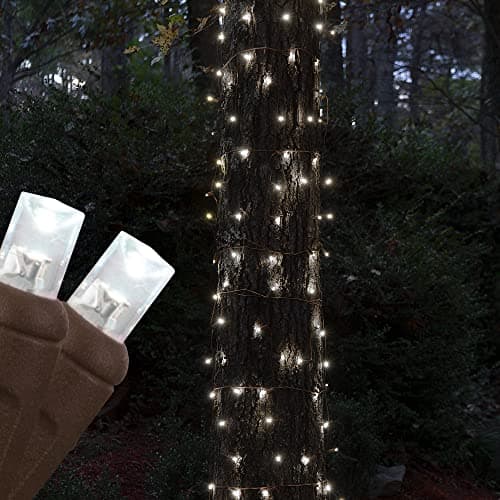 Wintergreen Lighting 70 Cool White StretchNet Pro Tree Wrap Lights70 cool white 5 mm, expandable net | Wrapping a trunk in minutes | 8.7 | $23.99 · View on Amazon |
| 3 | 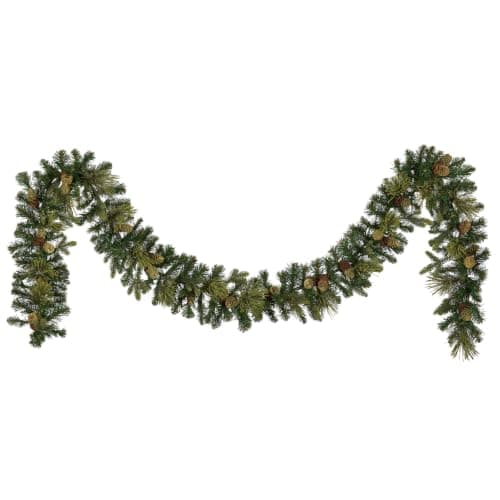 National Tree Company 9 ft Pre-Lit Carolina Pine Garland, warm white LED9 ft, 240 tips, 100 warm white LED, 6/18 timer | A door surround with no outlet near it | 9.0 | Check price on Amazon |
| 4 | 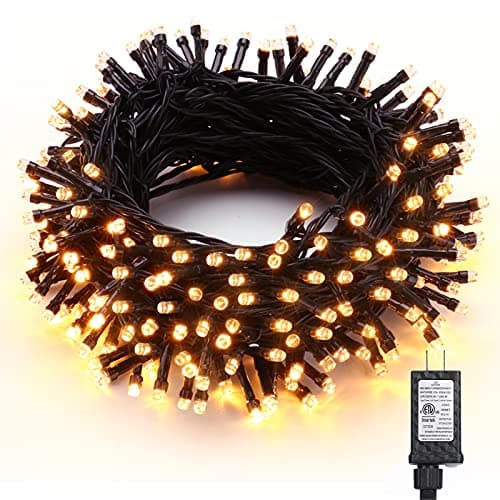 Brizled Outdoor Christmas Lights, 78.74 ft / 240 LED warm white78.74 ft, 240 LED, warm white | A first display on a budget | 8.0 | $16.99 · View on Amazon |
| 5 | 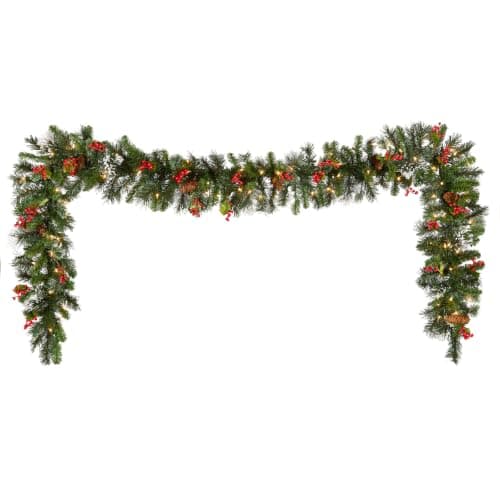 National Tree Company 9 ft Pre-Lit Wintry Pine Flocked Garland, clear lights9 ft x 12 in, 184 tips, 100 clear lights, plug-in | A covered porch that has an outlet | 8.6 | $62.99 · View on Amazon |
#ad We may earn a commission · Price as of October 10, 2026
Scores are our own editorial judgment from published specifications and buyer feedback, scored against the same criteria across this category. See how we pick.
Jump to a full review below: lights
The short version: for a wrapped porch column, buy 5 mm wide-angle LED mini lights on green or brown wire at 4-inch spacing — that is the format every professional column wrap uses, and our top pick is a 70-count wide-angle strand. Before you buy, run the formula: column height in inches, divided by your wrap spacing, multiplied by the column circumference. A 10-foot column with a 36-inch circumference wrapped at 4-inch spacing needs about 90 feet of light. Most people buy 25.
The formula, worked
Decorators Warehouse publishes the arithmetic directly and it is the single most useful thing on this page. Take the height — for a 10-foot column that is 120 inches — and divide by the spacing you want between wraps. At 4 inches that gives 30 wraps. Each wrap is one circumference of travel, so 30 wraps around a 36-inch circumference is 1,080 inches, which is 90 feet. On 23.3-foot mini strands, that is about four strands for one column.
| Column height | 24 in circumference | 36 in circumference | 48 in circumference |
|---|---|---|---|
| 8 ft | 48 ft | 72 ft | 96 ft |
| 10 ft | 60 ft | 90 ft | 120 ft |
| 12 ft | 72 ft | 108 ft | 144 ft |
Measure circumference with a tape run right around the column at mid-height — not the width. A 12-inch-square column is 48 inches around, which is why square posts consume so much more light than people assume from looking at them. And buy long: it is always better to have a little extra linear length than too little, because a column that runs out of light three feet from the top cannot be fixed without rewrapping the whole thing.
Why 5 mm mini, and not C9
A column is touched, leaned on and viewed from a few feet away, so the same logic that governs a handrail applies here. Industry spacing guidance gives 6 inches as the maximum for a tree, gutter or house trim but specifies a tighter 4 inches for poles and banisters — a column is a pole. A 5 mm wide-angle bulb at 4-inch spacing produces a continuous helix of light; a C9 at 12-inch spacing on the same post produces eight visible lamps and a lot of visible wire.
- 5 mm wide-angle on green or brown wire — the default. Wide-angle optics throw light sideways, which is what you want on a surface you are wrapping rather than pointing.
- Stretch net tree wrap — a pre-spaced expandable net that goes on in one pass instead of thirty. Built for trunks, works on round columns, and turns a twenty-minute wrap into a two-minute one.
- Pre-lit garland spiralled up the column — the traditional porch look. Covers the column in far fewer passes and adds daylight presence, which bare wire does not.
- Plain mini string on white wire — only on a white column. On anything else the wire is the thing you see in daylight.
Spacing: tight, even, and decided before you start
Two things ruin a column wrap and both are spacing problems. The first is spacing that is too wide, which reads as stripes rather than light. The second is spacing that drifts — tight at the bottom where you were careful, loose at the top where you ran short. Fix both by deciding the interval first, marking the column with a pencil or a strip of painter's tape at your interval, and wrapping to the marks.
- 1
Measure and calculate
Height in inches divided by spacing equals wraps. Wraps times circumference equals total inches. Divide by 12 for feet, then add a strand.
- 2
Start at the power end
Begin at the bottom with the male plug at the base, so the run ends at the top and the only cord at ground level is the one going to the outlet. Wrapping downward leaves you with a plug stranded eight feet up.
- 3
Wrap to marks, not by eye
Mark the interval up one face of the column first. Keep the wire snug against the surface at every pass; a loose helix sags into the one below it within a week of wind.
- 4
Take up the slack at the top
A zip tie is the standard trick for shortening a mini-light strand where it runs long, rather than leaving a loop. Black or clear, cut off in January.
Connecting several columns on one run
Four columns at 90 feet each is 360 feet of mini lights, which sounds like a circuit problem and usually is not. 5 mm LED sets have a generous end-to-end allowance — Decorators Warehouse states up to 80 strands can be safely connected end to end for the 5 mm sets it supplies — so the chain limit is rarely what stops you. What stops you is the count on your own set's tag, which is the authoritative number. Check it, then read how many lights on one circuit for the circuit side.
Garland instead of, or as well as, lights
A spiralled pre-lit garland is the other honest answer to a column, and on a covered porch with an outlet it is the better one: it is faster, it reads as decoration in daylight rather than as wire, and a 9-foot length spirals a standard porch column in about three passes. The trade is that you see garland, not a helix of light, and that you are buying by the 9-foot length rather than by the foot. Best outdoor Christmas garland covers the formats and which ones have a battery timer for columns with no power.
How we picked
Published manufacturer specifications, the industry wrap formula and spacing guidance, and buyer feedback read in full. Every figure is linked below. See methodology.
The picks in full
Top pick
5 mm Wide Angle LED Mini Lights, 70 ct, green wire
Wintergreen Lighting
The commercial 5 mm wide-angle string is the format built for tree wrapping: a small concave lens that throws light sideways, on a green wire that disappears into bark and foliage in daylight.
Wrapping a tree is a different lighting problem from outlining a roof, and the bulb that solves it is different too. A roofline wants a big bulb that reads as a distinct point from the street. A trunk wants a small bulb, close together, that turns the bark into a glowing column — and that is what the 5 mm wide-angle format is for. Christmas Lights, Etc identifies 5 mm LED wide-angle lights as the type most commonly used on outdoor trees, and the reason is the lens: it is concave, so it spreads light sideways around the curve of the trunk instead of firing it into the street.
Wintergreen's 70-count set runs 24 feet on green wire. Green matters more than people expect. Lights are lit for roughly eight hours a night and the wire is visible for the other sixteen, and white wire spiraled up a dark trunk is a barber pole in daylight. Green disappears against bark and evergreen foliage; brown wire, sold in the same format, disappears against deciduous trunks.
The practical limit is length. Twenty-four feet sounds like a lot until you wrap it: at the 6-inch spiral spacing Christmas Lights, Etc recommends for the best look, a single set covers a surprisingly short stretch of a mature trunk. Buy by measured length rather than by set count, and buy connectable so the whole trunk runs off one feed.
What you give up against a socketed C9 is repairability — these are prelamped, so a failed section is a failed set. For a trunk wrap that is an acceptable trade, because the wire is doing structural work around a rough surface and the failure mode is usually abrasion rather than a dead bulb.
What works
- Wide-angle lens spreads light around the trunk rather than straight out
- Green wire is invisible against bark and foliage during the day
- Connectable, so a tall trunk is one continuous wrap from one outlet
- Small bulb means the wrap reads as a line of light, not a row of dots
What does not
- Bulbs are not individually replaceable on a prelamped set
- 24 ft per set covers less trunk than you expect once it is spiraled
- Manufacturer does not publish a rated-hours figure for this line
| Bulb | 5 mm wide angle (concave lens), LED |
|---|---|
| Set | 70 bulbs, 24 ft |
| Wire | Green (other colors sold in the same line) |
| Use | Commercial grade, outdoor |
| Connectable | Yes, end to end |
Wrapping a trunk in minutes
Wintergreen Lighting 70 Cool White StretchNet Pro Tree Wrap Lights
Wintergreen Lighting
A stretchable net sized for a trunk rather than a string you spiral by hand. You wrap once, the elastic takes up the slack, and the spacing comes out even without you measuring it.
The slow part of lighting a tree is not the ladder. It is spiraling a string up a trunk by hand and discovering at the top that the spacing drifted, so the bottom four feet are dense and the top four are sparse. Tree wrap net solves that mechanically: the lights are held in a net with a stretchable cord woven through it, so you hold one edge against the trunk, wrap once, and the elastic pulls the spacing even.
Christmas Lights, Etc describes the StretchNet Pro as expandable to fit a variety of trunk diameters, which is the whole point — a trunk tapers, and a fixed net would be tight at the bottom and loose at the top. The brown wire version is the one to buy for a deciduous trunk; green is right if you are wrapping an evergreen or a column against foliage.
The honest limitation is that this is a trunk product and nothing else. It does not go up into branches, it does not follow a fork, and on a multi-stem or heavily gnarled tree it will not sit flat. For those, hand-spiraled 5 mm string is still the answer, and Christmas Lights, Etc's own guidance is to carry the wrap up the trunk and roughly three to four feet into the extending branches, choosing branches rather than trying to do all of them.
Price per lit foot is higher than plain string. What you buy is time, and a finish that looks deliberate rather than improvised — which matters most on the one specimen tree at the front of the house that everybody actually looks at.
What works
- Even spacing without measuring — the net sets it for you
- Wraps a trunk in a fraction of the time a hand-spiraled string takes
- Brown wire disappears against bark in daylight
- Stretch means one size fits a range of trunk diameters
What does not
- Only works on a reasonably straight, cylindrical trunk
- Costs more per lit foot than a plain string
- Useless on branches — it is a trunk product
| Format | Net with an elastic cord woven through |
|---|---|
| Bulb | 5 mm wide angle LED |
| Wire | Brown (green also sold) |
| Fit | Expandable across a range of trunk diameters |
| Use | Outdoor tree trunks and columns |
A door surround with no outlet near it
National Tree Company 9 ft Pre-Lit Carolina Pine Garland, warm white LED
National Tree Company
The densest pre-lit 9-footer we found with a built-in timer and no cord: 240 tips, 100 warm white LEDs, battery-run on a 6-on / 18-off cycle. A door frame is exactly where a trailing cord ruins the look.
A front door is the hardest place in an outdoor display to run power to, and it is the place where a visible cord does the most damage, because the garland is at eye level and eighteen inches from where people stand. That one fact decides this pick. National Tree's Carolina Pine garland is battery-run with the light string built in, so the only thing you are hiding is a battery box rather than a cord down the door frame.
The specification that makes it worth the money over a cheaper pre-lit garland is tip count. National Tree publishes 240 PVC tips on this 9-foot length, in a mix of bristle and cashmere needle shapes. Tip count is to garland what branch-tip count is to an artificial tree: it is the number that predicts whether the thing reads as greenery from ten feet away or as a wire with needles attached. A 9-foot garland at 160 tips looks sparse on a door frame in daylight, and a door frame is seen in daylight far more than it is seen lit.
The lights are 100 warm white LEDs and they stay lit if a bulb fails, which matters more on garland than on a roofline run — a dead section in the middle of a door surround is impossible to ignore and awkward to reach into. The built-in timer runs a fixed 6 hours on, 18 hours off cycle that restarts at the same time each day. It is not a clock you set, but it does mean the garland comes on by itself every evening, which is the difference between a decoration that works all season and one that gets switched on four times in December.
Two honest limits. Batteries are a running cost, and cold reduces usable capacity, so a hard December will shorten the per-set runtime — budget for a mid-season change of the three D cells rather than being surprised by it. And National Tree's own wording for this range is indoor and covered outdoor spaces, which is the real constraint on nearly every pre-lit garland sold and the reason this page has a separate pick for fully exposed runs.
Length, width, tip count, light count, power, timer behavior and the covered-outdoor rating above are National Tree Company's published figures, linked in the sources below.
What works
- No cord, which is the whole problem with lighting a door frame
- A real timer on board — no outdoor timer, no smart plug, nothing to remember
- 240 tips is dense for a 9 ft garland and it is what makes it read as greenery, not wire
- LED draw means D cells last a season rather than a fortnight
What does not
- Batteries are a consumable and cold shortens them — plan on a mid-season change
- The timer is a fixed 6/18 cycle, not a clock you set
- National Tree rates it for covered outdoor, not a fully exposed railing
- 3 D cells sit in a visible battery box you have to hide in the greenery
| Length | 9 ft (108 in) |
|---|---|
| Width / depth | 10 in x 10 in |
| Branch tips | 240 PVC tips, mixed bristle and cashmere |
| Lights | 100 warm white LED, stay-lit if a bulb goes out |
| Power | Battery — 3 D cells, not included |
| Timer | Built in: 6 hours on, 18 hours off, same time daily |
| Trim | Pine cones |
| Rated for | Indoor and covered outdoor spaces (manufacturer wording) |
A first display on a budget
Brizled Outdoor Christmas Lights, 78.74 ft / 240 LED warm white
Brizled
High-count LED string sets at big-box prices, with the multi-function controllers and color-changing options a first display usually wants. Not commercial hardware, and not priced like it.
Most first displays are mini LED strings, and Brizled is one of the brands that does them well enough at a low price. If your goal is to cover a lot of roofline and two bushes this weekend without spending several hundred dollars, this is the honest answer, and the commercial C9 recommendation above is the wrong one for you.
The meaningful feature is the controller. Many of these sets include warm-white/cool-white switching or full color-change, which means one purchase covers two looks. Deciding between warm and cool is the single most common regret in outdoor lighting, and a set that does both removes the decision.
What you give up is repairability. The bulbs are molded into the wire, so a dead section is a dead set — you replace it, you do not fix it. And the wire is light gauge, which matters at takedown more than at install: wound carelessly onto a reel, thin wire kinks, and a kink is where next year's failure starts.
The manufacturer publishes no rated-hours figure for these, so judge them on build and price: treat them as a two-to-four season purchase and the value is very good.
What works
- Cheapest route to a lot of covered feet
- Color-changing and warm/cool-switching options in one set
- Connectable, so a run is not a per-set outlet problem
What does not
- Bulbs are molded in — a failed section is a failed strand
- Wire gauge is light; it does not enjoy being wound badly onto a reel
- No published hours rating, so longevity is a guess
| Bulb | Mini LED, fixed (not replaceable) |
|---|---|
| Modes | Multi-function controller on most sets |
| Use | Indoor / outdoor rated |
| Connectable | Yes, on most sets |
| Rated life | Not published for this line |
A covered porch that has an outlet
National Tree Company 9 ft Pre-Lit Wintry Pine Flocked Garland, clear lights
National Tree Company
The decorated option: pine cones, red berries and snowflakes already on it, 12 inches across, and a plug so brightness never depends on a battery. Spare bulbs and fuses in the box.
If there is an outlet on the porch, a plug-in garland is simply the easier object to own. Nothing dims in week three, nothing needs a battery change on a cold evening, and if you already have a timer or a smart plug running the rest of the display, the garland joins it rather than keeping its own schedule.
This is also the decorated pick, and that is worth more than it sounds. Buying a plain green garland and then buying pine cone picks, berry sprays and floral wire to dress it is how a 9-foot garland quietly becomes three purchases and an evening of work. National Tree ships this one pre-decorated with pine cones, red berries and snowflakes, and at 12 inches across it is the widest of the three pre-lit options here — width is what makes a door swag look deliberate rather than thin.
The honest trade is the light source. These are 100 clear incandescent bulbs, not LEDs. They draw more, they run warm, and bulbs are a consumable rather than a sealed-for-life component. National Tree does the sensible thing and includes spare bulbs and fuses in the box, which is exactly what an incandescent set needs to reach a second season — and is the first thing to put somewhere you will find again next November. The set stays lit when a bulb fails, so one dead bulb is a cosmetic job rather than a dark garland.
Tip count is 184 against the Carolina Pine's 240. On a bare green garland that gap would show. On this one the decoration fills the visual space, which is a legitimate design answer rather than a dodge — but it does mean this is the garland to buy if you want its look, not the one to buy if you intend to decorate it yourself.
Dimensions, tip count, light count, power, included spares and the covered-outdoor rating above are National Tree Company's published figures, linked below.
What works
- Widest of the three at 12 in, so it reads as a substantial swag rather than a strand
- Already decorated — no separate trip for pine cones and berry picks
- Plug-in means full brightness every night with no battery arithmetic
- Spare bulbs and fuses in the box, which is how an incandescent set survives season two
What does not
- Incandescent rather than LED: hotter, thirstier, and the bulbs are a consumable
- 184 tips is fewer than the Carolina Pine, so it leans on its decoration for fullness
- You now have a cord to route and hide at the door
- Covered outdoor only, like almost every pre-lit garland
| Length | 9 ft (108 in) |
|---|---|
| Width | 12 in |
| Branch tips | 184 PVC tips |
| Lights | 100 clear incandescent, stay lit if a bulb goes out |
| Power | Plug-in |
| Trim | Pre-decorated with pine cones, red berries and snowflakes |
| Included | Spare bulbs and fuses |
| Rated for | Indoor and covered outdoor spaces (manufacturer wording) |
Common questions
How many feet of Christmas lights do I need to wrap a porch column?
Divide the column height in inches by your wrap spacing to get the number of wraps, then multiply by the column circumference. A 10-foot column with a 36-inch circumference at 4-inch spacing needs 30 wraps of 36 inches, which is 1,080 inches or about 90 feet — roughly four 23-foot mini-light strands.
What kind of lights are best for porch columns?
5 mm wide-angle LED mini lights on green or brown wire. Industry spacing guidance calls for about 4 inches between bulbs on poles and banisters, and a wide-angle 5 mm bulb at that spacing gives a continuous helix. A C9 at 12-inch spacing on the same column reads as a handful of separate lamps.
What spacing should I use when wrapping a column?
About 4 inches between wraps, and mark the interval on the column before you start. The two failures are spacing that is too wide, which reads as stripes, and spacing that drifts looser toward the top because you ran short of light. Marking the interval fixes both.
Should I start wrapping at the top or the bottom of the column?
At the bottom, with the plug end at the base. That keeps the only ground-level cord the one going to your outlet. Starting at the top leaves the plug stranded high on the column with no way to reach power without an extra run down the face.
Can I use garland instead of wrapping lights around the column?
Yes, and on a covered porch with an outlet it is often the better choice. A 9-foot pre-lit garland spirals a standard column in about three passes, goes up far faster than thirty wraps of mini lights, and reads as decoration in daylight rather than as visible wire.
Sources
Every specification quoted on this page comes from the manufacturer’s own published information or a current retail listing, linked below. Where a figure is not published, we say so rather than estimating it.
- Decorators Warehouse — tree and column lighting with 5 mm mini lights (height divided by 4-inch spacing equals wraps; 10 ft column at 36 in circumference = 1,080 in / 90 ft / about 4 strands; up to 80 strands end to end; zip-tie to shorten a strand)
- 1000Bulbs — Christmas mini lights buying guide (6 in maximum for house trim, 4 in for poles and banisters)
- Christmas Lights Etc — 5 mm StretchNet Pro tree wrap lights, brown wire
- National Tree Company — 9 ft pre-lit Carolina Pine garland with LED lights (battery box and 6/18 timer)
- Wintergreen Lighting — 5 mm wide angle LED mini light specifications
Read next
- The best outdoor Christmas lights for a house
- How to wrap a tree trunk with Christmas lights
- The best outdoor Christmas lights for trees
- The best outdoor Christmas garland
- The best Christmas lights for windows, outside
- How many Christmas lights do I need for my house?
- The best outdoor Christmas lights for deck railings