Power, Cords & Timers
The best multi-outlet outdoor extension cords for Christmas lights
Almost every display needs more sockets than the house provides. There is a right product for that and a very common wrong one.
Mike M. — The hands-on owner behind Iron Mako Media.
Published
This page contains affiliate links. If you buy through them we may earn a commission at no cost to you, and it never decides what we recommend. How this site is funded.
Quick picks
| # | Product | Best for | Score | Price |
|---|---|---|---|---|
| 1 | 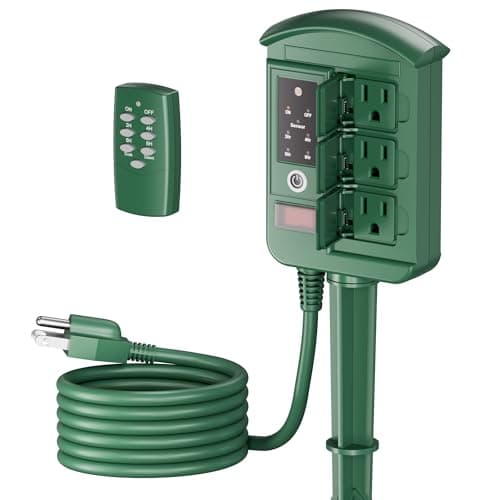 Top pickBN-LINK Outdoor Power Stake Timer, 6 outlets6 outlets on a ground stake, remote | Yard displays far from the house | 8.5 | $21.99 · View on Amazon |
| 2 | 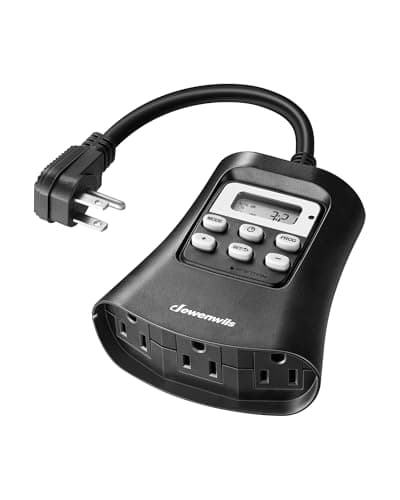 DEWENWILS Outdoor Digital Timer, 3 outlets, 15A15 A, 3 grounded outlets, 7-day | A whole display on one schedule | 9.1 | $18.99 · View on Amazon |
| 3 | 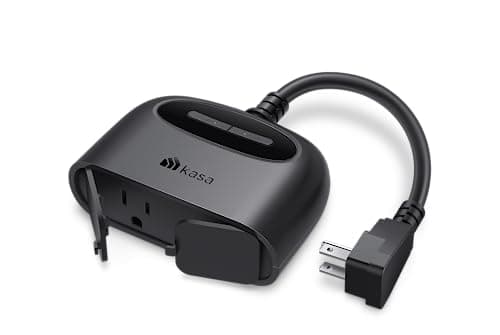 Kasa Outdoor Smart Plug (EP40)2 independent outlets, sunset offset | Sunrise/sunset scheduling and phone control | 8.8 | $22.99 · View on Amazon |
| 4 | 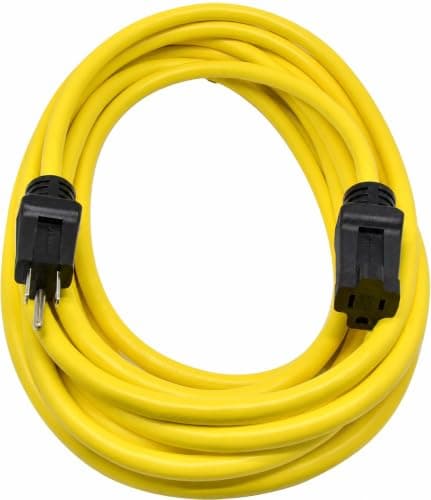 Clear Power 12/3 SJTW Heavy Duty Outdoor Cord, 25 ft12/3 SJTW, heavy duty | Feeding a stake or a heavy load | 8.7 | $28.99 · View on Amazon |
| 5 | 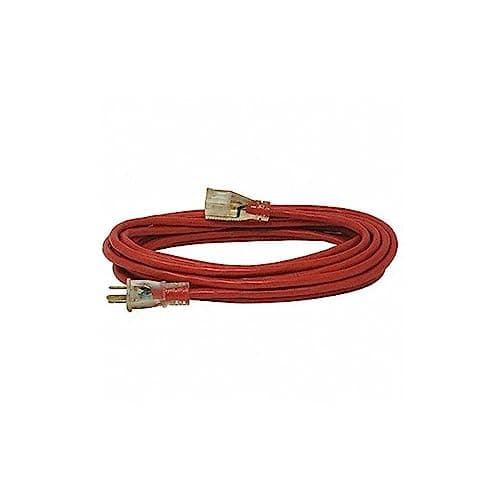 Southwire 14/3 SJTW Outdoor Extension Cord, lighted end14/3 SJTW, 13 A rated | The standard run from house to display | 9.0 | $19.30 · View on Amazon |
#ad We may earn a commission · Price as of October 17, 2026
Scores are our own editorial judgment from published specifications and buyer feedback, scored against the same criteria across this category. See how we pick.
Jump to a full review below: power-and-timers
The short version: you do not want a cord with three sockets moulded into the end of it. You want one heavy cord from the house to a weatherproof outdoor power stake, and everything in the yard plugged into that. Our top pick is the BN-LINK outdoor power stake timer, because it puts six weather-covered outlets on a ground stake with the timer built in, which means one cord leaves the house and one schedule controls the yard. The thing to never use is an indoor power strip: electrical-safety guidance is explicit that power strips belong indoors, plugged directly into a wall receptacle.
Why the socket count is the real problem
Most houses have one exterior receptacle, sometimes two. A modest display has a roofline run, a bush bed, an inflatable with its own blower and a wreath — four things wanting power, in four different places, from one socket twenty feet from any of them. People solve it by chaining cords and splitting ends, and that is how a yard ends up with six connections lying in the grass.
The professional answer is a trunk-and-branch layout: one properly specified cord from the house to a single distribution point, and short cords out from there. It needs fewer connections, it keeps them all in one place you can elevate and cover, and it means one timer rather than four.
| Option | Outlets | Weather | Verdict |
|---|---|---|---|
| Outdoor power stake with timer | 6, weather-covered | Outdoor rated | The right answer for a yard |
| Outdoor timer box | 3 grounded, 15 A | Weatherproof housing | Right answer at the house wall |
| Outdoor smart plug, dual socket | 2, independently switched | Outdoor rated housing | Right when you want two schedules |
| Cord with a 3-way moulded end | 3, usually uncovered | Varies, often indoor | Only if marked for outdoor use |
| Indoor power strip | 6-8 | Indoor only | Never outdoors |
The power strip rule
This is the single most common mistake in outdoor decorating after using an indoor extension cord, and the guidance on it is not ambiguous. A multi-outlet power strip should have an internal overload device to limit current, it should always be used indoors, and it should be plugged directly into a wall receptacle — never into another power strip and never daisy-chained.
All three of those conditions are broken by the standard yard arrangement: a strip at the end of an extension cord, sitting on the ground, in the weather, with a second cord plugged into it. A power stake does the same job while being designed for the conditions — the outlets face down behind weather covers, the body sits above the grass on a stake, and the whole unit is rated for outdoor use.
Choosing the trunk cord
The cord feeding the distribution point carries everything, so it is the one place to buy heavier than the arithmetic demands. Two specifications matter and both are printed on the jacket.
- SJTW, with the W. The W is the letter that means rated for outdoor and wet locations. Outdoor installations require cords listed and approved for wet locations; a cord without the W is an indoor cord regardless of how heavy it feels.
- 12 AWG for a trunk run, 14 AWG for a branch. Wire gauge runs backwards, so 12 is thicker than 14. A 14/3 SJTW cord is rated 13 amps and is right for a single branch; 12/3 is the right choice for the one cord feeding several devices, because over distance a heavier conductor drops less voltage.
- Buy the length you need, not the longest you can find. A coiled surplus carrying a real load dissipates heat far less effectively than the same cord laid out flat, and a longer run drops more voltage at the far end. Inflatable blower motors are the first thing to run poorly on a sagging supply.
Where the timer should live
If you put the timer in the yard, on the stake, then one schedule runs everything plugged into the stake and you never think about it again. If you put the timer at the house, in a weatherproof three-outlet box, you can run the roofline on one schedule and the yard on another — which matters if the inflatable should go off earlier than the lights, which it probably should.
A good compromise is both: a 15-amp three-outlet timer at the wall feeding the trunk cord, and the stake out in the yard purely as distribution. Where you want phone control and sunset tracking instead of a fixed clock, a dual-socket outdoor smart plug gives you two independently switched outlets with sunrise and sunset offsets — see the best outdoor smart plugs and the best Christmas light timers.
Protecting the one place everything connects
Concentrating your connections at one distribution point is only an improvement if that point is protected. The failures in an outdoor display are almost never the cord — they are the junctions, sitting in a puddle or buried in wet leaves.
- Get it off the ground. A stake does this for you; a timer box at the wall should be mounted or set on a brick, not left in the flower bed.
- Use a drip loop at every junction. Let the cord dip below the connection and come back up so water runs off the bottom of the loop instead of tracking into the plug.
- Point covered outlets downward, and leave the unused ones covered rather than open.
- GFCI protection on the circuit, always. Outdoor decorations and standing water are the exact scenario GFCI exists for — see GFCI and outdoor lights.
- Do not daisy-chain cords to reach the stake. Each joint is another connection to keep dry and another point of voltage drop. One cord of the right length.
How we picked
Published manufacturer specifications for outlet count, amp rating, weather rating and safety listing, plus published electrical-safety and code guidance for outdoor cords and multi-outlet devices. Every figure is linked below. See methodology.
The picks in full
Top pick
BN-LINK Outdoor Power Stake Timer, 6 outlets
BN-LINK
A stake you push into the lawn with six outlets and a timer built in. It replaces a power strip sitting in the mud, which is what the alternative actually is.
A yard display means several things needing power in a place with no outlet. What people actually do is run an extension cord out and land a household power strip on the grass under an upturned bucket. That is a bad idea in wet weather and everybody knows it while they are doing it.
A power stake is the intended product: a spike with six weather-covered outlets and a timer, raised off the ground. One cord runs from the house to the stake, and the inflatable, the projector and two light runs plug into it.
Check the aggregate rating before you load it. Six outlets is not permission to draw six appliances' worth of current — the stake's own rating, the cord feeding it and the breaker at the house all still apply. For inflatables this is usually comfortable; blower motors draw less than people assume.
The remote is a bigger quality-of-life feature than it sounds, because the alternative to a remote is walking to the middle of a dark wet lawn.
What works
- Gets the connections off wet ground — the real safety win
- Six outlets means one cord from the house instead of four
- Remote control saves a walk across a dark lawn
What does not
- Check the total amp rating before loading six things into it
- Stake goes into soft ground only
- One more device living in the weather
| Form | Ground stake |
|---|---|
| Outlets | 6, weather-covered |
| Control | Timer plus remote on current models |
| Weather | Outdoor rated |
A whole display on one schedule
DEWENWILS Outdoor Digital Timer, 3 outlets, 15A
DEWENWILS
Three grounded outlets, 7-day programming and a 15-amp rating in one weatherproof box. The amp rating is the spec that matters and this one does not cut it fine.
Buy the timer before you buy the last set of lights. Switching a display on and off by hand at an outdoor outlet lasts about four days before everyone gives up and leaves them on all night, which triples the running cost and shortens the life of everything.
The spec that decides a timer is its amp rating, and most people never look at it. An outdoor circuit is typically 15 amps. A timer rated at 10 amps plugged into that circuit is a 10-amp ceiling on your display whatever the breaker says, and exceeding it is how timers fail — often by welding their relay closed, which is a timer that never turns off again.
This DEWENWILS unit is rated 15 A with three grounded outlets and 7-day programming, and it is UL Listed. That last point deserves attention: certification is not universal in cheap outdoor timers, and it is the difference between a tested product and an untested one carrying your whole display.
Practical advice: program it indoors, on the kitchen table, before it goes outside. Digital timer interfaces are all bad, and they are worse in gloves, in the dark, at 25 degrees.
Three outlets also means one timer instead of three, which matters because each outdoor timer is itself a thing to weatherproof.
What works
- 15 A means it is not the bottleneck on a full 15 A circuit
- Three outlets covers roofline, bushes and inflatables from one timer
- 7-day programming handles a different weekend schedule
- UL listing is not universal in this product category — check for it
What does not
- Programming a digital timer in the cold, in the dark, is unpleasant
- Can lose its program in a long power cut if the backup cell is flat
- Physically bulky for an outdoor outlet box
| Rating | 15 A, 1/3 HP |
|---|---|
| Outlets | 3 grounded |
| Programming | 7-day programmable |
| Weather | Weatherproof outdoor housing |
| Certification | UL Listed (per the manufacturer listing) |
Sunrise/sunset scheduling and phone control
Kasa Outdoor Smart Plug (EP40)
Kasa (TP-Link)
Two independently controlled outdoor outlets with sunset-offset scheduling. It is the only control type that gives you both automatic sunset tracking and a hard off time.
The control problem has two halves. You want the lights on when it actually gets dark, which moves through the season, and off at a fixed civilized hour. A clock timer solves the second and fails the first. A photocell solves the first and fails the second.
A smart plug with sunset-offset scheduling solves both: on at sunset plus fifteen minutes, off at 11:00 pm, and the on-time moves itself as the season progresses. That is the actual answer, and it is why smart plugs have displaced timers for people who already have decent Wi-Fi outside.
The EP40 has two independently switched outdoor sockets, so the roofline and the inflatables can be on different schedules from one device — useful, because an inflatable at 2:00 am is a different proposition from the roofline.
Two real cautions. Wi-Fi at an outdoor outlet on the far side of the house is often marginal; test coverage there before you commit the whole display to it. And check the combined amp rating against your load — smart plugs typically carry a lower rating than a 15 A mechanical timer, and that ceiling is easy to miss.
What works
- Sunset-based schedules plus a fixed off time — the combination photocells cannot do
- Two outlets on separate schedules from one device
- Turn the display off from inside when a storm arrives
What does not
- Needs reliable 2.4 GHz Wi-Fi at the outdoor outlet — often the weakest point in the house
- Total load across both outlets is limited; check the rating against your display
- A cloud service outage can mean the schedule does not fire
| Outlets | 2, independently switched |
|---|---|
| Control | App, schedules, sunrise/sunset offsets, voice assistants |
| Network | 2.4 GHz Wi-Fi |
| Weather | Outdoor rated housing |
| Model | EP40 |
Feeding a stake or a heavy load
Clear Power 12/3 SJTW Heavy Duty Outdoor Cord, 25 ft
Clear Power
12-gauge SJTW. Heavier than an LED display needs, which is exactly right when the cord is feeding a six-outlet power stake or a run of inflatable blowers.
The one place a heavier cord genuinely earns its cost is the trunk run — the single cord from the house that feeds a power stake, which then feeds four or five things. That cord carries everything downstream of it, so it is the one with a real load on it.
12 AWG is one step up from the 14 AWG standard and carries more current with less voltage drop over distance. Voltage drop is the invisible failure: the far end of a long thin cord delivers less than 120 volts, and inflatable blowers in particular run poorly on a sagging supply.
Clear Power's CP10144 is 12/3 SJTW with a flame-retardant jacket and nickel-coated blades. That last detail matters more than it reads — corrosion at the plug blades is what actually kills outdoor cords over a few seasons, and it starts at the connection sitting in a puddle.
For a single string of LEDs this is unnecessary weight. Use 14 gauge for branches and save the 12 for the trunk.
What works
- 12 gauge gives headroom when the cord feeds several devices
- Flame-retardant jacket is the right spec for a run left out all season
- Nickel-coated blades resist the corrosion that kills outdoor cords
What does not
- Stiff and heavy, especially below freezing
- Overkill feeding a single string of LEDs
| Gauge | 12 AWG, 3 conductor |
|---|---|
| Jacket | SJTW, water and weather resistant, flame retardant |
| Length | 25 ft (other lengths sold) |
| Plug | 3-prong grounded |
| Model | CP10144 |
The standard run from house to display
Southwire 14/3 SJTW Outdoor Extension Cord, lighted end
Southwire
14-gauge, three-conductor, SJTW-jacketed and rated 13 amps. For an LED display this is the right cord, and the lighted end tells you the circuit is live without walking back to the outlet.
Three things matter in an outdoor extension cord and the first two are printed on the jacket. Look for SJTW: S is service cord, J is junior 300-volt service, T is thermoplastic, and W is the one that counts — rated for outdoor and wet locations. An indoor cord in a December rainstorm is a genuine hazard, not a technicality.
Second is gauge. 14 AWG carries 13 amps. An LED display of any realistic residential size draws a small fraction of that, so 14/3 is comfortably right, and it is also flexible enough to actually coil in the cold. 12-gauge is heavier duty and heavier to handle; you do not need it for LEDs.
Third is length, and here the advice is counter-intuitive: buy the length you need, not the longest one. Coiled excess cord is the thing that overheats. A tightly wound 100-foot cord running near its capacity is meaningfully hotter than the same cord run out flat.
The lighted end is a small feature that saves a lot of walking. When a section of the display is dark, a glance at the cord end tells you whether the problem is upstream at the breaker or downstream in the lights.
What works
- SJTW jacket is the actual outdoor spec — check for those letters
- Lighted end diagnoses a dead run in one glance
- 13 A is well above what any residential LED display draws
What does not
- 100 ft at 14 gauge is heavy and stiff in the cold
- Lighted ends can be distracting if the cord is visible
| Gauge | 14 AWG, 3 conductor |
|---|---|
| Jacket | SJTW — rated for outdoor and wet locations |
| Rating | 13 A |
| Lengths | 25, 50 and 100 ft |
| Feature | Lighted end / power indicator |
Common questions
What is the best multi-outlet extension cord for Christmas lights?
A weatherproof outdoor power stake rather than a cord with sockets moulded into the end. The BN-LINK outdoor power stake timer puts six weather-covered outlets on a ground stake with a timer built in, so one cord leaves the house and one schedule controls the yard. At the house wall, a 15-amp weatherproof three-outlet timer does the same job for the facade.
Can you use a power strip outside for Christmas lights?
No. Electrical-safety guidance is explicit that multi-outlet power strips should be used indoors and plugged directly into a wall receptacle, never into another strip and never daisy-chained. The outdoor equivalent is a weatherproof power stake or an outdoor timer box, both of which are rated for the conditions and have covered, downward-facing outlets.
Does a power stake let me run more lights?
No, and this is the trap. Six outlets on a stake is still one 15-amp circuit at the house. The stake only removes the physical limit on how many things can reach the socket, which makes overloading easier. Total the display's draw first and keep it inside the 80 percent continuous-load figure for the circuit.
What gauge cord should feed an outdoor power stake?
12/3 SJTW for the trunk run. The cord feeding a distribution point carries everything, so it is the place to go heavier than the arithmetic demands — over distance a thicker conductor drops less voltage, and inflatable blower motors are the first thing to run poorly on a sagging supply. A 14/3 SJTW cord rated 13 amps is fine for a single branch.
How many extension cords can I plug into each other?
None, ideally. Every joint is another connection to keep out of standing water and another point of resistance and voltage drop, and the same guidance that prohibits daisy-chaining power strips applies to the spirit of chaining cords. Buy one cord of the correct length to a single distribution point instead.
Sources
Every specification quoted on this page comes from the manufacturer’s own published information or a current retail listing, linked below. Where a figure is not published, we say so rather than estimating it.
- IAEI Magazine — electrical safety tips for the holidays (multi-outlet power strips should have an internal overload device, be used indoors and be plugged directly into a wall receptacle; never daisy chain; outdoor cords must be listed and approved for wet locations)
- ESFI — outdoor decoration safety tips (outdoor-marked cords, GFCI protection, keep connections out of standing water)
- Southwire — 14/3 SJTW outdoor extension cord, 13 A rating and lighted end
- Amazon — Clear Power 12/3 SJTW heavy duty outdoor cord, CP10144
- Amazon — DEWENWILS outdoor digital timer, 15 A, 3 grounded outlets, UL listed
- Amazon — Kasa Outdoor Smart Plug EP40, two independently controlled sockets with sunrise and sunset offsets
Read next
- The best outdoor extension cords for Christmas lights
- The best outdoor Christmas light timers
- How many watts and amps do Christmas lights use?
- How many Christmas lights can you run on one circuit?
- How to hide outdoor extension cords for Christmas lights
- GFCI and outdoor Christmas lights
- The best outdoor smart plugs for Christmas lights