Outdoor Christmas Lights
The best Christmas lights for a roofline
A roofline is a specific job with specific answers. These are the lights for a gutter, a rake and a gable — not a general outdoor list.
Mike M. — The hands-on owner behind Iron Mako Media.
Published
This page contains affiliate links. If you buy through them we may earn a commission at no cost to you, and it never decides what we recommend. How this site is funded.
Quick picks
| # | Product | Best for | Score | Price |
|---|---|---|---|---|
| 1 | 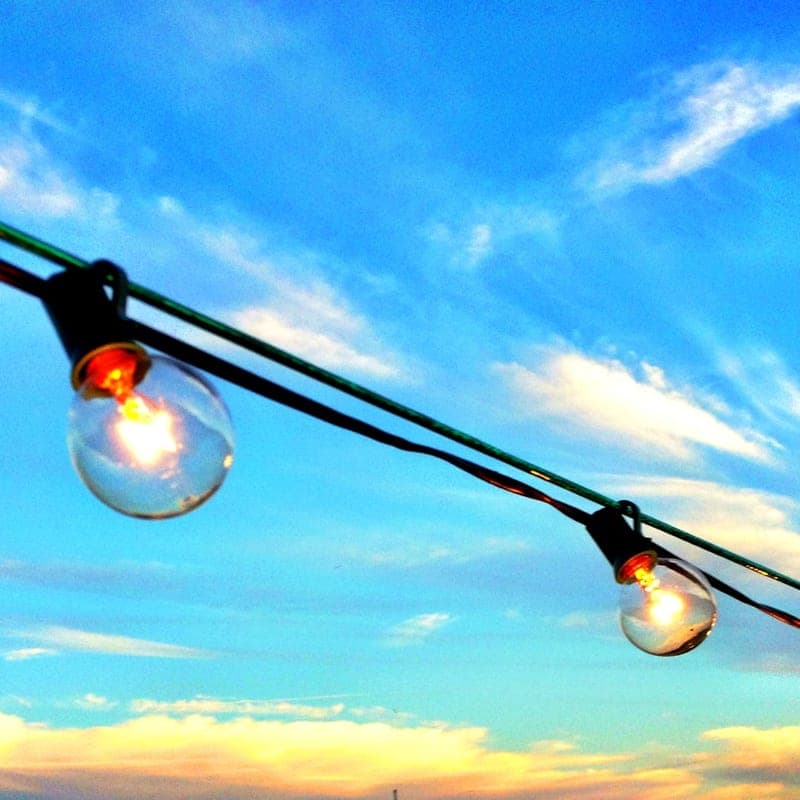 Top pickWintergreen Lighting OptiCore C9 LED, 25 ft25 bulbs / 25 ft, 12 in spacing | Rooflines you want to keep for a decade | 9.2 | Check price on Amazon |
| 2 | Novelty Lights C9 Ceramic LED, green wire25 bulbs, opaque ceramic finish | Opaque, saturated color instead of clear glass | 8.5 | Check price on Amazon |
| 3 | Brizled LED Christmas String LightsHigh LED count per set, multiple modes | A first display on a budget | 8.0 | Check price on Amazon |
| 4 |  Toodour LED Icicle LightsVaried drop lengths, outdoor rated | Gutter lines and porch eaves | 8.4 | Check price on Amazon |
| 5 |  Govee Permanent Outdoor Lights ProRGBIC, app + voice control | DIY year-round eave lighting | 8.6 | Check price on Amazon |
#ad We may earn a commission · Prices are shown by Amazon, not by us
Scores are our own editorial judgment from published specifications and buyer feedback — not aggregated user ratings, and not from hands-on testing. See how we pick.
Jump to a full review below: lights
What makes a light a roofline light
A roofline is viewed from a long way off, almost always in a straight or near-straight line, and it is the one part of a display that is genuinely awkward to reach. Those three facts settle most of the decision before brand ever comes into it.
- It has to read at distance. A roofline is typically seen from 60 to 150 feet away. A big bulb at wide spacing reads as Christmas lights; a dense mini string reads as a glowing line. Both are valid, and they are different looks rather than different quality levels.
- It has to be straight. Every error is visible because there is a perfectly straight gutter next to it for comparison. Sag between clips shows from the street in a way it never does on a shrub.
- It has to survive being reached once. You are going up a ladder in November and again in January. A set that fails in between means a third trip, which is why repairability matters more here than anywhere else on the house.
The formats, and which roof edge each suits
| Roof edge | Format that suits it | Why |
|---|---|---|
| Front gutter, long and straight | C9 socketed LED | Reads as distinct bulbs at distance; bulbs replace individually |
| Rake line up a gable | C9 or mini string | Both clip along the shingle edge; C9 needs a clip per bulb |
| Porch roof or garage return | Icicle | Varied drops hide small alignment errors on a short run |
| Whole roofline, on a budget | Mini LED string | Cheapest route to full coverage; one set covers more feet |
| Roofline you never want to climb again | Permanent installed lighting | Fitted once, app-controlled, used year round |
The four numbers to settle before you buy
- 1
Measure the actual edges you will light
Not the width of the house. A typical two-story with an attached garage has a front gutter, two rake lines, a garage return and often a porch roof, and the total is frequently double what people guess. Our measuring guide does this from the ground with a laser measure.
- 2
Choose bulb spacing
Twelve inches is the standard for C9 and is what most commercial sets are built at. Six to eight inches is typical for mini string. Spacing determines how many sets your measured footage needs — the conversion is in how many Christmas lights do I need.
- 3
Count clips, not sets
This is the step everyone skips and it is the one that sends people back to the store. The clip count is one per bulb for C7 and C9, and one every 18 to 24 inches for plain wire. A 180-foot roofline at 12-inch spacing is about 180 clips. Buy 250.
- 4
Add up the amps
Watts per set multiplied by the number of sets, divided by 120. LED makes this almost a formality; incandescent does not. The arithmetic and the 80 percent continuous-load rule are in how many lights on one circuit.
Socketed or molded: the decision that decides the lifespan
A socketed C9 set has bulbs that screw into E17 sockets, so a failure is a two-dollar bulb. A molded mini string has bulbs sealed into the wire, so a failed section is a dead set. On a shrub that hardly matters. On a roofline, where replacement means a ladder in January, it is the whole argument.
The honest counterweight is price. Commercial C9 costs several times what a big-box mini set does, and it is sold in 25-foot sets — a 180-foot roofline is eight boxes. If this is your first display and you are not certain you will do it again, the cheaper set is the right call and we would not push you off it. The multi-year arithmetic is worked through in commercial vs consumer grade.
Color temperature is the decision people regret
Warm white reads as an incandescent bulb and flatters brick, wood and warm-toned siding. Cool white is crisper, reads as modern, and can look distinctly blue against warm materials. On a roofline this matters more than anywhere else, because the run is long and unbroken and any mismatch is unmissable.
Getting it up there straight
The difference between a roofline that looks installed and one that looks draped is clip discipline. Set one clip per bulb for C9 so every bulb stands upright, keep the spacing constant across the whole run, and pick the clip by the roof edge rather than by the bulb — a gutter lip, a shingle edge, a tile groove and a soffit are four different problems. Best Christmas light clips covers the general case, and our soffit and eave clips and tile roof clips pages cover the two edges that defeat a standard clip.
Never nail, screw or staple lights to a roof, and never use adhesive on shingles. And do the install in mild weather — asphalt shingles get brittle below about 40 degrees and can crack when a tab is forced under them.
How we picked
These picks come from manufacturer specifications, current listings and buyer feedback read in full — not from hands-on testing. There is no test roof here and no weather lab. Where a manufacturer publishes a rated-hours or construction figure we quote it and link it; where none exists, we say so rather than inventing one. Our full approach is on the methodology page.
The picks in full
Top pick
Wintergreen Lighting OptiCore C9 LED, 25 ft
Wintergreen Lighting
#ad We may earn a commission · Prices are shown by Amazon, not by us
The commercial-grade C9 most professional installers use, sold in retail quantities. Thick polycarbonate lenses and a green commercial-gauge wire that survives being handled every year.
C9 is the big, faceted, traditional-looking bulb — the one that reads as Christmas lights from the street rather than as a glow. Wintergreen's OptiCore line is the version professional installers buy, and the reason is not brightness. It is that the lens is polycarbonate rather than glass, and the manufacturer rates the bulbs at 60,000 hours. A season is roughly 45 days at eight hours, so about 360 hours. The arithmetic on that rating is generous enough that bulb failure stops being the thing that ends a strand's life; handling damage is.
The practical case for buying commercial-grade C9 is replaceability. Each bulb screws into an E17 socket. When one dies, you replace one bulb for a couple of dollars instead of pulling a 100-light strand off the roof. Over five seasons that is the whole argument, and it is why the same boxes keep appearing on the same houses.
The honest counterpoint: this is expensive per foot, and it is sold in 25 ft sets. A 180 ft roofline is eight boxes plus spare bulbs, which is a real number. If you are lighting one gable over the front door and you are not sure you will do it again next year, a cheaper set is the right call and we would not argue.
One buying note that trips people up — C9 sets and C9 bulbs are sold separately as often as together. Check whether the listing you are on is a complete lit set or a box of replacement bulbs, because the photos look nearly identical.
What works
- Bulbs are replaceable individually — one failure is not a dead strand
- Polycarbonate lens survives being dropped off a ladder
- Same product line pros buy, so spare bulbs stay available year to year
- End-to-end connectable, so long roof runs are one circuit decision
What does not
- Costs several times what a big-box 100-count set costs
- Green wire is visible against white fascia in daylight
- 25 ft per set means a 180 ft roofline is eight boxes
| Bulb | C9, E17 base, LED |
|---|---|
| Set length | 25 ft, 25 bulbs |
| Spacing | 12 in |
| Lens | Polycarbonate (manufacturer states 200x the impact strength of glass) |
| Rated life | 60,000 hours (manufacturer figure) |
| Wire | Green, commercial gauge |
Opaque, saturated color instead of clear glass
Novelty Lights C9 Ceramic LED, green wire
Novelty Lights
#ad We may earn a commission · Prices are shown by Amazon, not by us
Ceramic-style opaque C9 bulbs in a commercial string. The color reads solid at distance rather than as a bright point, which is what most people picture when they picture C9 multicolor.
There are two kinds of C9 bulb and the listings rarely make the difference clear. Transparent faceted bulbs sparkle and throw light; opaque ceramic bulbs glow as a solid block of color. From fifty feet away on a roofline, the opaque version is what most people have in their head when they say they want old-fashioned Christmas lights.
Novelty Lights sells the opaque version in a standard 25-bulb commercial string on green wire, at a price below the top-tier commercial lines. The bulbs use the same E17 base as every other C9 on this page, so spares are interchangeable across brands — a genuinely useful property that nobody advertises.
The trade-off is light output onto the house. If you want the facade lit, faceted or smooth transparent bulbs do that and these do not. If you want the roofline outlined in color against a dark house, these do it better. It is an aesthetic decision, not a quality one.
We could not find a published rated-hours figure for this line, so we are not quoting one. That is a gap in the manufacturer's own documentation rather than a mark against the product.
What works
- Opaque finish reads as solid color from the curb, not as a glare point
- Replaceable bulbs, same E17 base as other commercial C9
- Cheaper than the premium commercial lines
What does not
- Opaque bulbs throw less light onto the house itself
- Manufacturer does not publish a rated-hours figure for this line
- Green wire is the only common option
| Bulb | C9, E17 base, LED, opaque ceramic finish |
|---|---|
| Set | 25 bulbs, green wire |
| Voltage | 120 V |
| Colors | Multicolor and single-color options |
| Connectable | Yes, end to end |
A first display on a budget
Brizled LED Christmas String Lights
Brizled
#ad We may earn a commission · Prices are shown by Amazon, not by us
High-count LED string sets at big-box prices, with the multi-function controllers and color-changing options a first display usually wants. Not commercial hardware, and not priced like it.
Most first displays are mini LED strings, and Brizled is one of the brands that does them well enough at a low price. If your goal is to cover a lot of roofline and two bushes this weekend without spending several hundred dollars, this is the honest answer, and the commercial C9 recommendation above is the wrong one for you.
The meaningful feature is the controller. Many of these sets include warm-white/cool-white switching or full color-change, which means one purchase covers two looks. Deciding between warm and cool is the single most common regret in outdoor lighting, and a set that does both removes the decision.
What you give up is repairability. The bulbs are molded into the wire, so a dead section is a dead set — you replace it, you do not fix it. And the wire is light gauge, which matters at takedown more than at install: wound carelessly onto a reel, thin wire kinks, and a kink is where next year's failure starts.
We have not run these across multiple seasons, and the manufacturer does not publish a rated-hours figure, so we are not going to tell you how long they last. Treat them as a two-to-four season purchase and the value is good.
What works
- Cheapest route to a lot of covered feet
- Color-changing and warm/cool-switching options in one set
- Connectable, so a run is not a per-set outlet problem
What does not
- Bulbs are molded in — a failed section is a failed strand
- Wire gauge is light; it does not enjoy being wound badly onto a reel
- No published hours rating, so longevity is a guess
| Bulb | Mini LED, fixed (not replaceable) |
|---|---|
| Modes | Multi-function controller on most sets |
| Use | Indoor / outdoor rated |
| Connectable | Yes, on most sets |
| Rated life | Not published for this line |
Gutter lines and porch eaves
Toodour LED Icicle Lights
Toodour
#ad We may earn a commission · Prices are shown by Amazon, not by us
Varied-length drops off a horizontal wire. The look only works on a genuinely straight run, which is why they belong on a gutter and almost nowhere else.
Icicle lights are the one light type where installation quality is nearly invisible. The drops are deliberately different lengths, so a clip line that is a half-inch off here and there disappears into the design. On C9, that same error is a visible sag.
That forgiveness only applies on a straight horizontal run. On a raked gable — a roof edge that climbs at an angle — icicles hang vertically off a sloped line and the effect reads as a mistake. Gutter lines, porch eaves and the horizontal band above a garage door are where they work.
Storage is their real cost. The drops interlock with each other in a box, and untangling a set of icicles in November is a genuinely unpleasant hour. They are the strongest argument on this site for buying a storage reel, which is why we link that section from here.
Toodour's sets come in the three standard colors and are connectable. We have not run them across multiple seasons and there is no published hours rating, so we are not quoting durability figures.
What works
- Reads as a deliberate design element rather than a strand of lights
- The varied drop lengths hide small height errors in your clip line
- Cheap relative to the visual effect
What does not
- Needs a straight horizontal run — they look wrong on a raked gable
- Drops tangle with each other in storage more than any other light type
- Wind moves them, which some people find distracting
| Type | Icicle, varied drop lengths |
|---|---|
| Bulb | Mini LED, fixed |
| Colors | Warm white, cool white, multicolor |
| Use | Outdoor rated |
| Connectable | Yes on most sets |
DIY year-round eave lighting
Govee Permanent Outdoor Lights Pro
Govee
#ad We may earn a commission · Prices are shown by Amazon, not by us
The DIY end of permanent holiday lighting: RGBIC LEDs in a track you mount once, app-controlled, at a fraction of a professionally installed system. The install is genuinely a weekend, and the warranty is short.
Permanent holiday lighting is a track of addressable LEDs mounted under the eave and left there. It is on for Christmas, and then for Halloween, and then as warm-white accent lighting in March. The reason people buy it is not Christmas; it is never climbing a ladder in December again.
The market splits cleanly in two. Professionally installed systems — Trimlight, JellyFish, Gemstone, EverLights and others — are dealer-installed, run several thousand dollars on a typical home, and carry long warranties. Govee is the DIY end: you buy the kit, you mount it, and it costs a fraction of that.
What you are actually buying with the professional systems is the install and the warranty, not better LEDs. Trimlight publishes a lifetime product warranty; Govee's is one year. If a channel section fails in year three, the difference between those two positions is the whole product.
Do not buy this expecting it to be invisible. Every permanent system is a visible track under the eave in daylight. The good ones are color-matched to the fascia and read as trim. None of them disappear, and any marketing that implies otherwise is overselling.
We have not installed this system ourselves. The warranty terms and control features above are the manufacturers' published figures, and the comparison page linked from here lays out where each brand's numbers come from.
What works
- A small fraction of the cost of a professionally installed system
- Per-pixel color means Halloween, Christmas and a July 4th scene from one install
- No ladder in December, ever again
What does not
- One-year warranty against systems that offer ten years to lifetime
- You are the installer, so you own the mounting quality and any leak
- It looks like a light track in daylight — that is true of all of these
| Type | Permanent eave-mounted RGBIC LED |
|---|---|
| Control | App, scheduling, music sync, voice assistants; Matter on current models |
| Install | DIY |
| Warranty | 1 year (per Govee's published terms) |
| Use | Outdoor rated |
Common questions
What are the best Christmas lights for a roofline?
C9 LED bulbs on a socketed commercial string, for most houses. The large bulb reads clearly from the street, 12-inch spacing is the established standard, and because the bulbs screw into E17 sockets a failure is a two-dollar fix rather than a ladder trip to replace a whole strand.
How many lights do I need for my roofline?
Measure every edge you intend to light, then divide by your bulb spacing. At the standard 12-inch C9 spacing, one bulb covers one foot, so a 180-foot roofline is about 180 bulbs — roughly seven 25-bulb sets plus spares. Mini string at 6-inch spacing needs roughly double the bulb count for the same footage.
Should I use C9 or mini lights on a roofline?
C9 if you want the roofline to read as individual bulbs from the street and you want the set to last; mini string if you want a continuous line of light and the lowest cost per covered foot. They are different looks, not different quality tiers. C9 is repairable, mini string is not.
How far apart should roofline Christmas lights be?
Twelve inches for C9 and C7, which is what commercial sets are built at and what looks right at viewing distance. Mini strings are typically 6 to 8 inches. Whatever you choose, keep it constant across the whole run — inconsistent spacing is the most visible install error on a straight gutter.
Can I leave Christmas lights on the roofline all year?
Not seasonal sets. They are specified for a season of exposure, not twelve months of UV, and leaving them up shortens their life and looks unfinished by March. If the appeal is never climbing the ladder again, permanent installed lighting is the product designed for that job, and it is built and rated differently.
Do roofline lights need their own circuit?
Usually not with LED. A whole-house LED roofline typically draws a small fraction of a 15-amp circuit. Incandescent is a different matter entirely and will use most of one. Work it out rather than assuming — watts per set times sets, divided by 120, and keep the total under 80 percent of the breaker rating.
Sources
Every specification quoted on this page comes from the manufacturer’s own published information or a current retail listing, linked below. Where a figure is not published, we say so rather than estimating it.