Outdoor Christmas Lights
The best Christmas lights for bushes
A bush is the one surface on your property that a pre-made grid fits better than a string. Buy the grid, size it to the shrub, and the front of the house is done in minutes.
Mike M. — The hands-on owner behind Iron Mako Media.
Published
This page contains affiliate links. If you buy through them we may earn a commission at no cost to you, and it never decides what we recommend. How this site is funded.
Quick picks
| # | Product | Best for | Score | Price |
|---|---|---|---|---|
| 1 | 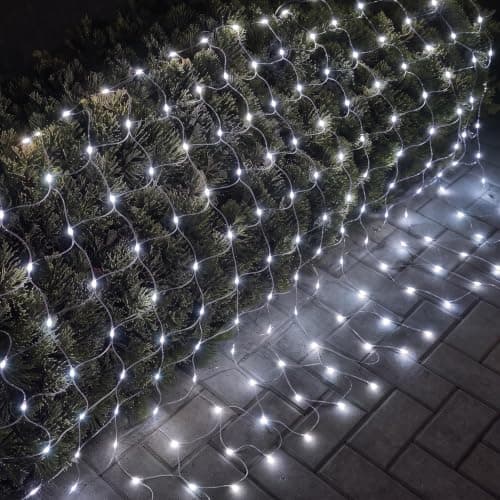 Top pickDazzle Bright Christmas Net Lights360 LEDs, 8 modes | Bushes and hedges, done in ten minutes | 8.7 | $25.99 · View on Amazon |
| 2 | 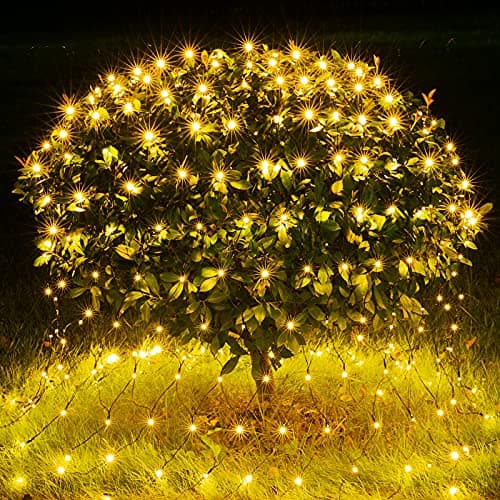 BlcTec Christmas Net Lights, 360 LED, 9.8 x 6.6 ft360 LED, 9.8 x 6.6 ft, 8 modes, UL | A larger bed in one drop | 8.3 | $29.99 · View on Amazon |
| 3 | 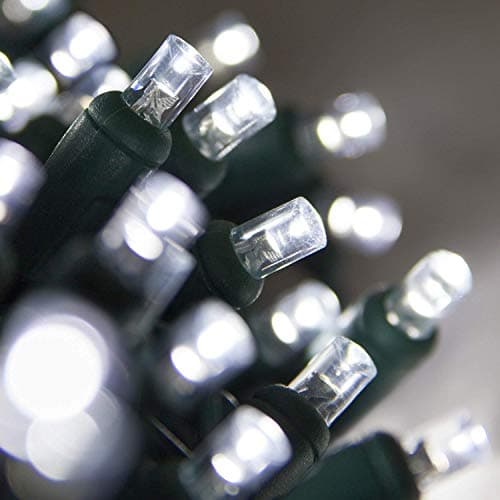 5 mm Wide Angle LED Mini Lights, 70 ct, green wire70 bulbs / 24 ft, 5 mm wide angle | Wrapping trunks and branches | 9.0 | $24.99 · View on Amazon |
| 4 | 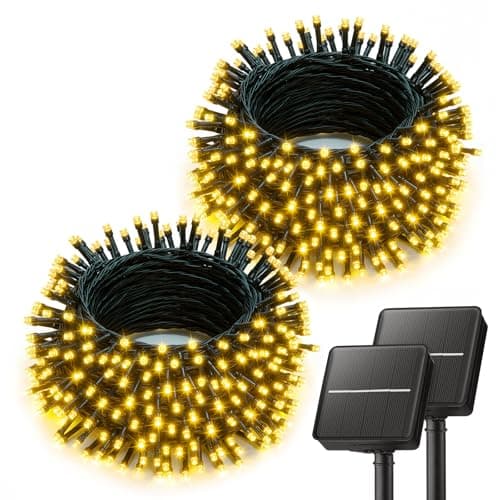 Brightown Solar Christmas String Lights, 2-packSolar panel, 8 modes, 2-pack | Anywhere you have no outlet | 7.6 | $16.99 · View on Amazon |
| 5 | 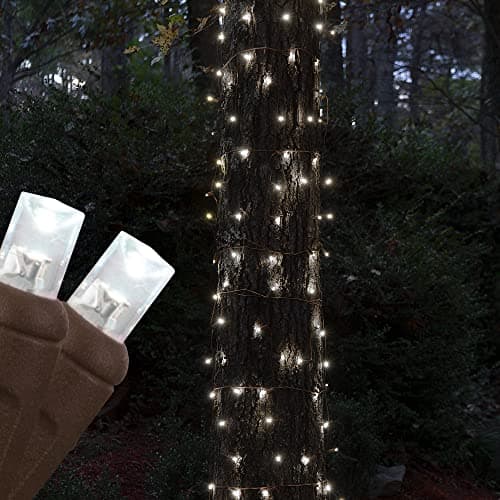 Wintergreen Lighting 70 Cool White StretchNet Pro Tree Wrap Lights70 cool white 5 mm, expandable net | Wrapping a trunk in minutes | 8.7 | $23.99 · View on Amazon |
#ad We may earn a commission · Price as of October 17, 2026
Scores are our own editorial judgment from published specifications and buyer feedback, scored against the same criteria across this category. See how we pick.
Jump to a full review below: lights
The short version: buy net lights, not string lights. A net is a pre-made grid that drops over a shrub in one movement, and our top pick is the Dazzle Bright 360-LED net because it is the common 4 x 6 ft size that Christmas Lights Etc rates for a standard shrub up to about three feet tall and wide — which is most foundation planting in front of most houses. If your bushes are larger than that you buy more nets and overlap them, and if they are shaped in a way a flat grid cannot follow you drop to 5 mm mini lights and wrap.
Why a net and not a string
Wrapping a bush with a string light is the most thankless job in outdoor decorating. There is no logical path for the strand to follow, so you push it into the foliage by hand, stand back, find a dark patch, and pull it out again. Twenty minutes per bush is normal, and the result is uneven because the light ends up wherever your arm could reach.
A net solves it by fixing the spacing in advance. The bulbs are held in a grid by the wire itself, so once the grid is over the shrub the light is already evenly distributed. Christmas Lights Etc's own installation guidance is a thirty-second job per bush: start at a corner and drape the net the way you would wrap a present.
| Size | Format | Suits | Notes |
|---|---|---|---|
| 4 x 6 ft | LED or incandescent | A standard shrub up to about 3 ft tall and wide | The size to default to |
| 4 x 8 ft | Incandescent only | A larger bush, or two small ones side by side | No LED equivalent in that size |
| 2 x 6 ft / 2 x 8 ft | Tree wrap | Trunks and narrow columns | A long strip, not a square |
| 6 in x 12 ft / 15 ft | Spiral wrap | Trunks and porch columns | Wraps rather than drapes |
| StretchNet Pro | Expandable net | Trunk circumferences from 14 in to 52 in | Elastic cord woven through the net |
How many nets your bed needs
Treat each shrub as its own unit rather than measuring the bed as a whole. A 4 x 6 ft net covers one standard shrub. A bush clearly bigger than waist height and arm's width takes two, overlapped. A hedge row takes roughly one net per three feet of run, laid side by side.
- Count the shrubs you actually want lit, which is usually fewer than the number you have. An alternating pattern across a long bed reads better from the street than every bush lit identically.
- Assign one 4 x 6 ft net per standard shrub, two for anything noticeably larger.
- Check the connection limit before you buy. This is where LED matters most: Christmas Lights Etc publishes 45 commercial LED net sets end to end on a single outlet, against 6 sets for commercial incandescent and 3 for standard residential incandescent.
- Add one spare net. You will find a bush you forgot about, and the color you bought will be gone from the shelf by the second week of December.
Draping, by the shape of the bush
A net is a flat rectangle and a bush is not, so the technique changes with the shape. These cases cover almost everything in a front yard.
- Square or boxed bushes — start at a corner and drape as though you were wrapping a present. The corners pull the net square and the face of the bush lights evenly.
- Round and conical shrubs — turn the net vertical and hang it in overlapping panels around the bush. Draping a round shrub horizontally bunches all the light at the top and leaves the base dark, which is the most common net-light mistake.
- Hedge rows — lay the nets side by side on the ground first, align the strings, and keep every net facing the same way. Mismatched nets produce visible seams exactly where the eye travels along the hedge.
- Holly and anything sharp-leafed — wear gloves and work slowly. A snagged wire on a prickly shrub is how a net gets a nick in its insulation, and that nick is next season's dead section.
When a net is the wrong answer
Two situations call for mini lights instead. The first is a shrub with a shape no grid can follow — an espaliered wall plant, a topiary spiral, a bush trained flat against brick. The second is a bush you want to read as individual points of light rather than an even field, which is a legitimate aesthetic choice and the one case where twenty minutes of hand-wrapping buys you something.
For both, use 5 mm wide-angle LED mini lights rather than a standard mini. The concave lens throws light sideways rather than straight out of the end of the bulb, which is what you want on foliage sitting above and below the strand as well as in front of it. A 70-bulb, 24-foot set is the common commercial unit, and the wrapping arithmetic is the same as for a trunk: see how to wrap a tree trunk with Christmas lights.
Power, and the bed with no outlet near it
Foundation beds are often on the far side of the house from the only exterior receptacle. The right answer is one outdoor-rated cord of the correct length to the bed with the nets chained from there — not several cords joined end to end. The best outdoor extension cords covers the jacket code and the gauge, and no outdoor outlet covers the case where there is genuinely nothing to plug into.
If running a cord across a lawn is the thing stopping you, solar is a more reasonable option on a bush than almost anywhere else on a property, because a shrub in a front bed usually has the one thing a panel needs: open sky above it. Expect the manufacturer's stated eight to ten hours on a full charge to be a summer figure, and plan for less in December.
How we picked
Published manufacturer and retailer specifications for size, bulb count, connection limits and safety listings, plus published professional installation guidance for the draping method. Every figure is linked below. See methodology.
The picks in full
Top pick
Dazzle Bright Christmas Net Lights
Dazzle Bright
A mesh of LEDs you throw over a shrub. It is the highest ratio of visible result to time spent of anything on this site, and it is why net lights belong in most first displays.
Net lights solve one problem completely: covering a bush. Wrapping a shrub by hand takes twenty minutes and looks hand-wrapped. A net takes about ninety seconds and looks even, because it is a grid.
Dazzle Bright's sets run 360 LEDs in a mesh with eight modes. The mode controller is more useful than it sounds — on a bush the steady setting is almost always right, but the slow-fade setting reads well on a hedge line where a steady wall of light looks flat.
Where nets fail is geometry. They want a roughly rectangular volume. A tall juniper, an irregular ornamental grass, or a sparse young shrub will let the net sag into it and you get a lumpy result that reads as cheap. Measure the bush: if it is meaningfully taller than the net is wide, buy string and wrap it.
Takedown is the quiet advantage. A net comes off in one motion and folds. A wrapped shrub has to be unwrapped, in the cold, in January, and that is the job everyone underestimates.
What works
- Covers a shrub in one throw — no wrapping, no ladder
- Even spacing looks deliberate in a way hand-wrapped string never does
- Packs down flat, unlike a wrapped bush that has to be unwrapped
What does not
- Only works on roughly cube-shaped shrubs; it sags off tall or sparse ones
- A snagged mesh is harder to untangle than a string
- Fixed LEDs — no bulb replacement
| Type | Net / mesh |
|---|---|
| LED count | 360 (per the manufacturer listing) |
| Modes | 8 |
| Colors | Multicolor and warm white options |
| Use | Outdoor rated |
| Connectable | Yes on most sets |
A larger bed in one drop
BlcTec Christmas Net Lights, 360 LED, 9.8 x 6.6 ft
BlcTec
The bigger-footprint net: 9.8 by 6.6 feet of mesh in one piece, UL certified, with a built-in timer and end-to-end connection so a run of shrubs is still one plug.
If you are lighting a front bed you usually need more than one net, and the single biggest saving is buying a net that is physically big enough for the shrub rather than seaming two smaller ones together. At 9.8 by 6.6 feet this one covers a wide bed or a large rounded shrub in a single drop, which is the difference between a tidy install and a visible join across the top of a bush.
Buying every net for a run in one order matters more than the brand. Warm white is not a standard, so two makers' warm white on adjacent shrubs is visibly two different colors and there is no fixing it once they are up.
Two features here earn their place. It connects end to end, so a three-shrub bed runs off one outdoor outlet through one cord. And the timer is built into the set, which means this run does not need a separate outdoor timer — useful when the bed is the furthest thing from the house.
The limitations are the ones every net has: the shrub has to be roughly box-shaped, and a snag is annoying to clear. Nothing brand-specific.
The LED count, dimensions, mode count, UL certification and timer above are the listing's own published figures, and the UL certification is the one that matters most for something left outdoors on a timer.
What works
- 9.8 x 6.6 ft covers a wide bed or a large shrub without seaming two nets together
- Connectable end to end, so a bed of three shrubs is still one plug
- A built-in timer means no separate outdoor timer for this run
- UL certification is stated, which is not a given at this price
What does not
- Same geometry limits as any net — a shrub that is not roughly box-shaped fights it
- Eight modes includes flashing patterns most people will never use
- No published rated-hours figure
| Type | Net / mesh |
|---|---|
| LEDs | 360 |
| Coverage | 9.8 ft x 6.6 ft |
| Modes | 8 |
| Safety listing | UL certified (per the listing) |
| Timer | Built in |
| Connectable | Yes, end to end |
Wrapping trunks and branches
5 mm Wide Angle LED Mini Lights, 70 ct, green wire
Wintergreen Lighting
The commercial 5 mm wide-angle string is the format built for tree wrapping: a small concave lens that throws light sideways, on a green wire that disappears into bark and foliage in daylight.
Wrapping a tree is a different lighting problem from outlining a roof, and the bulb that solves it is different too. A roofline wants a big bulb that reads as a distinct point from the street. A trunk wants a small bulb, close together, that turns the bark into a glowing column — and that is what the 5 mm wide-angle format is for. Christmas Lights, Etc identifies 5 mm LED wide-angle lights as the type most commonly used on outdoor trees, and the reason is the lens: it is concave, so it spreads light sideways around the curve of the trunk instead of firing it into the street.
Wintergreen's 70-count set runs 24 feet on green wire. Green matters more than people expect. Lights are lit for roughly eight hours a night and the wire is visible for the other sixteen, and white wire spiraled up a dark trunk is a barber pole in daylight. Green disappears against bark and evergreen foliage; brown wire, sold in the same format, disappears against deciduous trunks.
The practical limit is length. Twenty-four feet sounds like a lot until you wrap it: at the 6-inch spiral spacing Christmas Lights, Etc recommends for the best look, a single set covers a surprisingly short stretch of a mature trunk. Buy by measured length rather than by set count, and buy connectable so the whole trunk runs off one feed.
What you give up against a socketed C9 is repairability — these are prelamped, so a failed section is a failed set. For a trunk wrap that is an acceptable trade, because the wire is doing structural work around a rough surface and the failure mode is usually abrasion rather than a dead bulb.
What works
- Wide-angle lens spreads light around the trunk rather than straight out
- Green wire is invisible against bark and foliage during the day
- Connectable, so a tall trunk is one continuous wrap from one outlet
- Small bulb means the wrap reads as a line of light, not a row of dots
What does not
- Bulbs are not individually replaceable on a prelamped set
- 24 ft per set covers less trunk than you expect once it is spiraled
- Manufacturer does not publish a rated-hours figure for this line
| Bulb | 5 mm wide angle (concave lens), LED |
|---|---|
| Set | 70 bulbs, 24 ft |
| Wire | Green (other colors sold in the same line) |
| Use | Commercial grade, outdoor |
| Connectable | Yes, end to end |
Anywhere you have no outlet
Brightown Solar Christmas String Lights, 2-pack
Brightown
Solar solves exactly one problem — the far corner of the yard with no power — and it is genuinely good at that. It is a poor substitute for a wired run anywhere an outlet exists.
Solar Christmas lights have a reputation problem, and most of it is deserved for the wrong reason. They are not bad products. They are products bought for the wrong job.
The right job is the tree at the end of the driveway, the mailbox, the fence line fifty feet from the house — anywhere running a cord means either a trip hazard or a trench. For that, solar is the only reasonable answer and it works.
The wrong job is the front of the house, where an outlet exists. December has the shortest days of the year and the lowest sun angle, which is precisely when a solar panel charges worst and you want the lights on longest. Brightown states 8-10 hours on a full charge; in late December, in the northern half of the country, after a cloudy day, expect meaningfully less. That is physics, not a product defect.
Practical placement note: the panel needs actual sky, not shaded sky, and it needs brushing clear after snow. A panel under two inches of snow is an off switch.
What works
- Zero wiring, zero circuit load, no cord across the lawn
- Reaches parts of the yard a cord realistically cannot
- No electricity cost at all
What does not
- December is the worst month of the year for solar charging
- Output is visibly dimmer than mains-powered LEDs
- A snowed-over panel produces nothing until you clear it
| Power | Solar panel with integrated battery |
|---|---|
| Runtime | Manufacturer states 8-10 hours on a full charge |
| Modes | 8 |
| Pack | 2 sets |
| Use | Outdoor rated |
Wrapping a trunk in minutes
Wintergreen Lighting 70 Cool White StretchNet Pro Tree Wrap Lights
Wintergreen Lighting
A stretchable net sized for a trunk rather than a string you spiral by hand. You wrap once, the elastic takes up the slack, and the spacing comes out even without you measuring it.
The slow part of lighting a tree is not the ladder. It is spiraling a string up a trunk by hand and discovering at the top that the spacing drifted, so the bottom four feet are dense and the top four are sparse. Tree wrap net solves that mechanically: the lights are held in a net with a stretchable cord woven through it, so you hold one edge against the trunk, wrap once, and the elastic pulls the spacing even.
Christmas Lights, Etc describes the StretchNet Pro as expandable to fit a variety of trunk diameters, which is the whole point — a trunk tapers, and a fixed net would be tight at the bottom and loose at the top. The brown wire version is the one to buy for a deciduous trunk; green is right if you are wrapping an evergreen or a column against foliage.
The honest limitation is that this is a trunk product and nothing else. It does not go up into branches, it does not follow a fork, and on a multi-stem or heavily gnarled tree it will not sit flat. For those, hand-spiraled 5 mm string is still the answer, and Christmas Lights, Etc's own guidance is to carry the wrap up the trunk and roughly three to four feet into the extending branches, choosing branches rather than trying to do all of them.
Price per lit foot is higher than plain string. What you buy is time, and a finish that looks deliberate rather than improvised — which matters most on the one specimen tree at the front of the house that everybody actually looks at.
What works
- Even spacing without measuring — the net sets it for you
- Wraps a trunk in a fraction of the time a hand-spiraled string takes
- Brown wire disappears against bark in daylight
- Stretch means one size fits a range of trunk diameters
What does not
- Only works on a reasonably straight, cylindrical trunk
- Costs more per lit foot than a plain string
- Useless on branches — it is a trunk product
| Format | Net with an elastic cord woven through |
|---|---|
| Bulb | 5 mm wide angle LED |
| Wire | Brown (green also sold) |
| Fit | Expandable across a range of trunk diameters |
| Use | Outdoor tree trunks and columns |
Common questions
What are the best Christmas lights for bushes?
Net lights, in the 4 x 6 ft size, which Christmas Lights Etc rates for a standard shrub up to about three feet tall and wide. They drop over the bush in one movement with the spacing already fixed, so the light is even without hand-placing a strand. Buy LED rather than incandescent nets, because the published connection limit is 45 sets end to end against three for standard residential incandescent.
How many net lights do I need for one bush?
One 4 x 6 ft net per standard shrub up to roughly three feet tall and wide. Anything noticeably larger takes two, overlapped. For a hedge row, budget about one net per three feet of run and lay them side by side facing the same direction.
How do you put net lights on a round bush?
Turn the net vertical and hang it in overlapping panels around the bush rather than draping it horizontally over the top. Draping a round or conical shrub horizontally concentrates the light at the crown and leaves the base dark.
Can you use regular string lights on bushes?
You can, and there are two good reasons to: a shrub with a shape no flat grid can follow, and a bush you want to read as individual points of light rather than an even field. Use 5 mm wide-angle LED minis, because the concave lens throws light sideways into foliage that sits above and below the strand.
Are solar lights any good on bushes?
Better here than almost anywhere else on a house, because a shrub in a front foundation bed usually has open sky above it for the panel. Treat the manufacturer's stated eight to ten hours of runtime as a summer figure and expect less in December.
Sources
Every specification quoted on this page comes from the manufacturer’s own published information or a current retail listing, linked below. Where a figure is not published, we say so rather than estimating it.
- Christmas Lights Etc — net Christmas lights for bushes (4 x 6 ft covers a shrub up to about 3 ft, 4 x 8 ft incandescent only, 2 x 6 / 2 x 8 tree wrap, 6 in spiral wrap, StretchNet Pro 14-52 in; 45 LED sets end to end vs 6 commercial and 3 residential incandescent; draping method for square, round and hedge-row shrubs)
- Amazon — Dazzle Bright Christmas net lights, 360 LED specification
- Amazon — BlcTec Christmas net lights, 360 LED, 9.8 x 6.6 ft, UL certified
- Wintergreen Lighting — 5 mm wide angle LED mini light specifications
- Amazon — Brightown solar Christmas string lights listing and stated runtime