Outdoor Christmas Lights
Are net lights worth it?
On one job they are the best product on the market by a wide margin. On every other job they are a compromise sold as a shortcut.
Mike M. — The hands-on owner behind Iron Mako Media.
Published
This page contains affiliate links. If you buy through them we may earn a commission at no cost to you, and it never decides what we recommend. How this site is funded.
The direct answer: yes, on bushes and hedges, where a net is genuinely the best product available and not a compromise at all. No, almost anywhere else. A net is a grid with its spacing fixed at the factory, which is exactly what a shrub wants and exactly what a roofline, a tree trunk or a porch column does not. The reason net lights have a mixed reputation is that they get bought for the second group on the strength of how well they do the first.
What you are actually buying
A net light is a rectangular mesh of wire with bulbs at every intersection. The value is not the bulbs — they are ordinary mini LEDs — it is that somebody has already solved the spacing problem. On a bush, which has no logical path for a strand to follow, that is worth a great deal: you drape it and the light is already even.
The sizes on the market are narrower than people expect, and the size is what determines whether a net fits your job. Christmas Lights Etc publishes 4 x 6 ft as the standard, covering a shrub up to about three feet tall and wide; 4 x 8 ft in incandescent only; 2 x 6 ft and 2 x 8 ft as tree-wrap strips; and 6-inch spiral wraps at 12 and 15 feet for trunks and columns.
| Job | Worth it? | Why |
|---|---|---|
| A boxed or square shrub | Yes, clearly | The grid is the shape of the job |
| A hedge row | Yes | Nets laid side by side, one per ~3 ft of run |
| A round or conical bush | Yes, hung vertically | Overlapping panels, not draped over the top |
| A tree trunk or a column | Only as a wrap strip | A square net cannot follow a cylinder |
| A roofline or a gutter | No | A single line of light, which is a strand's job |
| A tree canopy | No | Nothing to support a grid |
| A window or a door frame | No | A straight edge wants a strand |
The case for: three things a strand cannot do
- Time. Hand-wrapping a bush with a strand is a twenty-minute job per bush, and the result is uneven because the strand ends up wherever your arm could reach. A net is a thirty-second job: Christmas Lights Etc's guidance for a square bush is to start at a corner and drape it the way you would wrap a present.
- Evenness. The spacing is fixed by the wire, so there are no dark patches and no bunching unless you drape a round bush horizontally — which is the one mistake to avoid, and the fix is to hang it vertically in overlapping panels instead.
- Connection count. This is the underrated one. Christmas Lights Etc publishes 45 commercial LED net sets connectable end to end on a single outlet, against 6 for commercial incandescent and 3 for standard residential incandescent. On a ten-bush foundation bed, LED nets mean one cord run and incandescent nets mean four.
The case against: two real drawbacks
Both of these are genuine and neither gets mentioned on product pages.
- A net cannot be shortened. A strand can be run to the length you need and the excess tucked away or cut at a socket on some commercial lines. A net is a fixed rectangle: if your bush is 3 ft 6 in wide, the 4 x 6 ft net hangs over the edges, and the only remedy is to fold it, which doubles the light in the fold. Measure your shrubs before you buy, because the size steps are coarse.
- Nets are harder to store and easier to damage. A net has far more wire per bulb than a strand and no natural way to coil, so it goes back in the box as a tangle, and a snagged intersection is a break in the insulation that you will not find until next November. Fold it flat the way it arrived rather than balling it up — see the best storage bags and bins.
LED or incandescent, if you are buying nets
Buy LED. The connection limit above is the deciding reason — a foundation bed is the one application where you chain many sets off one receptacle, and the published limits differ by a factor of fifteen. The secondary reasons are the usual ones: less heat against living foliage, far lower draw so the bed does not eat a circuit, and no filament to break when a net is folded for storage.
The one thing incandescent nets still have is the 4 x 8 ft size, which has no LED equivalent. If you have genuinely large bushes, that size exists only in incandescent, and the alternative is two LED nets overlapped. The full comparison is in LED vs incandescent Christmas lights.
The verdict
If the question is whether to light your bushes with nets or with strands, buy nets and do not think about it further — this is one of the few places in outdoor Christmas lighting where the convenient option is also the better-looking one. If the question is whether nets can replace strands generally, the answer is no, and the pages that imply otherwise are selling convenience that does not survive contact with a roofline.
For the sizing and the draping method in full, see the best Christmas lights for bushes. For what to buy specifically, the best net lights covers the current sets and their published specifications.
What to buy
The products that fit the advice above, chosen by the process on our methodology page. Every specification quoted is the manufacturer’s own published figure, linked on the page.
Quick picks
| # | Product | Best for | Score | Price |
|---|---|---|---|---|
| 1 | 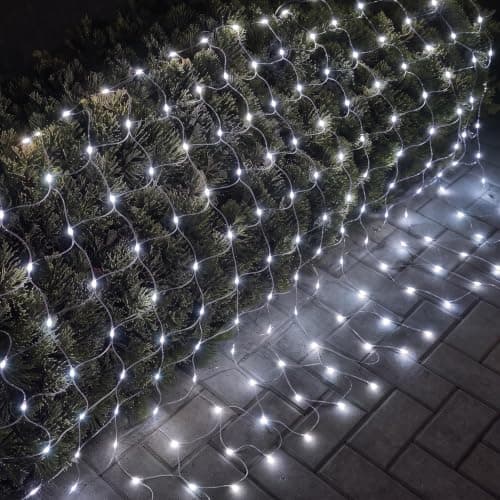 Top pickDazzle Bright Christmas Net Lights360 LEDs, 8 modes | Bushes and hedges, done in ten minutes | 8.7 | $25.99 · View on Amazon |
| 2 | 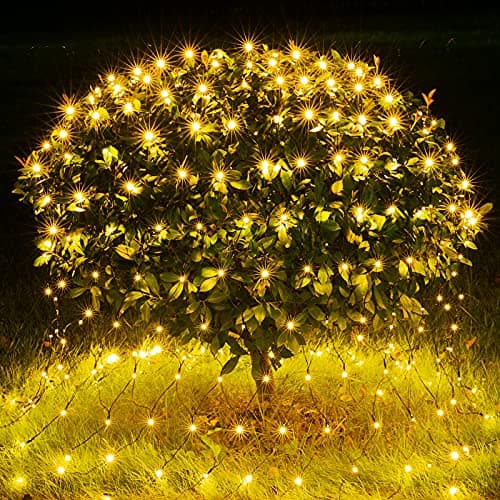 BlcTec Christmas Net Lights, 360 LED, 9.8 x 6.6 ft360 LED, 9.8 x 6.6 ft, 8 modes, UL | A larger bed in one drop | 8.3 | $29.99 · View on Amazon |
| 3 | 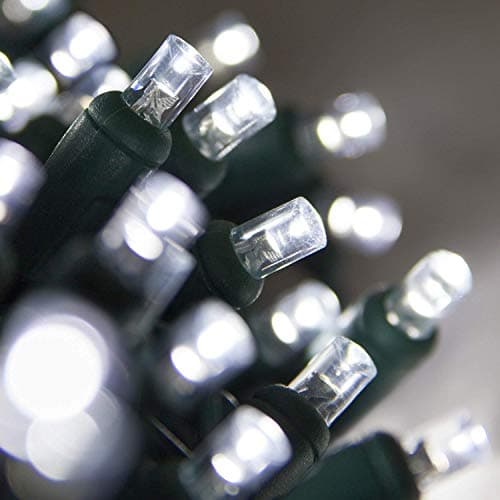 5 mm Wide Angle LED Mini Lights, 70 ct, green wire70 bulbs / 24 ft, 5 mm wide angle | Wrapping trunks and branches | 9.0 | $24.99 · View on Amazon |
#ad We may earn a commission · Price as of October 17, 2026
Scores are our own editorial judgment from published specifications and buyer feedback, scored against the same criteria across this category. See how we pick.
Jump to a full review below: lights
Common questions
Are net lights worth it?
On bushes and hedges, yes — a net is the best product available for that job and not a compromise, because the spacing is fixed at the factory and a shrub offers no logical path for a strand. Almost everywhere else, no: a roofline, a tree canopy, a window or a column all want a strand, and a fixed rectangular grid cannot follow any of them.
What size do net lights come in?
Narrower than most people expect. Christmas Lights Etc publishes 4 x 6 ft as the standard, which covers a shrub up to about three feet tall and wide; 4 x 8 ft in incandescent only; 2 x 6 ft and 2 x 8 ft tree-wrap strips; and 6-inch spiral wraps at 12 and 15 feet for trunks and columns.
What is the downside of net lights?
Two things. A net cannot be shortened — it is a fixed rectangle, so a bush that falls between sizes leaves you folding it, which doubles the light in the fold. And nets store badly: far more wire per bulb, no natural way to coil, and a snagged intersection is a break in the insulation you will not find until next season.
Should I buy LED or incandescent net lights?
LED, because of the connection limit. Christmas Lights Etc publishes 45 commercial LED net sets connectable end to end on one outlet against 6 for commercial incandescent and 3 for standard residential. On a foundation bed with ten bushes, that is the difference between one cord run and four. The only thing incandescent still offers is the 4 x 8 ft size, which has no LED equivalent.
Do net lights work on trees?
Not on a canopy — there is nothing to support a grid. On a trunk, the dedicated wrap formats do work: the 2 x 6 ft and 2 x 8 ft strips and the 6-inch spiral wraps are made for cylinders, and expandable wrap nets are published to fit trunk circumferences from 14 to 52 inches. A square net on a trunk bunches and gaps.
Sources
Every specification quoted on this page comes from the manufacturer’s own published information or a current retail listing, linked below. Where a figure is not published, we say so rather than estimating it.
- Christmas Lights Etc — net Christmas lights for bushes (published sizes 4 x 6 ft, 4 x 8 ft incandescent only, 2 x 6 / 2 x 8 tree wrap, 6 in spiral wraps, StretchNet Pro 14-52 in; 45 LED sets end to end against 6 commercial and 3 residential incandescent; draping method by bush shape)
- Amazon — Dazzle Bright Christmas net lights, 360 LED specification
- Amazon — BlcTec Christmas net lights, 360 LED, 9.8 x 6.6 ft, UL certified
- Wintergreen Lighting — 5 mm wide angle LED mini light specifications
Read next
- The best Christmas net lights for bushes
- The best Christmas lights for bushes
- The best outdoor Christmas lights for trees
- The best outdoor Christmas lights for a house
- How to wrap a tree trunk with Christmas lights
- The best Christmas light storage bags and bins
- A first outdoor Christmas display that looks finished