Outdoor Christmas Lights
The best Christmas lights for a mailbox post
A mailbox is at the end of the drive with nothing to plug into and a carrier who needs to reach it. Both facts narrow the choice down to about three products.
Mike M. — The hands-on owner behind Iron Mako Media.
Published
This page contains affiliate links. If you buy through them we may earn a commission at no cost to you, and it never decides what we recommend. How this site is funded.
Quick picks
| # | Product | Best for | Score | Price |
|---|---|---|---|---|
| 1 | 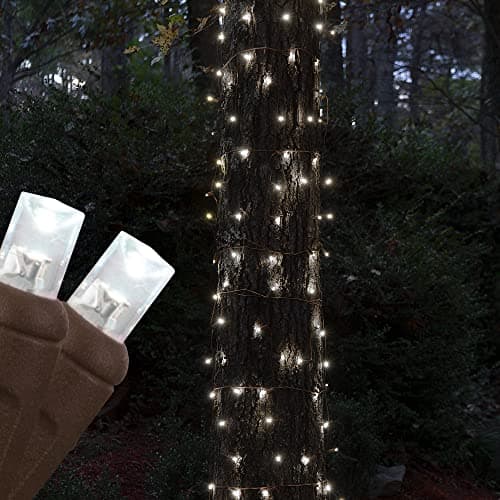 Top pickWintergreen Lighting 70 Cool White StretchNet Pro Tree Wrap Lights70 cool white 5 mm, expandable net | Wrapping a trunk in minutes | 8.7 | $23.99 · View on Amazon |
| 2 | 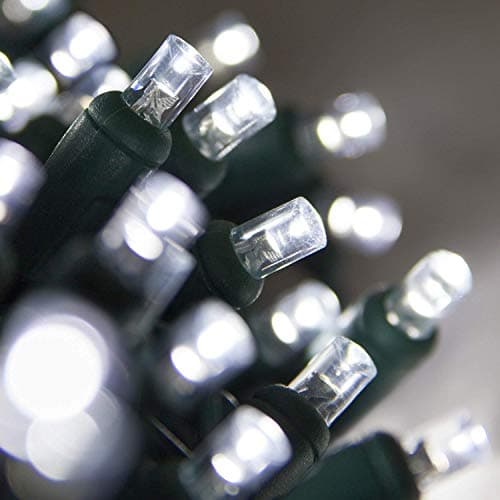 5 mm Wide Angle LED Mini Lights, 70 ct, green wire70 bulbs / 24 ft, 5 mm wide angle | Wrapping trunks and branches | 9.0 | $24.99 · View on Amazon |
| 3 | 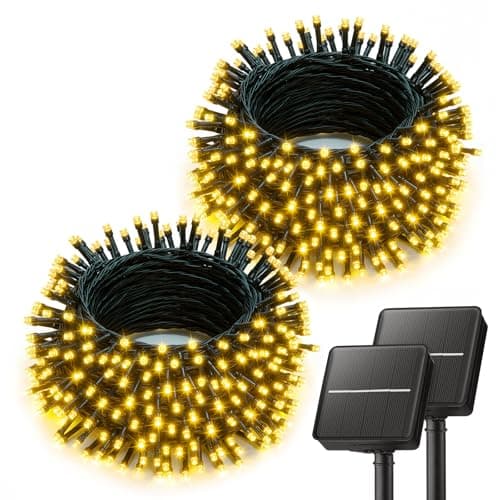 Brightown Solar Christmas String Lights, 2-packSolar panel, 8 modes, 2-pack | Anywhere you have no outlet | 7.6 | $16.99 · View on Amazon |
| 4 | 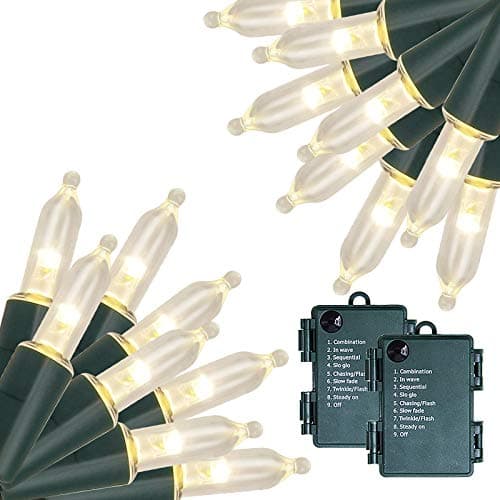 Twinkle Star Battery Operated String Lights, 16 ft / 50 LED, 2-pack16 ft, 50 LED warm white, 2-pack | Wreaths, garland and anything on a door | 7.8 | $14.99 · View on Amazon |
| 5 | 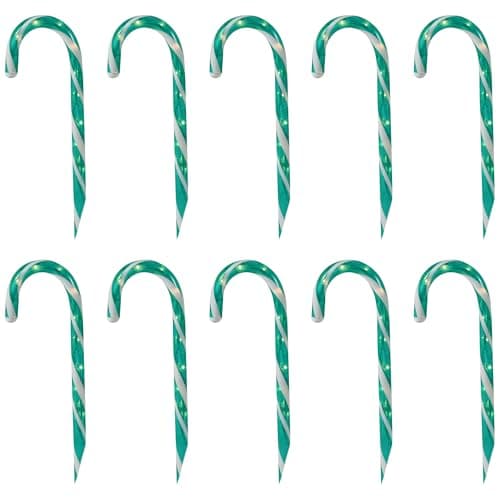 Lighted Candy Cane Pathway Markers, 12 in, set of 1012 in tall, set of 10 | A long walk on a small budget | 8.3 | $35.39 · View on Amazon |
#ad We may earn a commission · Price as of October 17, 2026
Scores are our own editorial judgment from published specifications and buyer feedback, scored against the same criteria across this category. See how we pick.
Jump to a full review below: lights
The short version: a mailbox post is a short vertical column with no power at the bottom, so the best answer is an expandable net wrap rather than a strand you spiral by hand. Our top pick is the Wintergreen StretchNet Pro, because it has an elastic cord woven through the net and is published to fit trunk circumferences from 14 to 52 inches — which covers a 4x4 post, a 6x6 post and a brick pillar without any measuring. Where there is no outlet at the end of the drive and no desire to run a cord across it, solar is a better compromise on a mailbox than it is anywhere else on a property.
Why the mailbox is its own problem
Every other surface on a house is either near a receptacle or on the way to one. A mailbox is at the property line, usually across a lawn and often across a driveway, and a cord across a driveway is not something to do for a month in winter. That one fact rules out most of the catalog and promotes two product classes that are mediocre everywhere else: solar and battery.
The second fact is that somebody has to use it every weekday. The door needs to open fully, the approach needs to stay clear, and nothing should be wrapped in a way that catches on a hand or a vehicle. That is not a decorating constraint most pages mention and it is the one that gets a display taken down.
| Method | Power | Install time | Best when |
|---|---|---|---|
| Expandable net wrap on the post | Solar, battery or mains | Under 5 minutes | You want it to look deliberate |
| Mini lights spiralled by hand | Any | 15-20 minutes | The post is an odd shape |
| Lit garland or swag on the box | Battery, with a timer | 10 minutes | You want daylight presence too |
| Pathway markers up the approach | Mains or solar | 10 minutes | The drive is long and dark |
The wrap arithmetic, if you are using a strand
A net wrap needs no math. A strand does, and under-buying is the standard outcome because a column eats far more light than it looks like it should. The formula professional installers use for columns applies unchanged to a mailbox post: divide the height you are wrapping by your spacing to get the number of wraps, then multiply by the circumference of the post.
- Measure the post height you will actually wrap — usually from a few inches above grade to just under the box, so roughly 36 to 42 inches on a standard mailbox.
- Pick a spacing. Four inches is the published figure for poles and banisters; six inches is the maximum for house trim and reads thin on something this close to the eye.
- Divide height by spacing for the number of wraps. A 40-inch post at 4-inch spacing is 10 wraps.
- Multiply by the post circumference. A 4x4 post is about 14 inches around, so 10 wraps is about 140 inches, or 12 feet of strand. A brick pillar at 40 inches around is 400 inches, or about 33 feet.
- Add a few feet for the run from the bottom of the wrap to wherever the power or battery box sits.
Solar on a mailbox: the one place it makes sense
Solar sets get recommended for jobs they are bad at, which is why they have a poor reputation. The failure is almost always the panel: a panel under a porch roof or on the shaded north side of a house never charges. A mailbox at the end of a drive is the opposite situation — open sky, no overhang, nothing shading it for most of the day.
Read the stated runtime as the best case rather than the December case. Brightown publishes eight to ten hours on a full charge, which is a figure from a full charge in good light. In a northern December, with a short day and a low sun, plan on substantially less and be satisfied with an evening rather than a night. The alternative is a battery set with a built-in timer, where you control the window instead of the weather doing it for you — see the best battery operated Christmas lights with a timer.
Keeping the carrier able to use it
This is the part that decides whether the display survives the season, and it is three rules.
- Nothing across the door. Wrap the post, not the box, or put a swag on the top face where the door swings away from it. A strand across the opening is a strand that gets pulled off within two days.
- Nothing loose at hand height. Secure the top and bottom of the wrap so it cannot unwind into a loop. Zip ties at both ends, trimmed flush.
- Nothing in the road or the drive apron. If you light the approach, keep the markers behind the curb line and out of the swing of a turning vehicle. Pathway markers with ground stakes are the right product here and they come as a set with fixed spacing — the 12-inch candy cane markers publish 24 inches between canes on an 18-foot string.
Matching the mailbox to the house
A mailbox lit in a different color temperature from the house reads as an afterthought, and from the street the two are in the same frame. If the roofline is warm white, wrap the post in warm white. If the house runs multicolor, the mailbox is the one place a single-color accent can work, because it is far enough from the facade to read as a separate object.
The other half of the same decision is the drive between the two. The best pathway Christmas lights covers markers and spacing, and warm white vs cool white covers the color choice that ties the whole property together.
How we picked
Published manufacturer and retailer specifications for fit range, bulb count, spacing and stated runtime, plus published professional column-wrapping guidance for the arithmetic. Every figure is linked below. See methodology.
The picks in full
Top pick
Wintergreen Lighting 70 Cool White StretchNet Pro Tree Wrap Lights
Wintergreen Lighting
A stretchable net sized for a trunk rather than a string you spiral by hand. You wrap once, the elastic takes up the slack, and the spacing comes out even without you measuring it.
The slow part of lighting a tree is not the ladder. It is spiraling a string up a trunk by hand and discovering at the top that the spacing drifted, so the bottom four feet are dense and the top four are sparse. Tree wrap net solves that mechanically: the lights are held in a net with a stretchable cord woven through it, so you hold one edge against the trunk, wrap once, and the elastic pulls the spacing even.
Christmas Lights, Etc describes the StretchNet Pro as expandable to fit a variety of trunk diameters, which is the whole point — a trunk tapers, and a fixed net would be tight at the bottom and loose at the top. The brown wire version is the one to buy for a deciduous trunk; green is right if you are wrapping an evergreen or a column against foliage.
The honest limitation is that this is a trunk product and nothing else. It does not go up into branches, it does not follow a fork, and on a multi-stem or heavily gnarled tree it will not sit flat. For those, hand-spiraled 5 mm string is still the answer, and Christmas Lights, Etc's own guidance is to carry the wrap up the trunk and roughly three to four feet into the extending branches, choosing branches rather than trying to do all of them.
Price per lit foot is higher than plain string. What you buy is time, and a finish that looks deliberate rather than improvised — which matters most on the one specimen tree at the front of the house that everybody actually looks at.
What works
- Even spacing without measuring — the net sets it for you
- Wraps a trunk in a fraction of the time a hand-spiraled string takes
- Brown wire disappears against bark in daylight
- Stretch means one size fits a range of trunk diameters
What does not
- Only works on a reasonably straight, cylindrical trunk
- Costs more per lit foot than a plain string
- Useless on branches — it is a trunk product
| Format | Net with an elastic cord woven through |
|---|---|
| Bulb | 5 mm wide angle LED |
| Wire | Brown (green also sold) |
| Fit | Expandable across a range of trunk diameters |
| Use | Outdoor tree trunks and columns |
Wrapping trunks and branches
5 mm Wide Angle LED Mini Lights, 70 ct, green wire
Wintergreen Lighting
The commercial 5 mm wide-angle string is the format built for tree wrapping: a small concave lens that throws light sideways, on a green wire that disappears into bark and foliage in daylight.
Wrapping a tree is a different lighting problem from outlining a roof, and the bulb that solves it is different too. A roofline wants a big bulb that reads as a distinct point from the street. A trunk wants a small bulb, close together, that turns the bark into a glowing column — and that is what the 5 mm wide-angle format is for. Christmas Lights, Etc identifies 5 mm LED wide-angle lights as the type most commonly used on outdoor trees, and the reason is the lens: it is concave, so it spreads light sideways around the curve of the trunk instead of firing it into the street.
Wintergreen's 70-count set runs 24 feet on green wire. Green matters more than people expect. Lights are lit for roughly eight hours a night and the wire is visible for the other sixteen, and white wire spiraled up a dark trunk is a barber pole in daylight. Green disappears against bark and evergreen foliage; brown wire, sold in the same format, disappears against deciduous trunks.
The practical limit is length. Twenty-four feet sounds like a lot until you wrap it: at the 6-inch spiral spacing Christmas Lights, Etc recommends for the best look, a single set covers a surprisingly short stretch of a mature trunk. Buy by measured length rather than by set count, and buy connectable so the whole trunk runs off one feed.
What you give up against a socketed C9 is repairability — these are prelamped, so a failed section is a failed set. For a trunk wrap that is an acceptable trade, because the wire is doing structural work around a rough surface and the failure mode is usually abrasion rather than a dead bulb.
What works
- Wide-angle lens spreads light around the trunk rather than straight out
- Green wire is invisible against bark and foliage during the day
- Connectable, so a tall trunk is one continuous wrap from one outlet
- Small bulb means the wrap reads as a line of light, not a row of dots
What does not
- Bulbs are not individually replaceable on a prelamped set
- 24 ft per set covers less trunk than you expect once it is spiraled
- Manufacturer does not publish a rated-hours figure for this line
| Bulb | 5 mm wide angle (concave lens), LED |
|---|---|
| Set | 70 bulbs, 24 ft |
| Wire | Green (other colors sold in the same line) |
| Use | Commercial grade, outdoor |
| Connectable | Yes, end to end |
Anywhere you have no outlet
Brightown Solar Christmas String Lights, 2-pack
Brightown
Solar solves exactly one problem — the far corner of the yard with no power — and it is genuinely good at that. It is a poor substitute for a wired run anywhere an outlet exists.
Solar Christmas lights have a reputation problem, and most of it is deserved for the wrong reason. They are not bad products. They are products bought for the wrong job.
The right job is the tree at the end of the driveway, the mailbox, the fence line fifty feet from the house — anywhere running a cord means either a trip hazard or a trench. For that, solar is the only reasonable answer and it works.
The wrong job is the front of the house, where an outlet exists. December has the shortest days of the year and the lowest sun angle, which is precisely when a solar panel charges worst and you want the lights on longest. Brightown states 8-10 hours on a full charge; in late December, in the northern half of the country, after a cloudy day, expect meaningfully less. That is physics, not a product defect.
Practical placement note: the panel needs actual sky, not shaded sky, and it needs brushing clear after snow. A panel under two inches of snow is an off switch.
What works
- Zero wiring, zero circuit load, no cord across the lawn
- Reaches parts of the yard a cord realistically cannot
- No electricity cost at all
What does not
- December is the worst month of the year for solar charging
- Output is visibly dimmer than mains-powered LEDs
- A snowed-over panel produces nothing until you clear it
| Power | Solar panel with integrated battery |
|---|---|
| Runtime | Manufacturer states 8-10 hours on a full charge |
| Modes | 8 |
| Pack | 2 sets |
| Use | Outdoor rated |
Wreaths, garland and anything on a door
Twinkle Star Battery Operated String Lights, 16 ft / 50 LED, 2-pack
Twinkle Star
Battery sets exist for the places a cord cannot go without looking terrible — a door wreath, a mailbox, a porch column. Judged on that job they are excellent; judged as house lighting they are not.
A cord running down the front door frame ruins a wreath. That is the entire case for battery lights, and it is a good one.
This set is 16 feet with 50 warm white LEDs, sold in twos — which is the right quantity, because the places battery lights belong come in pairs: a wreath and a mailbox, two porch columns, two window boxes. If the set you buy has a built-in timer, use it; without one you are opening the door and fishing behind the greenery every evening, and nobody does that past about day four.
The thing nobody mentions in listings: alkaline batteries lose capacity in the cold, and a wreath on an exterior door is at outdoor temperature. Expect noticeably shorter runtime in a cold snap than in a mild week. Lithium AA cells hold up much better in cold and are worth the premium on anything you do not want to service in January.
Hide the battery box in the back of the wreath before you hang it, not after. This sounds obvious and it is the step everyone skips.
What works
- No cord down the door frame — the whole point
- Two sets in the pack, which is the number a door and a mailbox actually need
- Trivially movable
What does not
- Cold weather cuts alkaline battery capacity significantly
- The battery box has to be hidden, and on a wreath that is fiddly
- Replacing batteries mid-season on a door wreath is a real chore
| Length | 16 ft per set |
|---|---|
| LEDs | 50, warm white |
| Pack | 2 |
| Power | Battery (cells typically not included) |
| Use | Outdoor rated; the battery box is the weak point |
| Runtime | Varies with mode and temperature |
A long walk on a small budget
Lighted Candy Cane Pathway Markers, 12 in, set of 10
Northlight
Ten markers on an 18-foot string at 24-inch spacing. Low and understated — the right choice when you want the path defined rather than decorated.
The 12-inch version is a different product for a different intention. Where the 28-inch canes are a decoration, these are an edge — ten markers at 24-inch spacing on an 18-foot string, low enough that from the street you read a lit line along the walk rather than a row of objects.
That restraint is the right call more often than people think. If the house already carries a full roofline run and a yard piece or two, tall pathway markers add a third competing element. A low, even line of light along the walk leads the eye to the door without arguing with anything.
Buy on the string length, not the marker count. Eighteen feet is the whole set, and the first marker has to reach your outlet — so a path that starts 20 feet from the house needs an outdoor-rated extension cord in the plan from the start. Ten markers at 24 inches is 18 feet of covered walk, which is a typical suburban front path and not much more.
In snow country this is the wrong size. Twelve inches is gone under six inches of snow plus whatever the shovel throws, and you will spend December digging them out. If you get real snow, the 28-inch set is the one to buy.
What works
- Ten markers in one box covers a real front walk
- 24 in spacing reads as a continuous edge, not as scattered points
- Low profile suits a modern or restrained facade
- Cheapest route to a lit path on this page
What does not
- Twelve inches disappears under any real snowfall
- Short 18 ft string limits where the outlet can be
- Small canes read as garden lighting rather than as Christmas at distance
| Height | 12 in |
|---|---|
| Set | 10 markers |
| Spacing | 24 in between canes |
| String length | 18 ft |
| Included | Ground stakes |
| Use | Outdoor |
Common questions
What are the best Christmas lights for a mailbox post?
An expandable net wrap, because it fits without measuring and goes on in under five minutes. The Wintergreen StretchNet Pro is published to fit trunk circumferences from 14 to 52 inches, which covers a 4x4 post, a 6x6 and a brick pillar. If there is no power at the end of the drive, a solar set is a more reasonable compromise on a mailbox than anywhere else, because the panel has open sky above it.
How many lights do I need for a mailbox post?
Divide the height you are wrapping by your spacing, then multiply by the post circumference. A 40-inch run on a 4x4 post at 4-inch spacing works out to about 140 inches, or 12 feet of strand. The same wrap on a brick pillar 40 inches around needs about 33 feet. One 70-bulb, 24-foot 5 mm set covers a wooden post comfortably.
Can you put Christmas lights on a mailbox without an outlet?
Yes, and it is the normal case. Use a solar set, where the open sky at the end of a driveway is the one condition solar actually needs, or a battery set with a built-in timer so you control the evening window rather than relying on how much the panel charged that day.
Is it allowed to decorate a mailbox for Christmas?
Keep the mailbox usable and you will not have a problem. Wrap the post rather than the box, leave the door free to swing fully open, secure both ends of the wrap so nothing can unwind into a loop at hand height, and keep anything on the ground behind the curb line and out of the path of a turning vehicle.
Should the mailbox match the house lights?
Yes on color temperature, because from the street the mailbox and the facade are in the same view. Warm white house, warm white post. A property running multicolor is the one case where a single-color mailbox accent works, since it is far enough from the house to read as its own object.
Sources
Every specification quoted on this page comes from the manufacturer’s own published information or a current retail listing, linked below. Where a figure is not published, we say so rather than estimating it.
- Christmas Lights Etc — 5 mm StretchNet Pro tree wrap lights (expandable net with elastic cord, published fit range 14 in to 52 in trunk circumference)
- Decorators Warehouse — tree and column lighting with 5 mm mini lights (height divided by 4-inch spacing equals wraps, multiplied by circumference)
- 1000Bulbs — Christmas mini lights buying guide (6 in maximum for house trim, 4 in for poles and banisters)
- Wintergreen Lighting — 5 mm wide angle LED mini light specifications, 70 bulbs / 24 ft sets
- Amazon — Brightown solar Christmas string lights listing and stated 8-10 hour runtime
- Northlight — lighted candy cane pathway markers, 12 in set of 10 (24 in spacing, 18 ft string, ground stakes included)