Power, Cords & Timers
How to hide outdoor extension cords for Christmas lights
Most cord-hiding advice online will get you a tidy display and a fire risk. Here is what is safe, what is not, and the fix that removes the cord instead of concealing it.
Mike M. — The hands-on owner behind Iron Mako Media.
Published
This page contains affiliate links. If you buy through them we may earn a commission at no cost to you, and it never decides what we recommend. How this site is funded.
The direct answer: hide an outdoor cord by routing it, not by covering it. Run it tight along the foundation line, behind the planting bed edge or along a fence base, in a colour that disappears against that surface, pinned down with light stakes so it never crosses a path. What you must not do is put it under a mat or mulch, through a doorway, across a walkway or driveway, or into a puddle — and the much better answer on most houses is to stop needing a long cord at all by putting a multi-outlet power stake in the middle of the display.
The four places a cord must never go
Electrical-safety guidance on outdoor decorations is consistent and specific on this, and every one of these rules is routinely broken in the name of tidiness.
| The tempting shortcut | Why it is a hazard |
|---|---|
| Under a doormat, rug or runner | A covered cord cannot shed heat, and foot traffic crushes the insulation out of sight |
| Through a doorway or window gap | A cord in a closing door is pinched and cannot release heat — guidance tells you explicitly not to run cords through doorways |
| Across a walkway or a driveway | A trip hazard in the dark, and a vehicle crushes the conductors inside intact-looking insulation |
| Into standing water, a puddle or snow | Connections must be kept above ground and clear of snow and standing water, or the GFCI will trip and the connection will corrode |
The routes that actually work
- Tight against the foundation. The junction where the wall meets the ground is in shadow all day and nobody looks at it. Run the cord along that line and it is effectively invisible from the street, with no cover needed.
- Behind the bed edge. A planting bed with a hard edge gives you a channel the full width of the front of the house. Run the cord on the bed side of the edging, under the lip, and it disappears in daylight.
- Along a fence base or a path kerb. Same principle: find the existing line in the landscape and follow it rather than cutting across the lawn.
- Up the unseen face. Every column, post and downspout has a side facing the house or the neighbour. Bring vertical runs up that face.
- On stakes, a few inches up. Light stakes hold a cord just off the ground, which keeps it out of puddles, out of the mower line in spring, and visible enough that nobody puts a spade through it.
Colour does a lot of the work. A green cord against a bed, a brown cord against bark mulch, or a black cord against a dark foundation reads as nothing. An orange contractor cord across a lawn reads as an orange cord across a lawn, no matter how neatly you route it.
The real fix: shorten the runs
Most cord-hiding problems are layout problems. One receptacle by the front door feeding four separate runs across the garden produces four cords to hide. One cord out to a multi-outlet power stake planted in the middle of the display produces one cord to hide and four short tails that never leave the bed.
- A ground-stake timer with multiple outlets is the single best purchase in this category. It gives you the switching and the distribution at the point of use, out in the yard, and it is built to sit outdoors.
- Plan the feed before the display. Place the distribution point first, then arrange the pieces around it. Yard decor layout ideas covers the composition side.
- Use the right gauge for the distance. A long run on a thin cord drops voltage and runs warm. Sizing is in best outdoor extension cords.
- Never daisy-chain cords to make up a distance. Buy the length you need in one piece.
Protect the connections, not just the cord
Hiding a cord and protecting its connections are two different jobs, and the connections are where the failures happen. A cord-to-cord or cord-to-lights joint sitting on wet ground is the commonest cause of a nuisance GFCI trip on a cold wet night.
- 1
Elevate every joint
Get each connection off the ground — on a stake, a brick, or clipped to a post. Keep it clear of snow and standing water.
- 2
Point it downward
Orient the joint so water runs away from the contacts rather than into them. A connection facing up is a cup.
- 3
Use a weatherproof connection cover
A moulded cord-connection cover or a weatherproof box turns an exposed joint into a protected one and is cheap. This is the one thing worth covering; the cord itself does not want covering.
- 4
Put it all on a GFCI
Outdoor decorations should be on a GFCI-protected circuit. If the receptacle is not GFCI, a portable outdoor GFCI adapter does the job and needs no tools. See GFCI and outdoor lights.
- 5
Inspect before you plug anything in
Every cord and every light string, every year. A nick in insulation from last January's takedown is invisible once the cord is routed along the foundation.
Buy the right cord for outdoors
All of the above assumes the cord is rated for the job. Use only cords marked for outdoor use — SJTW jacketed cords are the standard outdoor type and they are stamped as such. An indoor cord run out of a window is the single most common unsafe thing in a Christmas display, and no amount of careful routing makes it acceptable.
- 14/3 SJTW covers the typical run from the house to a display and is rated 13 A.
- 12/3 SJTW is the heavy-duty choice for a long run or a stake feeding several pieces.
- A lighted end tells you at a glance whether the far end is live, which saves a walk when something is dark.
- Replace, do not repair. A damaged outdoor cord is scrap. Taping a nick is not a repair.
If the problem is that there is no exterior receptacle at all, concealment is not your issue — no outdoor outlet covers the real options, including battery and solar for the far corners of a yard.
What to buy
The products that fit the advice above, chosen by the process on our methodology page. Every specification quoted is the manufacturer’s own published figure, linked on the page.
Quick picks
| # | Product | Best for | Score | Price |
|---|---|---|---|---|
| 1 | 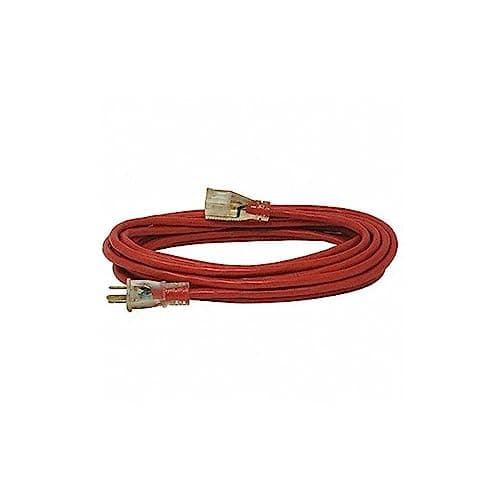 Top pickSouthwire 14/3 SJTW Outdoor Extension Cord, lighted end14/3 SJTW, 13 A rated | The standard run from house to display | 9.0 | $19.30 · View on Amazon |
| 2 | 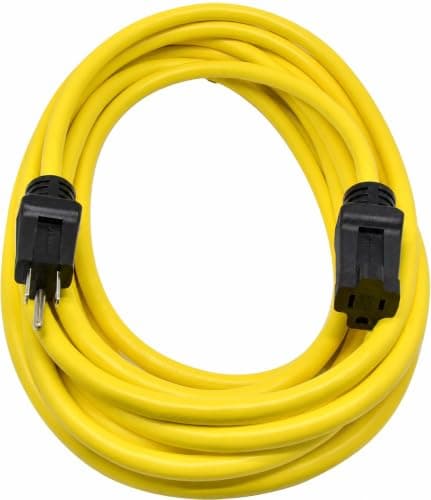 Clear Power 12/3 SJTW Heavy Duty Outdoor Cord, 25 ft12/3 SJTW, heavy duty | Feeding a stake or a heavy load | 8.7 | $28.99 · View on Amazon |
| 3 | 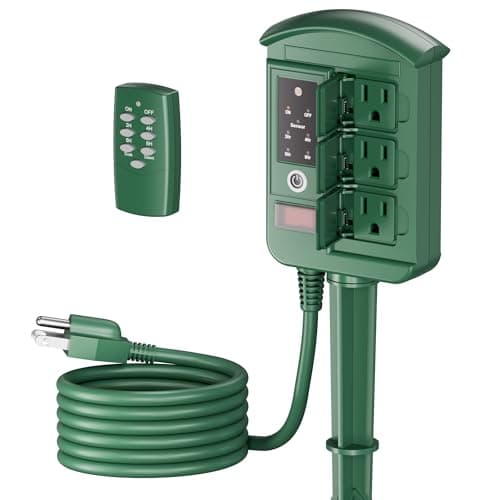 BN-LINK Outdoor Power Stake Timer, 6 outlets6 outlets on a ground stake, remote | Yard displays far from the house | 8.5 | Check price on Amazon |
| 4 | 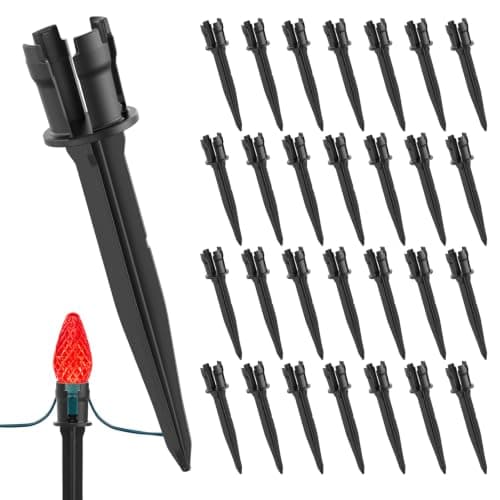 Christmas Light Stakes for C7/C9 string lightsFor C7/C9 string, multi-pack | Pathways, walkways and bed edges | 8.2 | $27.99 · View on Amazon |
#ad We may earn a commission · Price as of October 10, 2026
Scores are our own editorial judgment from published specifications and buyer feedback, scored against the same criteria across this category. See how we pick.
Jump to a full review below: power-and-timers
Common questions
How do you hide outdoor extension cords for Christmas lights?
Route them rather than cover them: tight along the foundation line, behind a planting bed edge, along a fence base or up the face of a post nobody looks at, in a cord colour that matches that surface. Hold the cord a few inches off the ground on light stakes so it stays out of puddles and never crosses a path.
Can I run an extension cord under a mat or rug?
No. A covered cord cannot shed heat and foot traffic crushes the insulation where you cannot see it. Safety guidance for outdoor decorations is explicit about not running cords under rugs or carpets, and about not running them through doorways for the same heat reason.
Can I bury an extension cord in the garden?
No. An extension cord is temporary wiring and is not rated for direct burial, regardless of how deep the mulch is. Permanent underground wiring uses direct-burial cable in a properly installed circuit, which is an electrician's job. A buried cord also sits in moisture all season and is invisible to the next spade.
How do I stop my outdoor connections tripping the GFCI?
Get the joints off the ground and point them downward so water runs away from the contacts, then fit a weatherproof connection cover. A connection lying on wet ground or buried in snow is the usual cause of a nuisance trip on a cold wet night. The cord itself does not need covering; the joints do.
What is the best way to reduce the number of cords in the yard?
Run one properly sized cord out to a multi-outlet ground-stake timer planted in the middle of the display, then feed each piece with a short tail that never leaves the bed. That turns four cords to hide into one, and puts the switching out at the point of use.
Sources
Every specification quoted on this page comes from the manufacturer’s own published information or a current retail listing, linked below. Where a figure is not published, we say so rather than estimating it.
- ESFI — outdoor decoration safety tips (use only cords marked for outdoor use, GFCI protection or a portable outdoor GFCI, do not run extension cords under rugs or carpets or through doorways, keep connections above ground and clear of snow and standing water, inspect everything for damage before use)
- Electrical Safety Authority — holiday safety tips (outdoor-rated equipment, cord and decoration inspection, GFCI use)
- Southwire — 14/3 SJTW 25 ft outdoor extension cord with lighted indicator end (13 A rating, SJTW outdoor jacket)
- Amazon — BN-LINK outdoor power stake timer, grounded weatherproof, multiple outlets
Read next
- The best outdoor extension cords for Christmas lights
- Christmas lights when you have no outdoor outlet
- GFCI and outdoor Christmas lights
- The best outdoor smart plugs for Christmas lights
- Laying out a yard display that reads as designed
- Christmas lights keep tripping the breaker
- How many Christmas lights can you run on one circuit?