Outdoor Christmas Lights
The best outdoor Christmas lights for cold weather
LEDs do not mind the cold. The plastic around them does. These are the picks whose published ratings cover the winter you actually get.
Mike M. — The hands-on owner behind Iron Mako Media.
Published
This page contains affiliate links. If you buy through them we may earn a commission at no cost to you, and it never decides what we recommend. How this site is funded.
Quick picks
| # | Product | Best for | Score | Price |
|---|---|---|---|---|
| 1 | 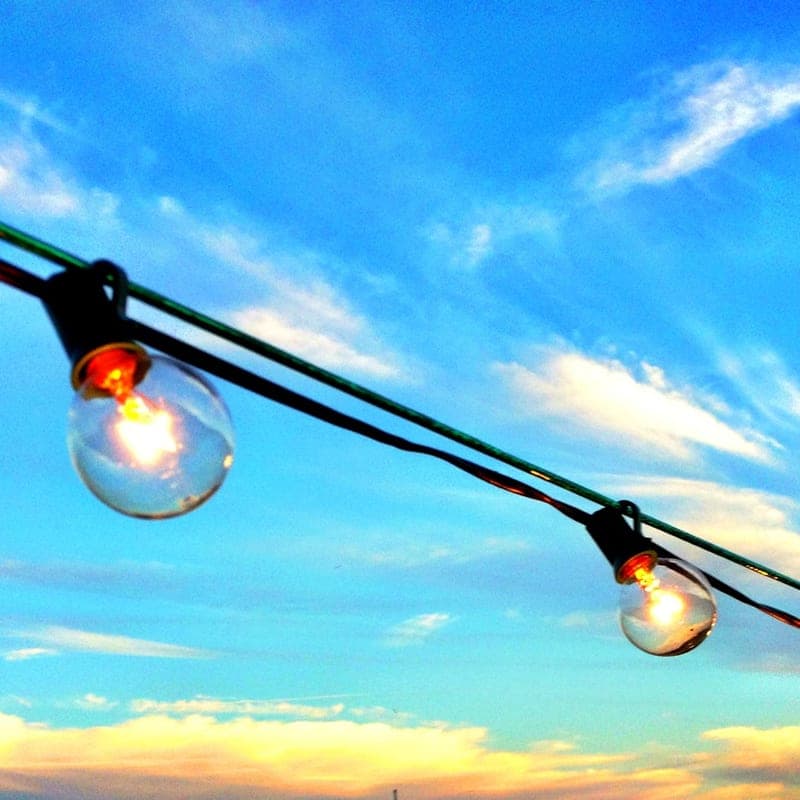 Top pickWintergreen Lighting OptiCore C9 LED, 25 ft25 bulbs / 25 ft, 12 in spacing | Rooflines you want to keep for a decade | 9.2 | Check price on Amazon |
| 2 |  Govee Christmas String Lights 2, RGBIC outdoorRGBIC, IP65, cold-resistant to -20 C | Music-reactive lights that can live outside all season | 8.9 | Check price on Amazon |
| 3 | Wintergreen Lighting 5 mm Wide Angle LED Mini Lights, 70 ct / 24 ft green wire70 bulbs / 24 ft, 5 mm wide angle | Wrapping trunks and branches | 9.0 | Check price on Amazon |
| 4 | Brizled LED Christmas String LightsHigh LED count per set, multiple modes | A first display on a budget | 8.0 | Check price on Amazon |
| 5 | 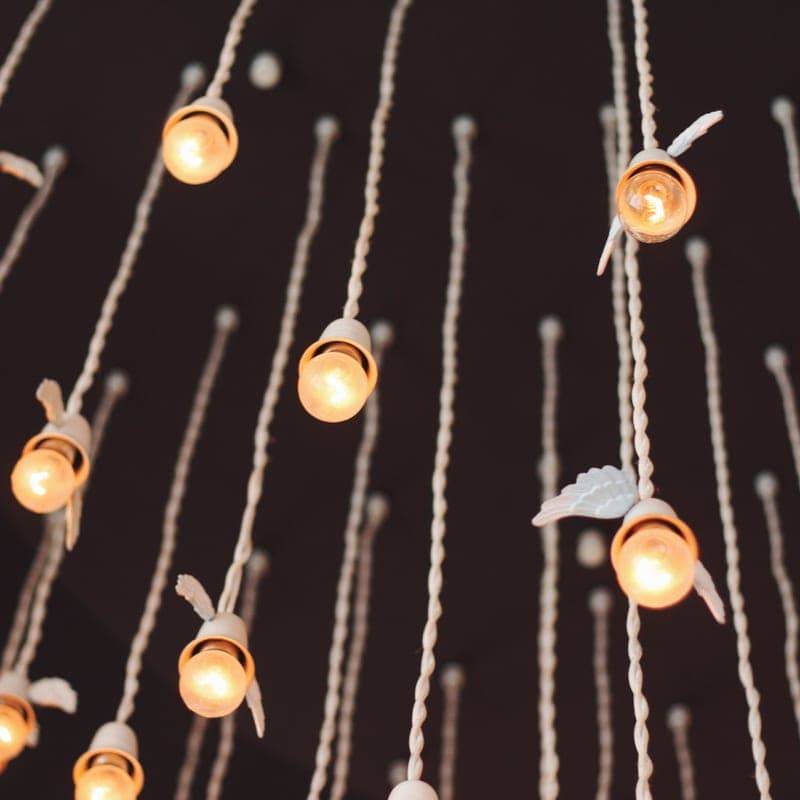 Toodour LED Icicle LightsVaried drop lengths, outdoor rated | Gutter lines and porch eaves | 8.4 | Check price on Amazon |
#ad We may earn a commission · Prices are shown by Amazon, not by us
Scores are our own editorial judgment from published specifications and buyer feedback — not aggregated user ratings, and not from hands-on testing. See how we pick.
Jump to a full review below: lights
The cold is not the LED's problem
Start with the counter-intuitive part, because it reframes the whole purchase. LEDs run better cold, not worse. Access Fixtures notes that many LEDs operate between -40 F and 185 F, with an optimal ambient range often given as -22 F to 104 F, and that lower temperatures can improve LED performance by reducing stress on the driver and increasing lumen output. Cold is a favourable environment for the semiconductor.
Incandescent bulbs are the opposite case. In a cold environment a filament takes longer to come up to temperature, and the heat it then produces is being dumped into a freezing housing. That thermal cycling — hot glass, cold air, wet snow — is why incandescent sets crack lenses and fail sockets in a way LED sets do not. The wider comparison is in LED vs incandescent Christmas lights.
What actually fails in the cold
The failure mode in a hard winter is mechanical, not electrical. Wire insulation, socket bodies and sealing gaskets are plastics and elastomers, and plastics stiffen as they cool. Industry guidance on cold-weather LED fixtures makes the point directly: the gaskets sealing a fixture have to be rated for freezing temperatures, because if those materials become brittle and crack, moisture gets in.
That is the whole cold-weather story for a light string. A run that is flexed, handled or walked on when it is 10 F cracks where a run at 50 F would have bent. Which leads to the single most useful piece of advice on this page and it costs nothing.
The two specs to look for
| Spec | What to want | Why it matters in the cold |
|---|---|---|
| Stated low-temperature rating | A published figure, e.g. -20 C | Tells you the maker expects the insulation to stay flexible, not just that the LED lights up |
| Ingress rating | IP65 or better for an exposed run | Melt-freeze cycles drive water into any gap; 65 is protection against jets from any direction |
| Lamp technology | LED | Performs better cold and avoids the hot-glass-cold-air cycling that kills incandescent |
| Lens material | Polycarbonate on C7 / C9 | Survives being dropped on frozen ground; glass does not |
| Wire gauge | Commercial gauge where handled yearly | Thicker insulation is more forgiving of cold flexing |
A published low-temperature figure is rarer than it should be, which is why it is worth paying attention when one exists. Govee states IP65 and cold resistance to -20 C on its outdoor RGBIC Christmas string line — that combination of a sealing rating and a temperature rating is the specification this page is looking for.
Snow load and ice, which nobody mentions
A string of lights in a gutter that fills with ice is carrying weight. Clips that hold fine in November let go under an inch of ice, and a strand that pulls free hangs from its wire and stresses the joints. If you get real ice, favour clips that mechanically lock rather than hook, and accept that a mid-season re-clip is part of the job in some climates. Clips vs adhesive hooks covers why adhesive is the wrong answer here specifically.
Water is the other half of it. Melt during the day and freeze at night drives water into every connection, then expands it. Keep plugs off the ground and out of gutters, face connections downward, and read are outdoor Christmas lights waterproof before you assume an outdoor rating covers sitting in a puddle.
Taking them down in the cold
The takedown is when brittle plastic gets discovered. Pulling a frozen run off a gutter in January breaks more sets than the whole season of weather did. Wait for a mild day, work the run loose rather than yanking, and wind each length as it comes off. When to take down has the timing argument.
How we picked
Published manufacturer specifications and industry guidance on LED behaviour at low ambient temperature, plus buyer feedback read in full — not testing in a freezer. Where a temperature or ingress figure is published we quote and link it; where a maker publishes no low-temperature rating, we say so rather than inventing one. See methodology.
The picks in full
Top pick
Wintergreen Lighting OptiCore C9 LED, 25 ft
Wintergreen Lighting
#ad We may earn a commission · Prices are shown by Amazon, not by us
The commercial-grade C9 most professional installers use, sold in retail quantities. Thick polycarbonate lenses and a green commercial-gauge wire that survives being handled every year.
C9 is the big, faceted, traditional-looking bulb — the one that reads as Christmas lights from the street rather than as a glow. Wintergreen's OptiCore line is the version professional installers buy, and the reason is not brightness. It is that the lens is polycarbonate rather than glass, and the manufacturer rates the bulbs at 60,000 hours. A season is roughly 45 days at eight hours, so about 360 hours. The arithmetic on that rating is generous enough that bulb failure stops being the thing that ends a strand's life; handling damage is.
The practical case for buying commercial-grade C9 is replaceability. Each bulb screws into an E17 socket. When one dies, you replace one bulb for a couple of dollars instead of pulling a 100-light strand off the roof. Over five seasons that is the whole argument, and it is why the same boxes keep appearing on the same houses.
The honest counterpoint: this is expensive per foot, and it is sold in 25 ft sets. A 180 ft roofline is eight boxes plus spare bulbs, which is a real number. If you are lighting one gable over the front door and you are not sure you will do it again next year, a cheaper set is the right call and we would not argue.
One buying note that trips people up — C9 sets and C9 bulbs are sold separately as often as together. Check whether the listing you are on is a complete lit set or a box of replacement bulbs, because the photos look nearly identical.
What works
- Bulbs are replaceable individually — one failure is not a dead strand
- Polycarbonate lens survives being dropped off a ladder
- Same product line pros buy, so spare bulbs stay available year to year
- End-to-end connectable, so long roof runs are one circuit decision
What does not
- Costs several times what a big-box 100-count set costs
- Green wire is visible against white fascia in daylight
- 25 ft per set means a 180 ft roofline is eight boxes
| Bulb | C9, E17 base, LED |
|---|---|
| Set length | 25 ft, 25 bulbs |
| Spacing | 12 in |
| Lens | Polycarbonate (manufacturer states 200x the impact strength of glass) |
| Rated life | 60,000 hours (manufacturer figure) |
| Wire | Green, commercial gauge |
Music-reactive lights that can live outside all season
Govee Christmas String Lights 2, RGBIC outdoor
Govee
#ad We may earn a commission · Prices are shown by Amazon, not by us
IP65 and cold-rated to -20 C, with built-in music modes and app scheduling. The reactive option that is genuinely specified for the weather it will sit in.
The specification that separates outdoor smart string lights from indoor ones sold with an outdoor photo is the pair of numbers on the box: ingress rating and cold rating. Govee states IP65 and cold resistance to -20 C for this line. Sixty-five is protection against water jets from any direction, which is what a string on a fascia in a December storm experiences, and a stated low-temperature figure tells you the manufacturer expects the insulation to stay flexible rather than going brittle and cracking on the first hard night.
RGBIC is the other term worth decoding. A plain RGB string is one color at a time across the whole run. RGBIC segments are independently addressable, so a color can travel along the string — which is what makes a music mode look like motion rather than like the whole house flashing in unison.
Govee builds the music modes into the product, with 10-plus reactive modes and a large library of preset scenes, controlled from the app and addressable by voice. Practically, that means there is no separate sensor to buy and no indoor-only dongle to site, which is the constraint that trips people up on the competing system.
Two things to be realistic about. The lights react to sound picked up near the control box, so if the box is behind the shrubs on a quiet street the reaction will be weak — site it where the music actually is. And a color-changing string is a distinct aesthetic; on a house whose roofline is matched warm-white C9, a saturated RGB run alongside it will fight rather than complement. Pick one language for the front of the house.
What works
- IP65 and a stated -20 C cold rating — specified for real winter
- RGBIC means color moves along the string instead of the whole run changing at once
- Music modes are built in; no dongle to buy or site indoors
- App scheduling replaces a separate outdoor timer
What does not
- Reacts to sound near the controller, so placement decides how well it tracks
- Needs Wi-Fi coverage at the front of the house
- Color-changing string is a different look from a matched warm-white roofline
| LED type | RGBIC (independently addressable segments) |
|---|---|
| Ingress rating | IP65 |
| Cold rating | -20 C (manufacturer figure) |
| Music modes | 10+ music-reactive modes |
| Scenes | 130+ preset animated scenes |
| Control | Govee Home app, Alexa, Google Assistant |
Wrapping trunks and branches
Wintergreen Lighting 5 mm Wide Angle LED Mini Lights, 70 ct / 24 ft green wire
Wintergreen Lighting
#ad We may earn a commission · Prices are shown by Amazon, not by us
The commercial 5 mm wide-angle string is the format built for tree wrapping: a small concave lens that throws light sideways, on a green wire that disappears into bark and foliage in daylight.
Wrapping a tree is a different lighting problem from outlining a roof, and the bulb that solves it is different too. A roofline wants a big bulb that reads as a distinct point from the street. A trunk wants a small bulb, close together, that turns the bark into a glowing column — and that is what the 5 mm wide-angle format is for. Christmas Lights, Etc identifies 5 mm LED wide-angle lights as the type most commonly used on outdoor trees, and the reason is the lens: it is concave, so it spreads light sideways around the curve of the trunk instead of firing it into the street.
Wintergreen's 70-count set runs 24 feet on green wire. Green matters more than people expect. Lights are lit for roughly eight hours a night and the wire is visible for the other sixteen, and white wire spiraled up a dark trunk is a barber pole in daylight. Green disappears against bark and evergreen foliage; brown wire, sold in the same format, disappears against deciduous trunks.
The practical limit is length. Twenty-four feet sounds like a lot until you wrap it: at the 6-inch spiral spacing Christmas Lights, Etc recommends for the best look, a single set covers a surprisingly short stretch of a mature trunk. Buy by measured length rather than by set count, and buy connectable so the whole trunk runs off one feed.
What you give up against a socketed C9 is repairability — these are prelamped, so a failed section is a failed set. For a trunk wrap that is an acceptable trade, because the wire is doing structural work around a rough surface and the failure mode is usually abrasion rather than a dead bulb.
What works
- Wide-angle lens spreads light around the trunk rather than straight out
- Green wire is invisible against bark and foliage during the day
- Connectable, so a tall trunk is one continuous wrap from one outlet
- Small bulb means the wrap reads as a line of light, not a row of dots
What does not
- Bulbs are not individually replaceable on a prelamped set
- 24 ft per set covers less trunk than you expect once it is spiraled
- Manufacturer does not publish a rated-hours figure for this line
| Bulb | 5 mm wide angle (concave lens), LED |
|---|---|
| Set | 70 bulbs, 24 ft |
| Wire | Green (other colors sold in the same line) |
| Use | Commercial grade, outdoor |
| Connectable | Yes, end to end |
A first display on a budget
Brizled LED Christmas String Lights
Brizled
#ad We may earn a commission · Prices are shown by Amazon, not by us
High-count LED string sets at big-box prices, with the multi-function controllers and color-changing options a first display usually wants. Not commercial hardware, and not priced like it.
Most first displays are mini LED strings, and Brizled is one of the brands that does them well enough at a low price. If your goal is to cover a lot of roofline and two bushes this weekend without spending several hundred dollars, this is the honest answer, and the commercial C9 recommendation above is the wrong one for you.
The meaningful feature is the controller. Many of these sets include warm-white/cool-white switching or full color-change, which means one purchase covers two looks. Deciding between warm and cool is the single most common regret in outdoor lighting, and a set that does both removes the decision.
What you give up is repairability. The bulbs are molded into the wire, so a dead section is a dead set — you replace it, you do not fix it. And the wire is light gauge, which matters at takedown more than at install: wound carelessly onto a reel, thin wire kinks, and a kink is where next year's failure starts.
We have not run these across multiple seasons, and the manufacturer does not publish a rated-hours figure, so we are not going to tell you how long they last. Treat them as a two-to-four season purchase and the value is good.
What works
- Cheapest route to a lot of covered feet
- Color-changing and warm/cool-switching options in one set
- Connectable, so a run is not a per-set outlet problem
What does not
- Bulbs are molded in — a failed section is a failed strand
- Wire gauge is light; it does not enjoy being wound badly onto a reel
- No published hours rating, so longevity is a guess
| Bulb | Mini LED, fixed (not replaceable) |
|---|---|
| Modes | Multi-function controller on most sets |
| Use | Indoor / outdoor rated |
| Connectable | Yes, on most sets |
| Rated life | Not published for this line |
Gutter lines and porch eaves
Toodour LED Icicle Lights
Toodour
#ad We may earn a commission · Prices are shown by Amazon, not by us
Varied-length drops off a horizontal wire. The look only works on a genuinely straight run, which is why they belong on a gutter and almost nowhere else.
Icicle lights are the one light type where installation quality is nearly invisible. The drops are deliberately different lengths, so a clip line that is a half-inch off here and there disappears into the design. On C9, that same error is a visible sag.
That forgiveness only applies on a straight horizontal run. On a raked gable — a roof edge that climbs at an angle — icicles hang vertically off a sloped line and the effect reads as a mistake. Gutter lines, porch eaves and the horizontal band above a garage door are where they work.
Storage is their real cost. The drops interlock with each other in a box, and untangling a set of icicles in November is a genuinely unpleasant hour. They are the strongest argument on this site for buying a storage reel, which is why we link that section from here.
Toodour's sets come in the three standard colors and are connectable. We have not run them across multiple seasons and there is no published hours rating, so we are not quoting durability figures.
What works
- Reads as a deliberate design element rather than a strand of lights
- The varied drop lengths hide small height errors in your clip line
- Cheap relative to the visual effect
What does not
- Needs a straight horizontal run — they look wrong on a raked gable
- Drops tangle with each other in storage more than any other light type
- Wind moves them, which some people find distracting
| Type | Icicle, varied drop lengths |
|---|---|
| Bulb | Mini LED, fixed |
| Colors | Warm white, cool white, multicolor |
| Use | Outdoor rated |
| Connectable | Yes on most sets |
Common questions
Do Christmas lights work in cold weather?
LED Christmas lights do, and they work slightly better cold than warm — published LED operating ranges commonly extend to -40 F, and lower ambient temperatures reduce driver stress and can increase light output. What struggles in the cold is the plastic: wire insulation and gaskets stiffen, so a strand cracks when handled at 10 F.
Are LED or incandescent Christmas lights better for cold weather?
LED, clearly. Incandescent filaments take longer to warm up in cold air and then dump heat into a freezing housing, and that hot-glass-cold-air cycling is what cracks lenses and kills sockets over a winter. LEDs have no filament and no meaningful warm-up.
What temperature is too cold to hang Christmas lights?
There is no single figure, but the practical rule is about handling rather than operation. Hang them on the mildest day available and let cold sets warm up indoors before unrolling, because the insulation and socket bodies are stiff below freezing and crack under flexing that would be harmless at 50 F.
What does a -20 C rating on Christmas lights mean?
It is the manufacturer stating the product is specified to work and stay intact down to that ambient temperature — in practice, that the insulation and seals are expected to remain flexible rather than going brittle. It is a more useful number than a vague outdoor claim, and relatively few sets publish one.
Can snow and ice damage outdoor Christmas lights?
Ice is the bigger risk, in two ways. Its weight can pull a strand out of clips that held fine in mild weather, and repeated melt-freeze cycles drive water into connections and then expand it. Keep every plug off the ground and out of gutters, face connections downward, and use clips that lock mechanically rather than just hook.
Sources
Every specification quoted on this page comes from the manufacturer’s own published information or a current retail listing, linked below. Where a figure is not published, we say so rather than estimating it.
- Access Fixtures — LED operating temperature ranges and how cold ambient temperature affects performance
- naturaLED — winter weather and outdoor LED fixtures, including gasket brittleness and moisture ingress
- Amazon — Govee Christmas String Lights 2, RGBIC outdoor, IP65 with a stated -20 C cold rating
- Amazon — Wintergreen Lighting OptiCore C9 commercial LED, polycarbonate lens