Planning & Calculators
When to put up outdoor Christmas lights
Installing and switching on are two different dates, and treating them as one is why so many displays go up in the cold and come on late anyway.
Mike M. — The hands-on owner behind Iron Mako Media.
Published
This page contains affiliate links. If you buy through them we may earn a commission at no cost to you, and it never decides what we recommend. How this site is funded.
The direct answer: put the lights up between late October and mid-November, and switch them on the weekend after Thanksgiving. The install date is set by weather and safety — the comfortable working range for this job is roughly 45 to 75 degrees F, and below about 40 degrees wire insulation goes stiff and ladder footing gets worse. The switch-on date is set by social convention, and nothing stops you separating them: install everything in mild weather, test each circuit quietly, and leave it dark until you want the reveal.
The season, as a calendar
| When | What you do | Why then |
|---|---|---|
| August-September | Plan. Audit last year's kit, test strands, order replacements | Stock is available and you are not competing with December demand |
| October | Infrastructure. Fit clips, run power, place stakes and the timer | Mild, dry and dark enough to test by 6 pm |
| Late October - mid-November | Install the lights themselves | The last reliable window of comfortable working weather |
| Weekend after Thanksgiving | Switch on | The convention almost every neighbourhood follows |
| Mid-January | Take down | Cold but dry, and before freeze-thaw damages clips |
Why the install window is a weather decision
This job happens at height, on a ladder, with your hands. Published installer guidance puts the ideal working range between 45 and 75 degrees F, and identifies the specific problems below 40: wire insulation becomes stiff and harder to work with, and ladders on frozen or frost-slick surfaces become a genuine hazard. Neither problem is about the lights. Both are about you.
- Stiff wire will not take a shape. A C9 run that laid flat in October coils and springs back in December, which means it will not sit snug against the roof edge and the sag shows from the kerb.
- Adhesive will not stick. Outdoor adhesive hooks specify a minimum application temperature and need a clean, dry surface. Fit them in mild weather well before the cold arrives, or they will drop in the first freeze — see clips vs adhesive hooks.
- Daylight runs out. By early December you have perhaps two usable hours after work. In late October you have four, and you are not working at height in the dark.
- Frost on a roof edge is the single biggest reason to go early. No display is worth a fall. Ladder safety covers the setup rules.
The switch-on date is a social question, not a technical one
For most American households the weekend after Thanksgiving is the moment. It is also, practically, the smartest time to be *hanging* exterior lights if you insist on doing both on the same day, because late November weather is usually milder than mid-December. But the two jobs do not have to be the same day, and separating them is strictly better.
- Decide your switch-on date first. Thanksgiving weekend is the default; December 1 is the other common choice.
- Count back three to five weekends and put the install in the first one with a mild, dry forecast.
- Set the timer, don't set a reminder. A digital outdoor timer or a dusk-to-dawn photocell means the switch-on is a programmed date, not something you have to remember on a Friday night. Best Christmas light timers covers the formats.
- Test the whole display once, in daylight, before you walk away from it. A dead strand found in October is a trip to the store; the same strand found on Thanksgiving night is not.
What to get done in October, before any lights go up
October is infrastructure month and it is the most underrated idea in this whole category. Everything that is not a light string can go up while the weather is pleasant, and once it is up, the install itself becomes a short job.
- Fit the clips. All-purpose or shingle-tab clips can live on the roofline permanently. Fitting them once and leaving them turns every future install into hanging a pre-built run on existing hooks.
- Run the power. Place the outdoor cord, the stakes and the timer, and confirm the receptacle is GFCI-protected. GFCI and outdoor lights covers the check.
- Measure, if you have not. A laser measure gets every roof segment from the ground in ten minutes — measuring your roofline.
- Test last year's strands laid out flat on the drive, before you need them. Fuses and bulbs fail in storage, not on the roof.
Is it too early? The honest answer
There is no technical penalty for having lights installed in October. LEDs are solid-state and unaffected by freezing temperatures, so an unlit run sitting on the fascia for six weeks is doing nothing at all. The only cost of going early is the social one, and that disappears entirely if you leave the display dark until your chosen date. If your neighbourhood has strong feelings about November 1st, install early and switch on late — nobody can tell the difference from the street.
The other end of the season is a genuine question with a real answer: when to take down Christmas lights makes the case for mid-January, before freeze-thaw cycles start working on the clips and before UV and ice shorten the life of the strands.
If you are hiring it out
Installer calendars fill from October and the premium rises through November. Booking in September for a late-October slot is both cheaper and more likely to get the date you want, and it puts the crew on your roof in good weather rather than in sleet. The cost comparison against doing it yourself is in DIY vs professional install cost.
What to buy
The products that fit the advice above, chosen by the process on our methodology page. Every specification quoted is the manufacturer’s own published figure, linked on the page.
Quick picks
| # | Product | Best for | Score | Price |
|---|---|---|---|---|
| 1 | 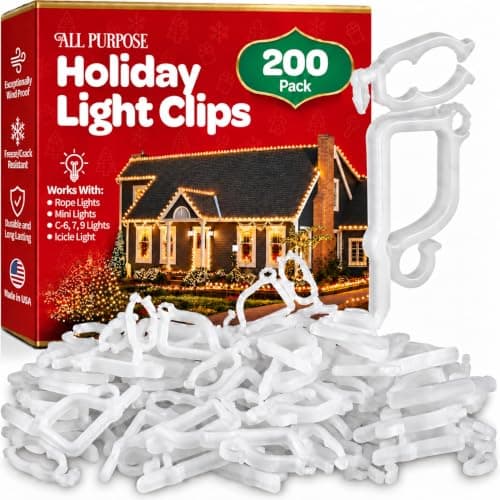 Top pickAll-Purpose Holiday Light Clips, 200-packFits C7, C9, mini, icicle; 200-pack | One clip for a whole mixed display | 9.0 | $13.99 · View on Amazon |
| 2 | 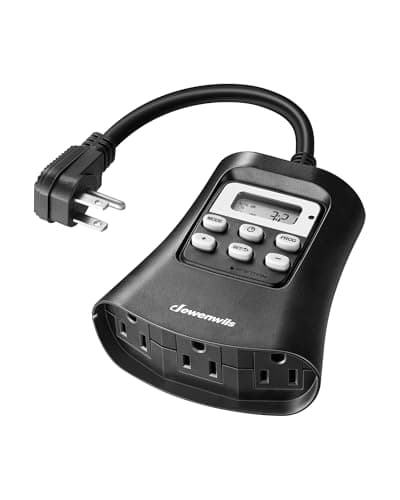 DEWENWILS Outdoor Digital Timer, 3 outlets, 15A15 A, 3 grounded outlets, 7-day | A whole display on one schedule | 9.1 | $18.99 · View on Amazon |
| 3 |  Bosch GLM165-40 Blaze Pro Laser Measure, 165 ft165 ft range, Blaze Pro | Measuring a roofline without a ladder | 8.8 | $59.84 · View on Amazon |
| 4 | 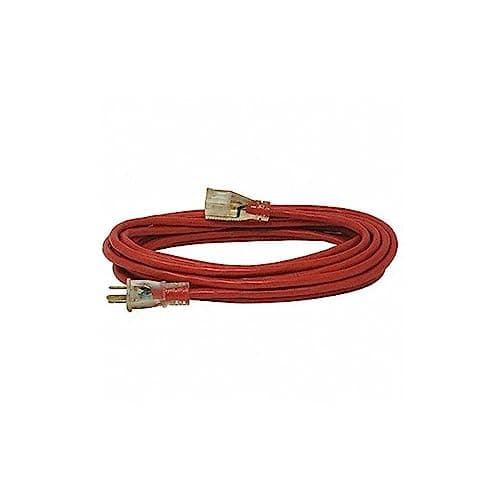 Southwire 14/3 SJTW Outdoor Extension Cord, lighted end14/3 SJTW, 13 A rated | The standard run from house to display | 9.0 | $19.30 · View on Amazon |
#ad We may earn a commission · Price as of October 10, 2026
Scores are our own editorial judgment from published specifications and buyer feedback, scored against the same criteria across this category. See how we pick.
Jump to a full review below: planning
Common questions
When should you put up outdoor Christmas lights?
Install them between late October and mid-November, while the weather is still in the comfortable 45 to 75 degree F working range, then switch them on at your chosen date — usually the weekend after Thanksgiving. The install date and the switch-on date do not have to be the same day.
Is it too cold to hang Christmas lights?
Below about 40 degrees F it becomes a real problem: wire insulation stiffens and will not take a shape, outdoor adhesive hooks stop bonding, and ladder footing on frozen or frost-slick ground gets considerably worse. The published ideal working range for the job is 45 to 75 degrees F.
Is it too early to put Christmas lights up in October?
Not technically. LEDs are solid-state and unaffected by freezing temperatures, so an unlit run on the fascia is doing nothing for six weeks. The objection is social, and it disappears if you install early and leave the display dark until your chosen switch-on date — an unlit roofline is close to invisible from the street.
What should I do in October before the lights go up?
Treat October as infrastructure month. Fit the clips, run the power and place the timer, confirm the receptacle is GFCI-protected, measure each roof segment from the ground, and test last year's strands flat on the drive. Once all of that is done the light install itself is a short job.
When do most people turn their Christmas lights on?
The weekend after Thanksgiving is the convention most decorators follow for the official lights-on moment, with December 1 the other common choice. Setting a digital outdoor timer or a dusk-to-dawn photocell makes that date a programmed event rather than something you have to remember.
Sources
Every specification quoted on this page comes from the manufacturer’s own published information or a current retail listing, linked below. Where a figure is not published, we say so rather than estimating it.
- The Christmas Light Emporium — best time to start planning and installing your Christmas lights (August-September planning, October infrastructure, late October to mid-November install, ideal working range 45-75F, below 40F wire insulation stiffens and ladders on frozen surfaces become hazardous, weekend after Thanksgiving for lights on, mid-January takedown, and do not turn them on yet)
- The Christmas Light Emporium — when should I put up my LED Christmas lights (LEDs are solid-state and unaffected by freezing temperatures)
- The Christmas Light Emporium — how to hang Christmas lights, complete method (measure each segment, build runs on the ground, test before hanging)
- ESFI — outdoor decoration safety tips (inspect everything before use, GFCI protection for outdoor decorations)
Read next
- A first outdoor Christmas display that looks finished
- How to measure your roofline for Christmas lights
- When should you take down Christmas lights?
- Ladder safety for hanging Christmas lights
- Christmas light clips vs adhesive hooks
- The best outdoor Christmas light timers
- How to hang Christmas lights on a two-story house