Takedown & Storage
How to store Christmas inflatables
Almost every inflatable that dies in storage dies for one reason: it went in damp. Everything else on this page is secondary to getting it dry.
Mike M. — The hands-on owner behind Iron Mako Media.
Published
This page contains affiliate links. If you buy through them we may earn a commission at no cost to you, and it never decides what we recommend. How this site is funded.
The direct answer: wash the shell with mild dish soap and warm water using a soft brush or microfiber cloth, then leave the blower running for at least 30 to 60 minutes and run your hand along every seam — if you feel any dampness at all, keep the blower going. Then roll rather than fold, bag it with a few desiccant packs, and store it off bare concrete in a dry space between about 50 and 80 degrees F. A shell that goes into a sealed bag even slightly damp can grow mold colonies within 24 to 48 hours, and that is what kills most inflatables, not weather or wind.
Why damp is the whole problem
An inflatable spends six weeks outdoors getting rained on, and at takedown the inside of the shell has condensation in it even if the outside looks dry. Zip that into a bag in January and you have created a warm, dark, humid container — the exact conditions mold needs. Equipment-care guidance for commercial inflatables is explicit that slight dampness in a sealed bag lets mold colonies establish within 24 to 48 hours. You will not see it until next November, when you open the bag to black speckling along the seams that does not wash off.
The takedown sequence, in order
- 1
Pick a dry day, with the blower still on
Do not take an inflatable down in rain or straight after a thaw. Leave it inflated and running on a dry afternoon — the blower is the best drying tool you own, and it is already attached.
- 2
Clean the shell while it is still inflated
Mix a gentle dish soap with warm water and use a soft-bristle brush or a microfiber cloth. Wipe again with clean water to take the soap off. Never use bleach, an ammonia-based cleaner or a pressure washer — all three damage the coating, strip the colour and weaken the seams.
- 3
Dry it on the blower for 30 to 60 minutes
Leave the unit running after washing for at least half an hour, longer in cold or humid weather. Then do the seam check by hand. This is the step people skip and it is the one that matters.
- 4
Lay a tarp down before you deflate
Asphalt and concrete abrade the shell as you fold and drag it. A cheap tarp on the ground prevents the small punctures that turn into a sag next season.
- 5
Roll, do not fold
Rolling distributes stress evenly across the material rather than concentrating it along fold lines. Think sleeping bag or air mattress: start at one end and push the air out as you go. Repeated hard folds in the same place are where splits appear after a few years.
- 6
Bag the hardware separately and label it
Stakes, tethers, the power lead and the manual go in a small bag with the unit, not loose in the bin. Everything that gets lost between seasons gets lost here.
Container: bin or bag?
Both work, and the choice depends on what else is going into the storage space. If you still have the original box, it is sized for the unit and is the easiest answer. Most people do not.
| Container | Good at | Watch out for |
|---|---|---|
| Original box | Correct size, holds the manual and parts | Cardboard soaks up any moisture in the space |
| Latching bin with a gasket seal | Rodents, dust, damp garage floors | Seals the shell in, so it MUST go in bone dry |
| Breathable canvas or mesh bag | Air circulation, so slight residual moisture can escape | Dust and rodents if the space is not clean |
| Vinyl bag left slightly open | A compromise — dust out, air in | Only works if nothing can get in through the gap |
- A sealed bin is the better choice in a garage with mice, and the worse choice if there is any chance the shell is damp. The seal that keeps water out also keeps water in.
- Add two to four large desiccant packs inside the bag or bin. They cost almost nothing and they absorb the condensation you could not feel.
- Never store directly on bare concrete. Concrete wicks moisture from the ground continuously. Put the bin on a pallet, a shelf or at minimum a tarp.
- Store the lights and cords with reels, not loose. A tangled cord jammed in beside a folded shell is how both get damaged — best storage bags and bins covers the formats.
Where to put it
Equipment-care guidance for inflatables targets 50 to 80 degrees F with humidity below 50 percent. That rules out the two places most people actually use: an unheated shed and an uninsulated attic. A shed is cold and damp; an attic swings from freezing in February to very hot in July, and repeated heat cycling is hard on the coating and the printed graphics.
- Best: an interior closet, a conditioned basement, or a shelf in an insulated garage.
- Acceptable: a dry unheated garage, off the floor, in a sealed bin with desiccant.
- Avoid: a garden shed, an uninsulated attic, or anywhere the container sits on bare concrete.
- Never: outside under a cover. A tarp over a bin outdoors collects water on top and holds it there.
Check the blower before you put it away, not after
The blower is the component that fails, and the easiest time to establish that is while the unit is still up and running. Listen for a bearing rattle, check the intake is clear of leaves and grit, and make sure the housing is dry inside. Noting a failing blower in January gives you ten months to replace it; discovering it on the first weekend of December does not. Christmas inflatable not working covers the diagnosis.
The same logic applies to anchoring hardware. If you spent the season re-staking a figure that kept rocking, replace the stakes now while you remember which unit it was. Best stakes and anchors and anchoring inflatables in wind cover what actually holds.
If it already has mold
Surface mildew on a shell that was put away slightly damp can sometimes be cleaned with mild soap, water and a soft brush, followed by a full blower dry. What cannot be fixed is mold that has worked into the seams and the coating, because the fix for that is the harsh chemicals that destroy the material. If the staining does not lift with gentle cleaning, the honest answer is that the unit is finished — and the lesson is the drying step, not the cleaning product.
What to buy
The products that fit the advice above, chosen by the process on our methodology page. Every specification quoted is the manufacturer’s own published figure, linked on the page.
Quick picks
| # | Product | Best for | Score | Price |
|---|---|---|---|---|
| 1 | 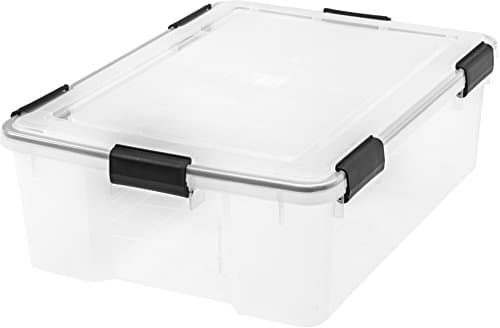 Top pickIRIS USA WeatherPro 41 Quart Storage Box41 qt, gasket seal, latching buckles | Clips, stakes, timers and spares | 8.3 | $27.48 · View on Amazon |
| 2 | 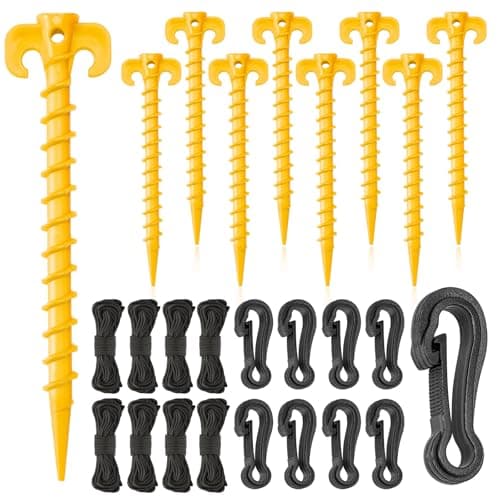 AUGSUN Inflatable Stake Kit with tethers and hooks27-piece kit: stakes, tethers, hooks | A complete anchoring kit in one purchase | 8.2 | $9.99 · View on Amazon |
| 3 | 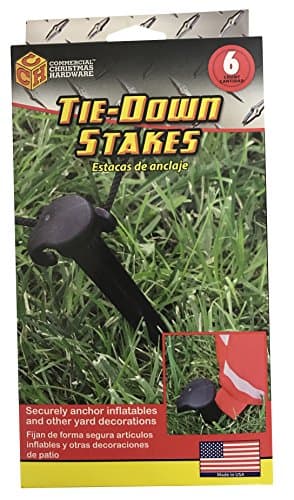 Commercial Christmas Hardware Tie-Down Stakes, 6-pack6-pack, metal, for inflatables | Replacing the stakes that came in the box | 8.9 | $10.40 · View on Amazon |
| 4 | 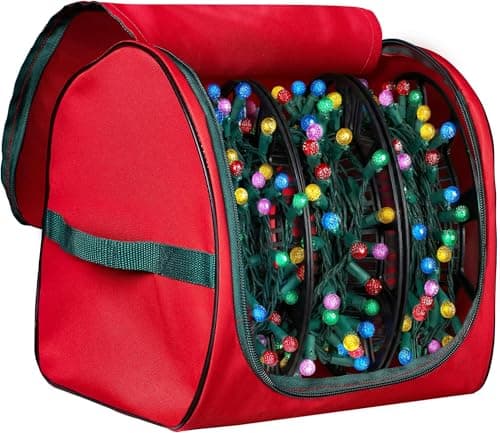 ZOBER Christmas Light Storage Reels, 3 reels with bag3 reels, 600D Oxford bag | Metal reels that will not crack | 8.6 | $29.99 · View on Amazon |
#ad We may earn a commission · Price as of October 10, 2026
Scores are our own editorial judgment from published specifications and buyer feedback, scored against the same criteria across this category. See how we pick.
Jump to a full review below: storage-and-takedown
Common questions
How do you store Christmas inflatables so they do not get moldy?
Dry them completely before they go in the bag. Leave the blower running for at least 30 to 60 minutes after washing, then run your hand along every seam and keep the blower going if you feel any dampness. Slight dampness in a sealed bag lets mold colonies establish within 24 to 48 hours.
How do you clean a Christmas inflatable before storing it?
Mix a gentle dish soap with warm water and wipe the shell down with a soft-bristle brush or a microfiber cloth while it is still inflated, then wipe again with clean water. Never use bleach, ammonia-based cleaners or a pressure washer — they damage the coating, strip the colour and weaken the seams.
Should you fold or roll a Christmas inflatable?
Roll it. Rolling spreads the stress evenly across the material instead of concentrating it along fold lines, which is where splits appear after a few seasons. Lay a tarp down first so asphalt or concrete does not abrade the shell while you work.
Can I store Christmas inflatables in a shed or attic?
Neither is a good choice. Inflatable storage guidance targets 50 to 80 degrees F with humidity below 50 percent. A shed is cold and damp; an uninsulated attic swings from freezing to very hot, and that heat cycling is hard on the coating and the printed graphics. An interior closet, a conditioned basement or a shelf in an insulated garage is better.
Is a sealed bin or a breathable bag better for inflatables?
A sealed bin with a gasket is better against rodents, dust and a damp garage floor, but only if the shell is bone dry — the seal that keeps water out also traps anything inside. A breathable canvas or mesh bag lets residual moisture escape. Either way, add two to four large desiccant packs and never stand the container directly on bare concrete.
Sources
Every specification quoted on this page comes from the manufacturer’s own published information or a current retail listing, linked below. Where a figure is not published, we say so rather than estimating it.
- Reservety — how to properly clean and store inflatables (gentle dish soap and warm water with a soft-bristle brush or microfiber cloth; no bleach, ammonia cleaners or pressure washers; blower running 30-60 minutes after washing; hand-check every seam; mold colonies establish within 24-48 hours in a sealed bag; roll instead of fold; tarp on the ground; breathable bags and 2-4 desiccant packs; 50-80F and humidity below 50 percent; store on pallets or tarps, never directly on concrete)
- The Home Depot — how to care for holiday inflatables (cleaning, air drying before storage, keeping the original packaging, using a snug-lidded bin with the manual and spare parts bagged)
- Magic Jump — maintaining inflatables through the winter season
- Christmas Light Source — tie-down stakes for inflatables, 6-pack
Read next
- Christmas light storage ideas that actually work
- When should you take down Christmas lights?
- The best Christmas light storage bags and bins
- Are Christmas inflatables waterproof?
- The best outdoor Christmas inflatables
- How to anchor Christmas inflatables in wind
- Christmas inflatable not working: how to fix it